Peas

Pea raised bed

Pea raised bed

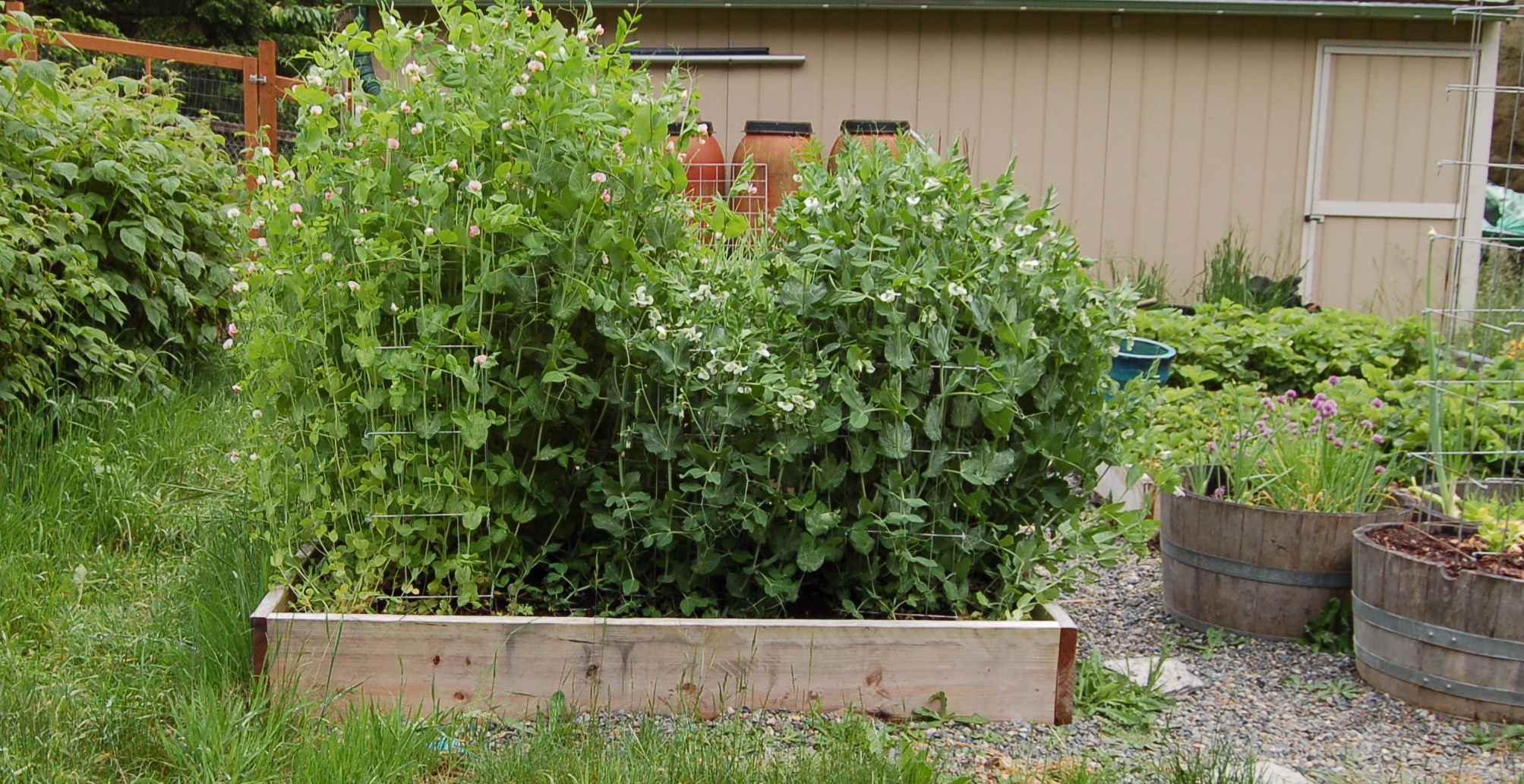
I did a smaller pea planting this year, but decided to plant three different varieties in one bed. The pea plants are huge! They’ve grown so much since the last photo, taken April 1. From left to right, I have Taiwan Sugar, Sugar Sprint, and Oregon Giant II. In retrospect, planting the Sugar Sprint in the middle wasn’t the best idea because the plants are smaller and are being crowded out by the Taiwan Sugar and Oregon Giant. Nonetheless, all are full of flowers and small peas are forming. I see a stir fry happening this weekend. Yum!

Sandy

Share

Posted in Gardening | Tagged | 1 Comment

A perfect goat life

Lucy taking a nap

Lucy taking a nap

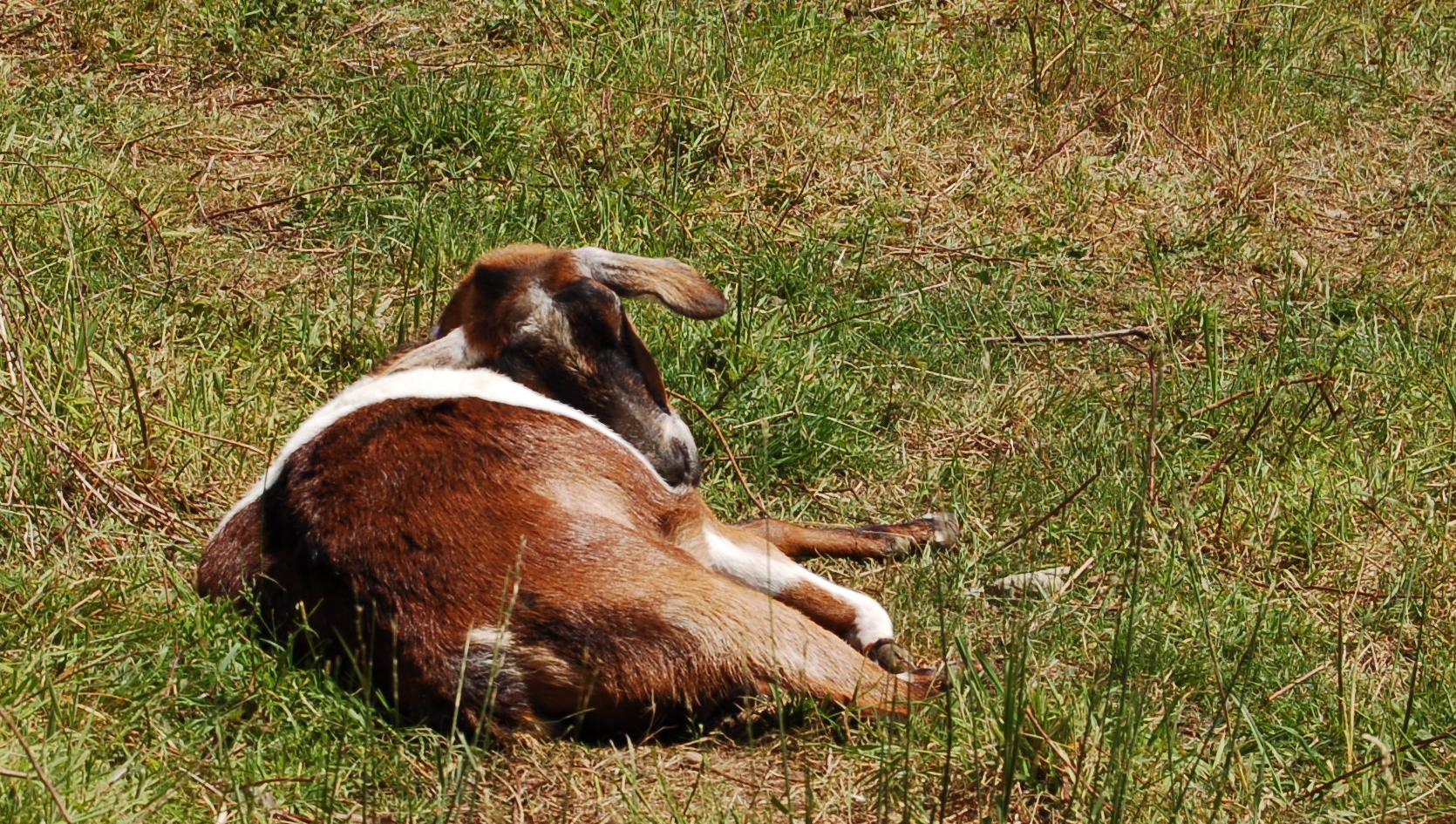
Ah, to be Lucy. Eat all day long and then take a long nap in the sun using a super full tummy as a pillow. Not a bad life indeed . . .

Sandy

Share

Posted in Livestock | Tagged | 2 Comments

Our new “edible landscaping” garden

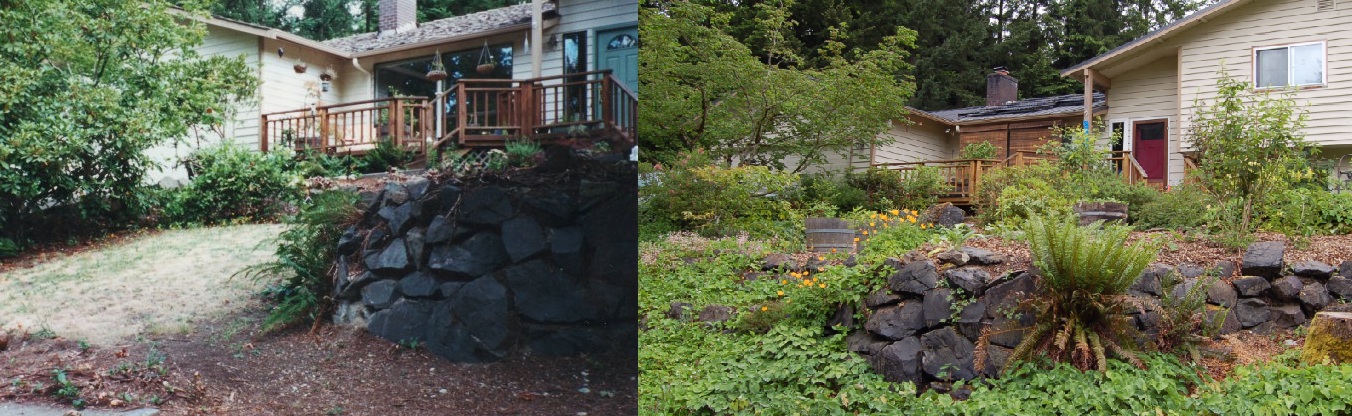
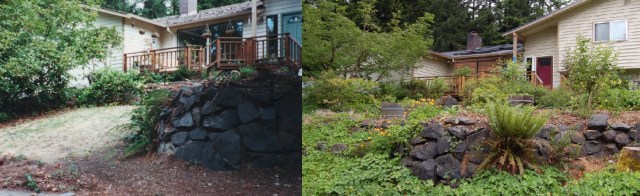
Front planting area, 2002 an 2012

Front planting area, 2002 an 2012

I’ve written before about the before and after transformation of our front yard. I’ve also written about the big decision to part ways with our big leaf maple. The structural changes we’ve made to this area have created the perfection conditions for edible landscaping. The area has great soil (we had this brought in to fill in and elevate the space) and, with a SW orientation, lots of sun. Because of the curved, slightly sloping and terraced nature of this area, it would never support a typical raised bed garden. That’s fine, though, because I’ve already got a number of raised beds in other areas. It wouldn’t make sense to try to make this area something it isn’t. Instead, the plan is to take advantage of the natural strengths of this part of our landscape and to transform it into something unique to the site and special in its own way.

What is edible landscaping? As Rosalind Creasy writes,

“Edible landscaping is the practical integration of food plants within an ornamental or decorative setting. The same design principles as for ornamental landscapes are used, while substituting edible plants such as lettuces, blueberries, vegetables and fruit trees for some of the otherwise unproductive plant material. Using edibles in landscape design can enhance a garden by providing a unique ornamental component with additional health, aesthetic, and economic benefits. Edible landscaping is a mixture of beauty and utility.”

In many ways, this takes me back to my original gardening roots. Prior to focusing on food growing, I primarily did ornamental gardening. When we moved to this house ten years ago, I shifted focus and began developing food growing skills. Edible landscaping merges both of these areas of interest. So let’s take a look at how this is coming along.
Edible landscaping, mixed planting area

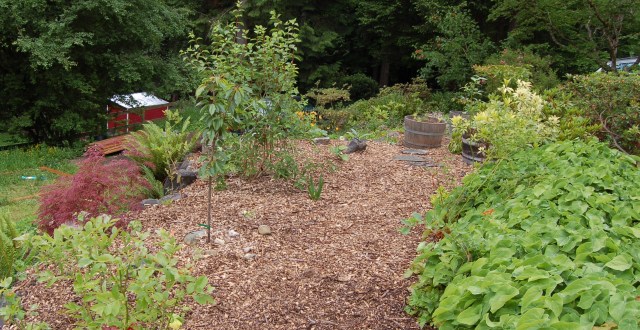
Edible landscaping, mixed planting area

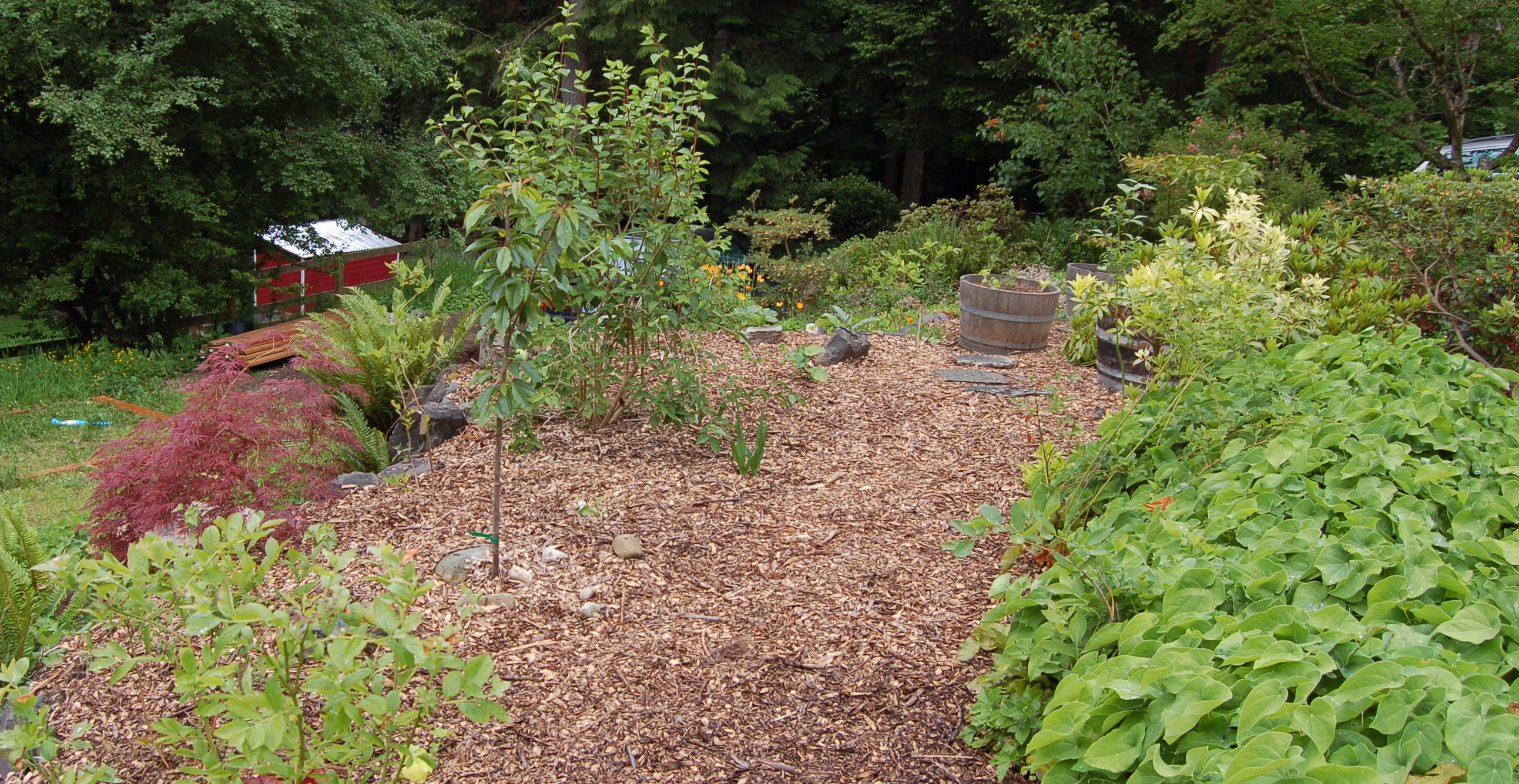
The new structural elements in this area are largely food producing. Three cherry trees and a crab apple join the Japanese maple, mock orange, and lilacs. The next layer down (in terms of eventual height) include numerous blueberries, black currants, a few smaller rhododendrons, pieris, azalea, and daphne.

Front border, structural elements

Front border, structural elements

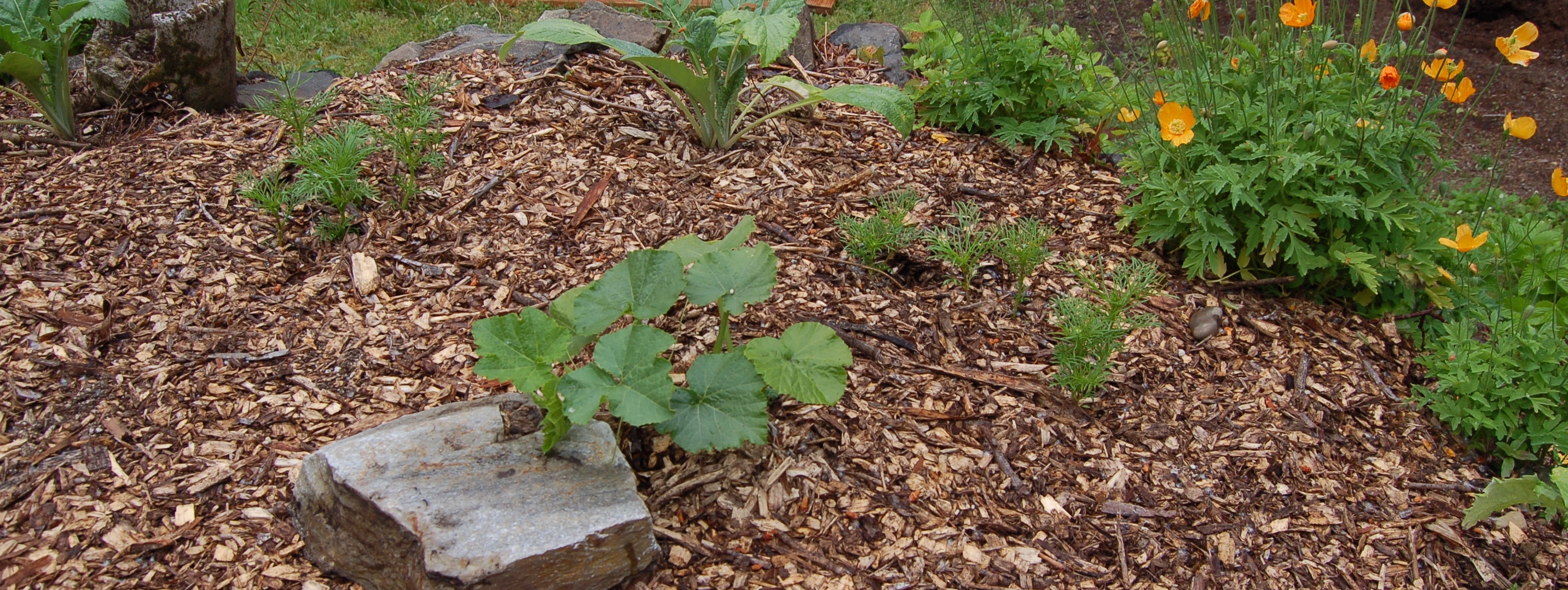
We just added three half wine barrels, which are currently planted with a mix of squash (delicata) and cosmos. Also notable are the rocks. When we filled in this area, we brought in a large, interesting rock for a focal point. You can see this slightly to the right in the middle of the above picture. This large rock complements the rock retaining wall you can see in the lower left of the picture. Planted around the rock, we have hardy geraniums and alpine strawberries, two ground covers we repeat throughout this area.
Squash and flowers

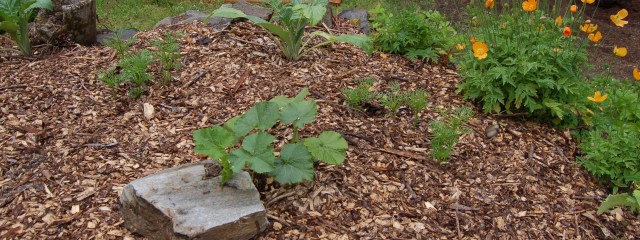
Squash and flowers

Joining the squash planted in the barrels, we planted small sugar pumpkins as an edible ground cover. In this picture, you can see poppies and cosmos. Oh, there are also a few artichoke plants in there. Artichokes often show up in edible landscapes because they have a high level of visual interest in addition to producing actual artichokes. Hollyhocks and zinnias round out the cast of flowers, making the flowers a mix of annuals, perennials and biennials. If you ask me, that pumpkin plant is looking pretty happy!

All in all, I’m really pleased with how this area is coming along. We just finished up weeding, planting, and barking (the wood chips came from the big leaf) throughout this area and it is looking really good.

Happy gardening.

Sandy

Share

Posted in Gardening | Tagged | 2 Comments

Solar production check-in & great energy consumption progress

1501 kWhs produced

1501 kWhs produced

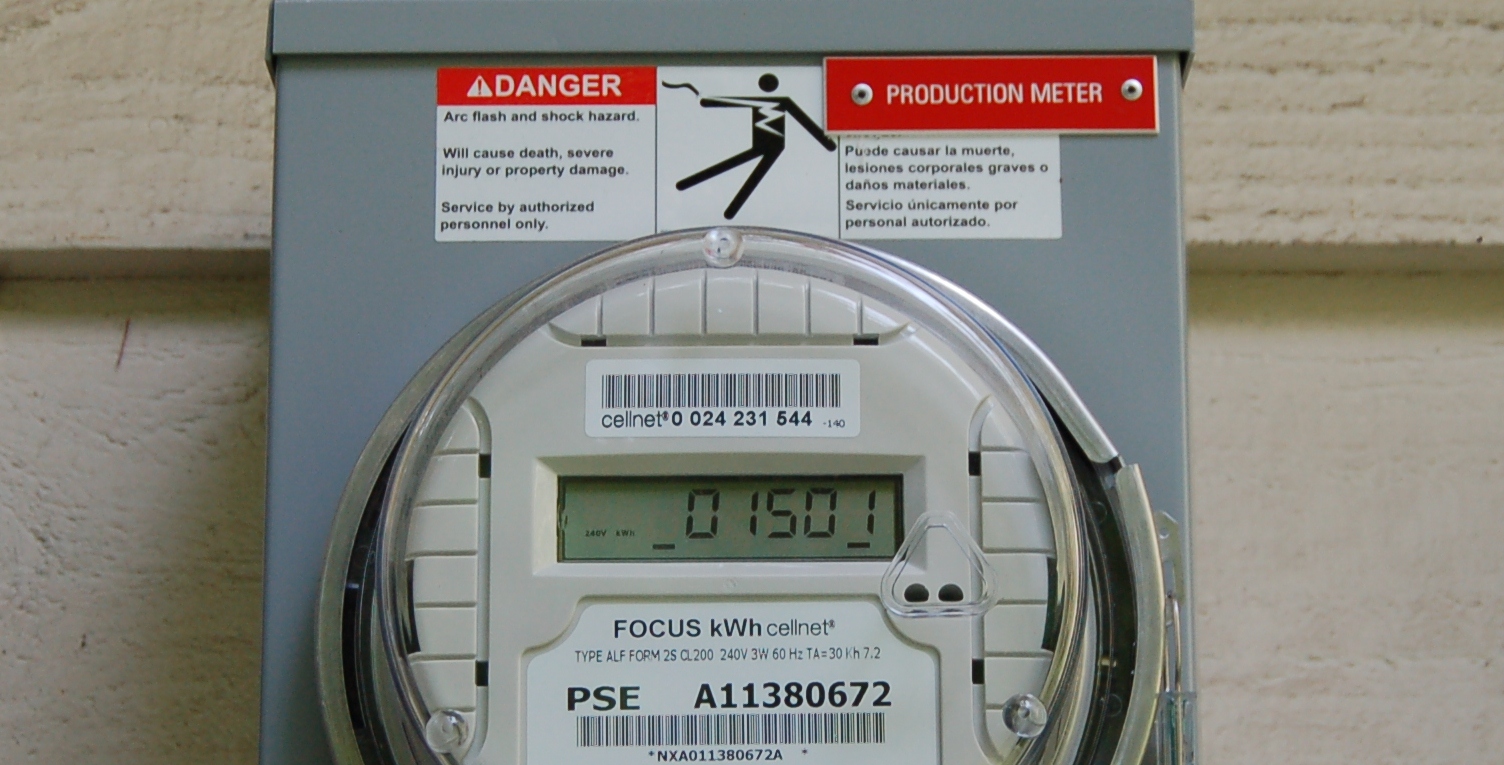
We’ve just hit an electricity production milestone with the solar production meter passing the 1500 kWh mark for 51 days of production. As I’m keeping track in the solar log, we’re currently averaging nearly 30 kWhs a day in production. On nice sunny days, we hit the upper 40’s in production. On a dreary, rainy day it can be as low as 10. I’m pretty happy we are averaging around 30 right now considering the number of cloudy and rainy days. It’s also nice to remember that 1500 kWhs equals $810 in energy production incentives that we’ve already earned (at $0.54 per kWh).

April - May electricity usage

April – May electricity usage

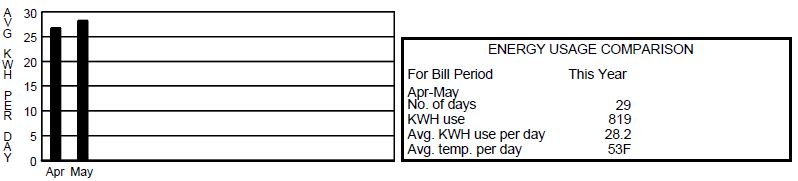
Thirty kWhs/day is especially awesome because we’re actually using less than we are making right now! As the graph from our last energy bill shows, we’ve been averaging 28.2 kWhs of usage each day. Considering that I’ve had a bunch of grow lights, heat mats, and a poultry heat light running during most of this time, it’s pretty good indeed.

Year over year natural gas usage

Year over year natural gas usage

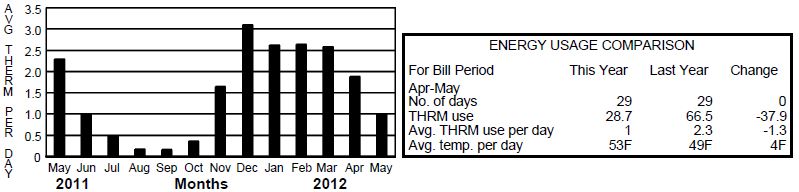
On our latest utility bill, I also noticed a steep year-over-year drop in our natural gas usage. In fact, it has dropped by over half. Most of the credit, I believe, goes to the extra insulation we installed last year. Our natural gas usage is tied to just the stove and the furnace. Clearly, the furnace uses the vast bulk of the natural gas we consume. We’ve definitely noticed over the winter that the insulation brought our natural gas usage down a lot. In addition to the insulation, it has helped that the weather has been a bit warmer and that we’ve been leaving the thermostat at 67 degrees (with just a few exceptions).

So, all in all, great “zero fossil fuel” progress this year so far!

Sandy

Share

Posted in Electricity usage, Energy usage, Natural gas usage, Solar | Tagged , , | 1 Comment

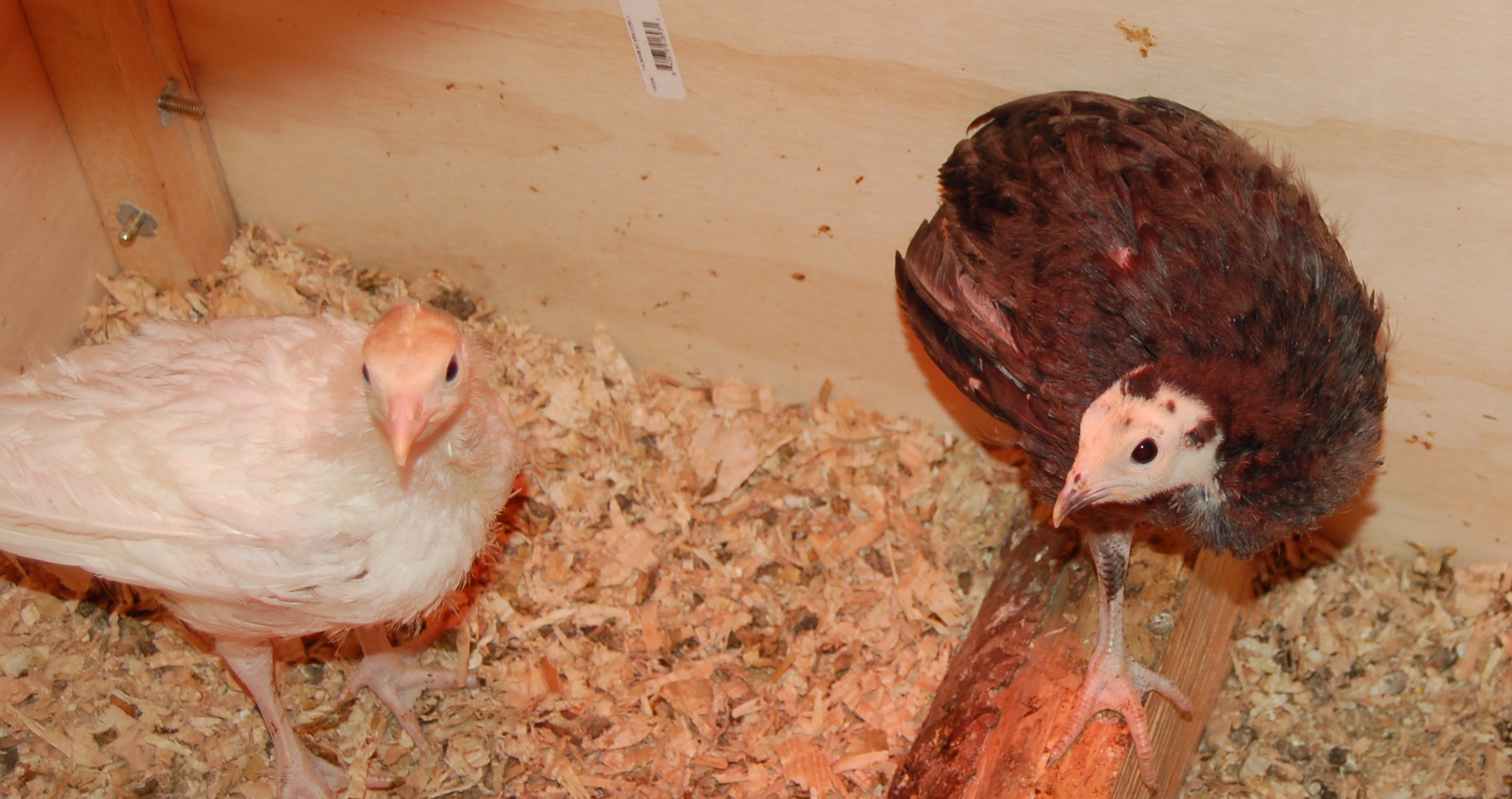
Awkward, gawky, teenage turkeys

Teenage turkeys

Teenage turkeys

It has been about five weeks since my turkey impulse purchase and the turkeys are finally starting to look like, well, turkeys. When I first bought them, they looked just like baby chicks. No more. Their bodies and necks are elongating and they definitely have an awkward turkey waddling gate. One of the turkeys, the black one, has more than a waddle. At one point a few weeks after getting them, the black turkey became ill. In fact, I thought it was going to die. The turkey rallied, but has been a little off ever since. It’s almost like it had a turkey stroke, because the movement on one side of its body seems a little out of sync. In spite of its physical challenges, it’s doing OK.

One big difference between baby chicks and baby turkeys is that the turkeys have a definite flying instinct. Even though these little guys are still in the poultry box, they flap their wings and push off for as much flight as they can muster in the box. I’m not sure how we’ll keep them contained once we move them outside into the pasture. We shall see!

Sandy

Share

Posted in Livestock | Tagged | 3 Comments

The muscle car of tomato plants

Grafted tomato plants

Grafted tomato plants

About a year or two ago, grafted tomato plants started appearing on the garden scene. As Valerie Easton explained in an Seattle Times article last year, grafted tomatoes “have proved more effective at taking up water and nutrients, they are tougher. Tougher tomatoes are better at withstanding disease, pests and temperature fluctuations. This means a higher yield of larger tomatoes. Perhaps most important in our climate, grafted tomatoes can be harvested over a longer period of time.” With such a description, these sound like the muscle cars of tomato plants, specifically tuned to our challenging Pacific Northwest growing conditions.

I remembered reading the positive review of grafted tomatoes yesterday when I took a “quick trip” to Molbak’s, something that is never as quick or as focused as I intend. Molbak’s is a gardener’s paradise located in Woodinville where I live. It’s also super pricey. I try to do most of my garden shopping at McClendon’s Hardware, but sometimes I go to Molbak’s. I always buy and spend more than I intend. For example, tomatoes were not on my shopping list. But I was intrigued. At $18 a plant (yes, $18 for a tomato plant!) I hope the experiment pays off. If it does, I might learn how to graft myself (per the below video, it doesn’t look overly hard), because I don’t see myself paying this much for tomato plants on a regular basis. Heck, I economically start all my plants from seed, so paying a lot for tomato plants isn’t something I want to do.

Anyway, I’ll let you know how the grafted tomato plant experiment works out. If anything, it’s always interesting to try something new.

Sandy

Share

Posted in Gardening | Tagged , , | 1 Comment

Video: Flight of the Orchard Mason Bees


The Orchard Mason Bees are doing great this year! By far, this has been the best year for the bees since we started hosting them a few years ago. The weather has cooperated well, with enough decently warm days to encourage significant bee activity. I think the orchard and berries will be very well pollinated this year.

Sandy

Share

Posted in Gardening, Wildlife | Tagged , | 1 Comment

Mushroom mysteries: What do I have here?

Mushroom colony

Mushrooms in rhubarb patch

Mushrooms in garlic patch

Mushrooms in garlic patch

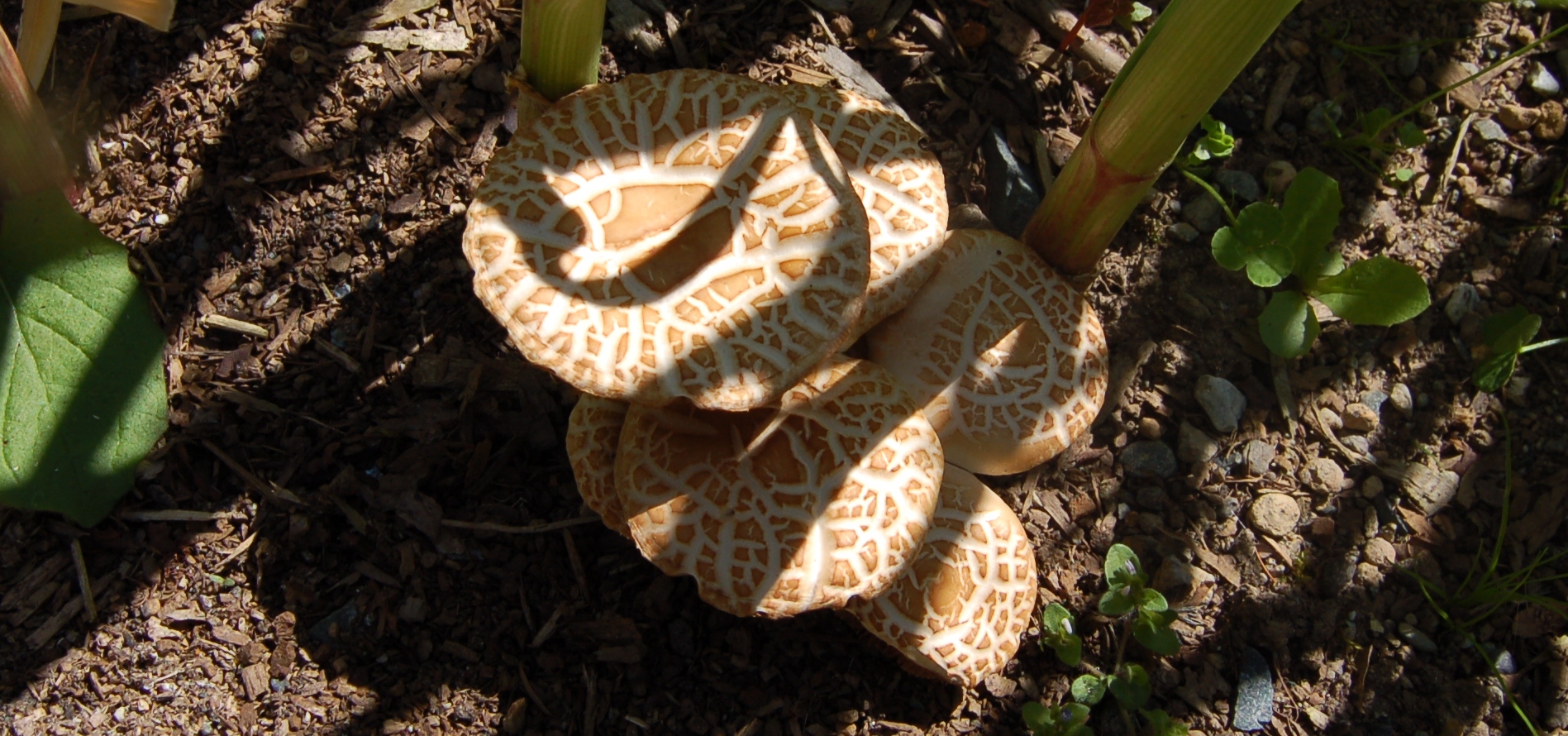
We are not a mushroom eating family. Derek loathes them. I can tolerate them if they are a small part of an otherwise non-mushroomy dish. When I came upon pretty sizable mushroom colonies in the rhubarb and garlic beds this morning, I was left with a number of questions. What are these mushrooms? Are they edible? And what should I do with them?

I thought this would be pretty easy to figure out by using a mushroom identifier site. I was wrong! Too many of them look the same to me. If you know mushrooms and could at least narrow it down, that would be great.

Sandy

Share

Posted in Gardening | Tagged | 4 Comments

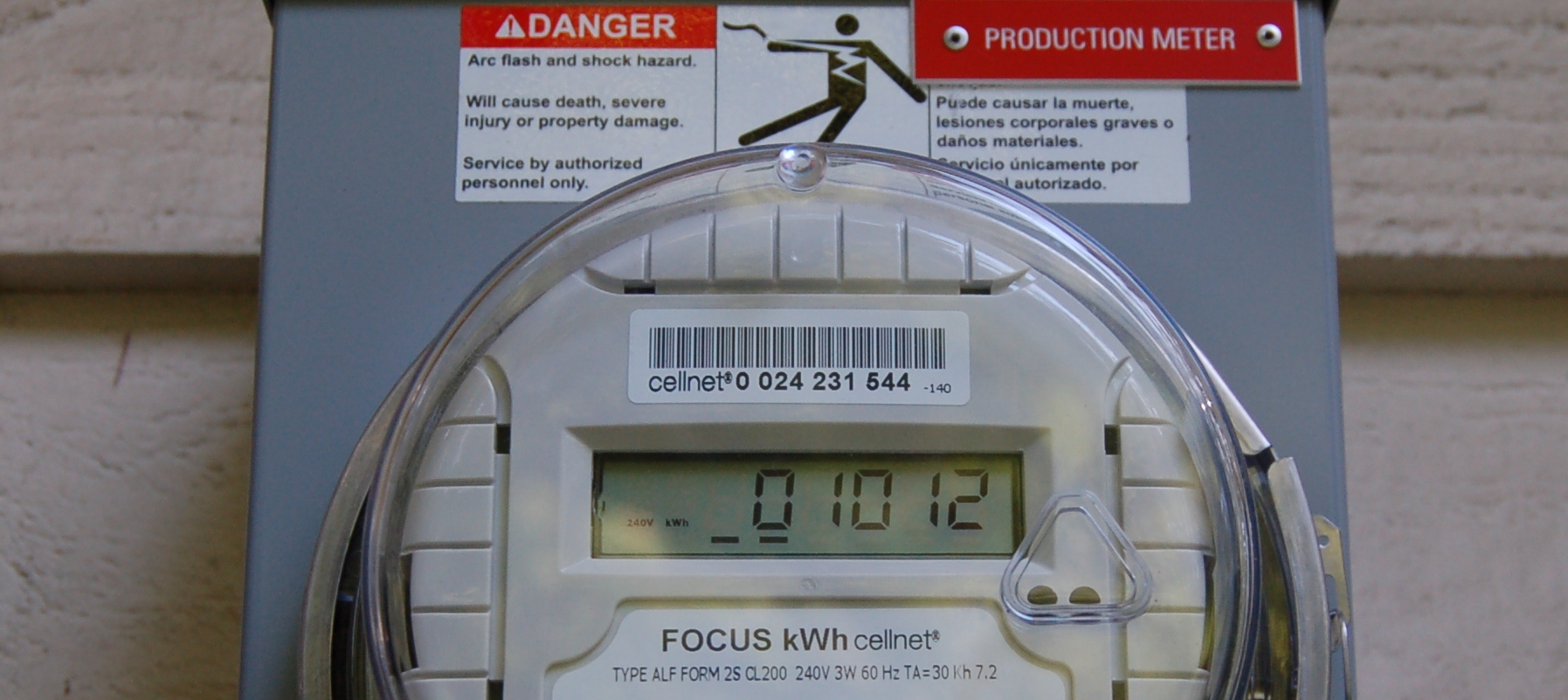
1012 things to love about solar power

Meter reading on day 37 of production

Meter reading on day 37 of production

Today, we surpassed 1,000 kWhs of solar production! This took 37 days of production, making our daily production a bit over 27 kWhs which isn’t too bad considering our spotty weather during April. As a simple measure, each kWh of energy we produce saves one pound of CO2. As a comparison measure, the average car produces 10,000 pounds of CO2 each year.

Since we are earning $0.54 per kWh, we’ve already earned $546.58 in production incentives. Go solar!

Sandy

Share

Posted in Solar | Tagged | 1 Comment

Hen vs. lizard

Hen with lizard

Hen with lizard

Hen with lizard

Hen with lizard

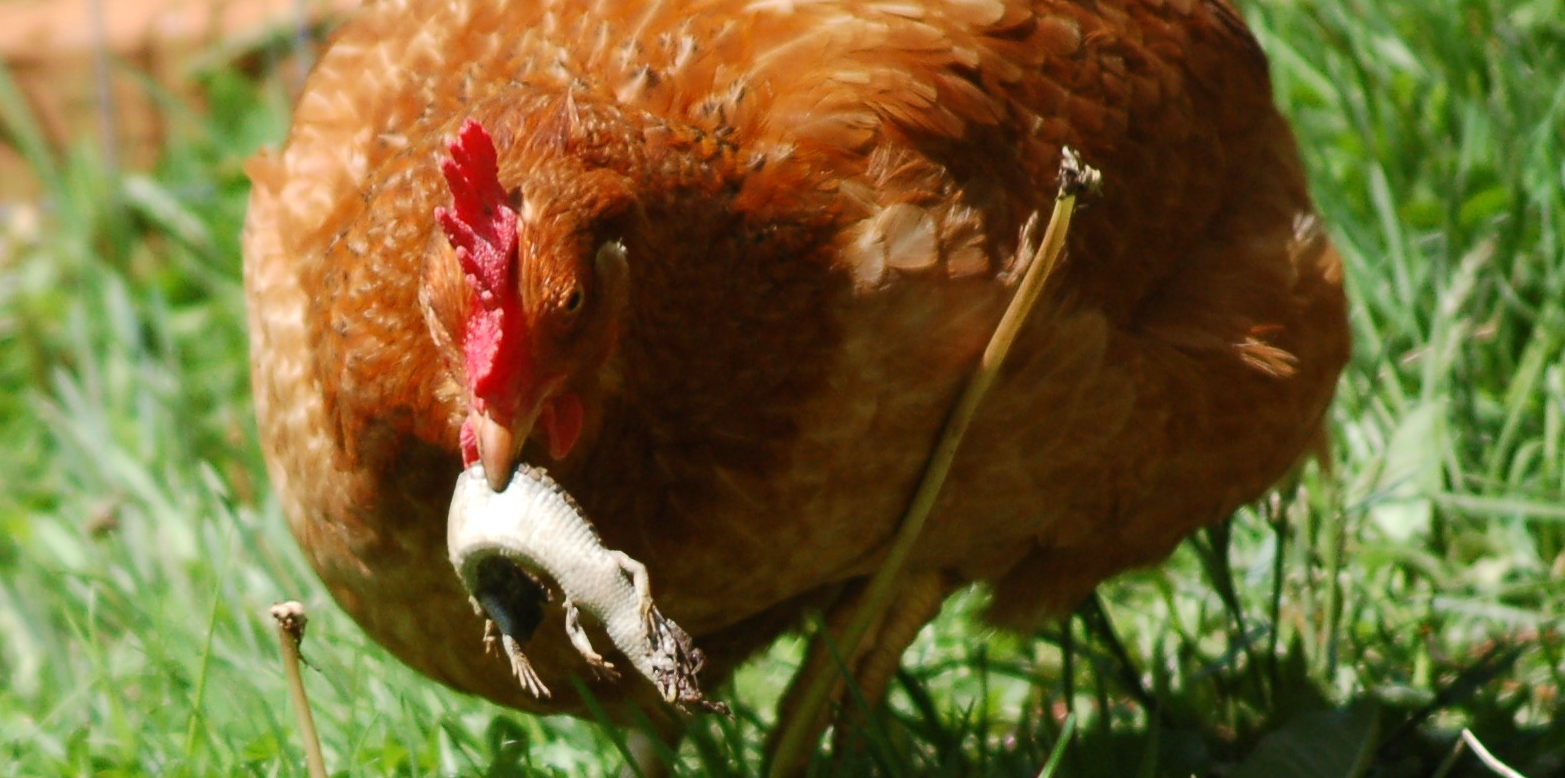
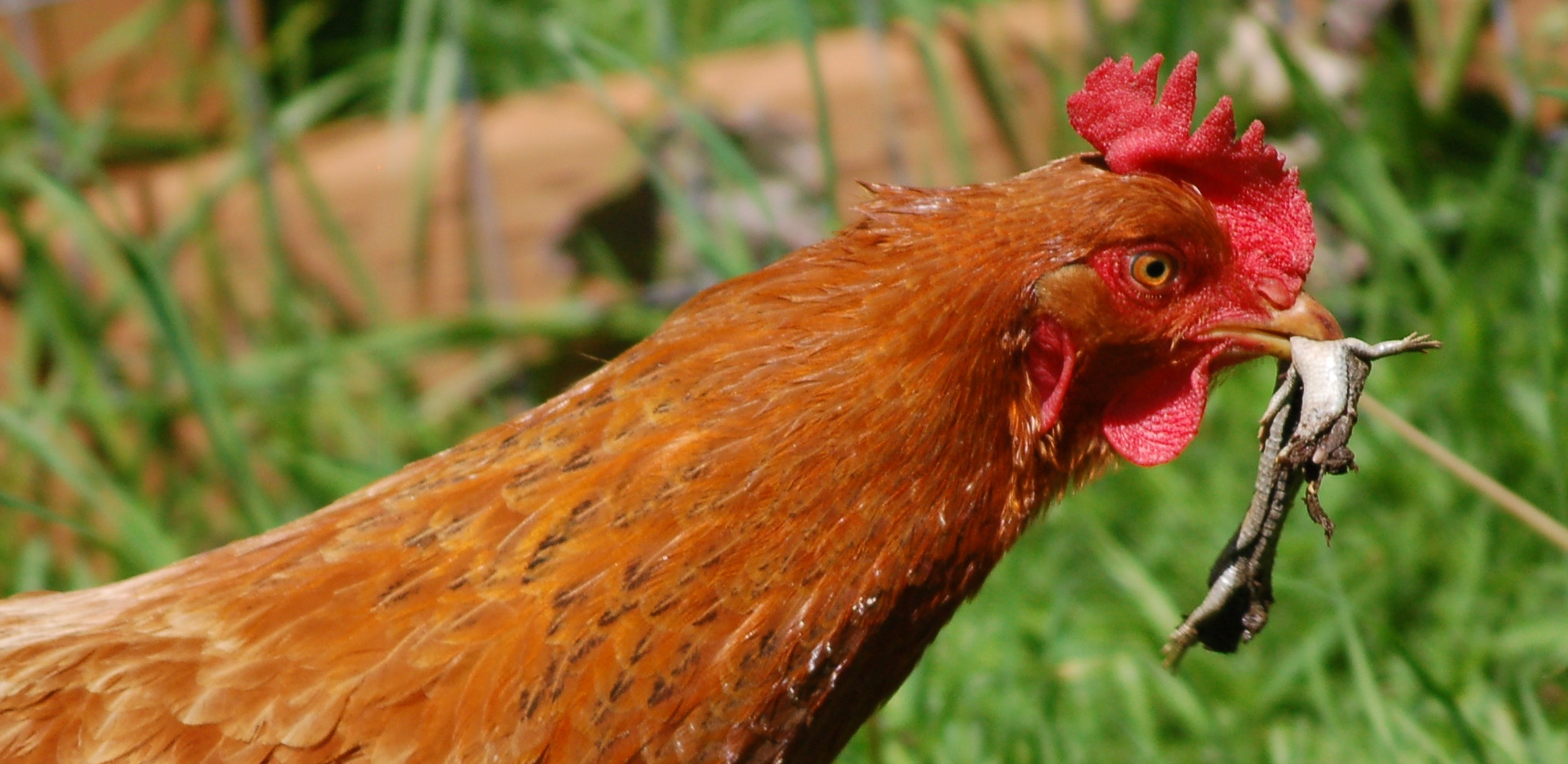
One of our New Hampshire hens found an interesting snack today, a little lizard. She ran around for about 10 minutes trying to eat it herself, but the other hens kept trying to steal it from her. Eventually, she tired of being chased, flipped the lizard up, and it flew straight down the hatch in one big bite. Pretty cool to witness!

Sandy

Share

Posted in Homesteading, Livestock | Tagged , | 2 Comments