More canning, beans and pickles

Canned beans and pickles

Canned beans and pickles

It has been a busy weekend! In addition to the spiced plum jam I made on Saturday, I took on two more canning projects this weekend: beans and cucumbers. Everything in the garden seems to be maturing (and require attention) at once.  The beans in particular have been producing a lot lately.  This morning I picked Santa Ana, Spanish Musica, and Maxibel beans and decided to can them instead of freezing them. This meant that I had to use the pressure canner for the first time.  A few weeks ago, I ordered the All-American 21-1/2-Quart Pressure Cooker/Canner.  This is a giant beast of a contraption, but it should last forever.  After reading all the directions, and many dire warnings about all the things that could go wrong, I managed to successfully can the beans without blowing up the house.  In fact, it wasn’t that hard.

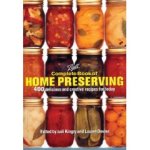
I finished up by making the Grandma Dill Pickles in the Ball Complete Book of Home Preservation book. This book is really helpful because it contains both detailed canning instructions as well as recipes.  In addition to the pressure canner, the Ball water bath canner is new to me this year.  I’m really getting the hang of using it.  And speaking of canning equipment, Amazon has set up a canning store.  If you are thinking of giving canning a try, they have pretty much everything you could need plus a lot of good, basic canning information. 

Sandy

Posted in Homesteading | Tagged , , | 4 Comments

Quite a year for plums and Ebony becomes Broody

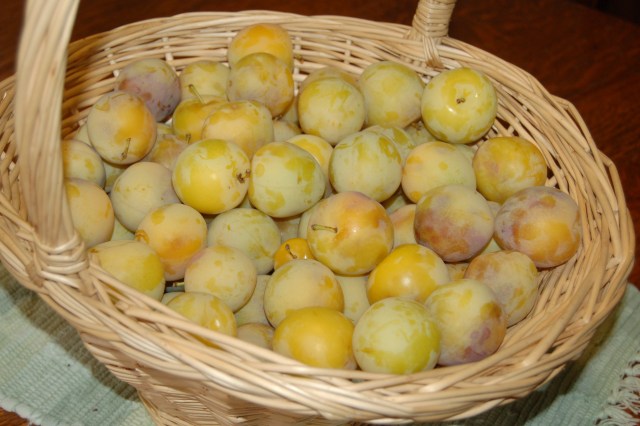
Basket of Shiro plums

Basket of Shiro plums

It has been quite a year for plums, at least for the Shiros. Our Shiro plum tree is consistently the best fruiting tree in our orchard.  I picked a very full basket of plums this morning (easily 10 lbs of plums) and it was just a fraction of the plums on the tree.  The one problem with the plums this year is that due to the extreme sun and heat we have been having, some of the plums are a little sunburned. Since this batch was intended for jam, it wasn’t really a problem. The sunburn didn’t really affect the taste and was just a cosmetic problem.  I simply trimmed off pieces that were too burned just to avoid making the jam too brown.  And oh, if you’ve never read the real Quite a Year for Plums by Bailey White, you should. It’s a sweet and funny set of vignettes of country life in the  summer.

Spiced golden plum jam

Spiced golden plum jam

And here is where the plums ended up.  I did my first canning a few weeks ago and decided that I would make water bath canned jam (instead of freezer jam) for the next jam batches.  It was actually really easy.  Instead of making plain plum jam, I made the spiced golden plum jam recipe from the Ball recipe book. It is a pretty basic jam made a bit fancy by the addition of cinnamon and cardamom.  Pretty dang yummy. 

You can also see a pumpkin on the shot above.  It is a Cinderella’s Carriage pumpkin that I accidentally broke off the vine.  It is quite a bit smaller than it would have been, but the color looks good so I might cut it open and see if it is usable.

Ebony becomes Broody

Ebony becomes Broody

 This is certainly not the most beautiful chicken picture you’ll ever see.  One of our lovely black Australorps has gone broody. A broody chicken is one that is actively trying to sit on a nest of eggs to hatch them into chicks.  Since these eggs are unfertilized, there is no hope that they will become chicks.  But Broody apparently doesn’t understand this and keeps trying, every day, to hatch the eggs.  We’re to the point where she will require some intervention.  She is starting to lose weight and has moulted (lost feathers) much more so than have the other chickens. As such, we’re probably going to need to start isolating her away from her favorite nesting spot for a few days to see if we can break the broodiness.

As I mentioned above, Broody has no hope of hatching chicks because the eggs are not fertilized.  That is because we have not had a rooster in residence (this would be Birds and Bees 101).  About three months ago, we bought four new chicks, three Golden Sex Links and a Golden Laced Wyandotte.  We knew for sure that the sex links would be female because they are color-sexed after hatching.  We weren’t sure what the Wyandotte would be.  Now we know.  Our Wyandotte is definitely a rooster.  Now, we need to decide what to do with him.  Aside from the crowing, which has already begun, any feedback about keeping a rooster?

Hope everyone is having great garden success this summer.

Sandy

Posted in Homesteading | Tagged , , , , | 8 Comments

First adventures in canning

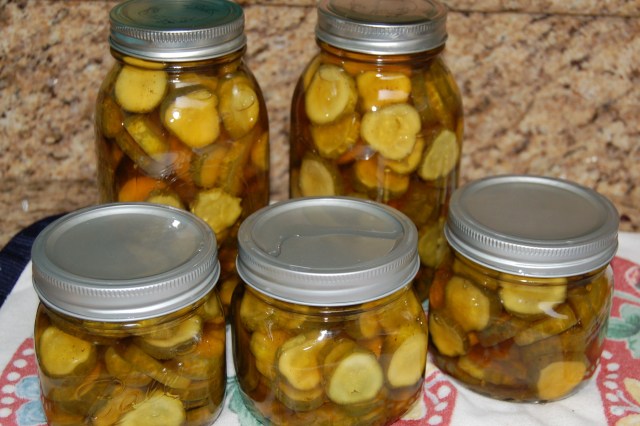
Canned pickles

Canned pickles

I’ve never canned before. At all. In fact, I didn’t even have basic canning supplies until I bought some last weekend. I took the plunge this weekend and made a batch of pickles. The cucumbers were a mix of Alibi cukes from my garden and cukes from the farmer’s market. I used the Cucumber Chips recipe in the Ball Complete Book of Home Preserving.  I followed the recipe and instructions exactly.  But, I don’t know.  I see a few little bubbles in the pickle liquid and they have me worried.  One of the reasons why I’ve never tried canning before is because it seems like there are so many ways for it to go wrong. This is why I’ve stuck to freezer preservation as my main way to save harvests.  But some things you just can’t freeze, such as pickles.

So, for you experienced canners out there, are little bubbles common?  What should I look for after cooling to make sure I’m not going to end up with food poisoning down the road? Thanks in advance for any tips or guidance I might get!

Sandy

Posted in Homesteading | Tagged , , | 7 Comments

Jam day and a pickle preview

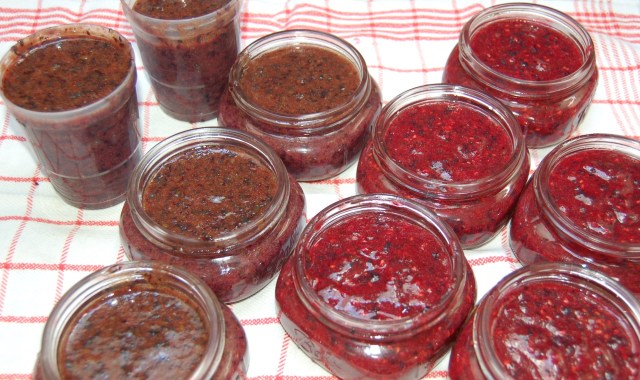
Berry jam setting up

Berry jam setting up

I love berry season.  We’ve planted a bunch of berries in our yard.  We have strawberries (June bearing, everbearing, and red and white alpines), blueberries (eight youngish plants), and raspberries (two new raised beds).  Because most of our berries are young plants, we don’t have huge harvests yet.  The kids constantly eat them right off the bush, too, so I’m not yet able to pick enough berries to make into jam.  As such, we bought berries from the Woodinville Farmer’s Market this weekend specifically to make jam.  I like making freezer jam because it’s quick and easy and really retains the natural berry flavor.  Above you can see the two types of jam we made, blueberry and blueberry/raspberry mixed. Yum!

Boothbys Blonde and Alibi cukes

Boothby's Blonde and Alibi cukes

Cucumbers were the inspiration for building the  greenhouse. I love cucumbers.  And cucumbers love heat.  Seattle doesn’t typically have a lot of summer heat, so growing cucumbers here has been a challenge. With the greenhouse in place, I’m doing most of the cucumber (and tomato and pepper) growing there and so far the results are great! Here you can see a Boothbys Blonde cucumber as well as an Alibi pickling cucumber.

Ball Complete Book of Home Preserving

Speaking of pickles, the cucumbers have really just begun producing fruit, so I don’t have enough yet to pickle, but I have started thinking about what I’ll do when I start getting heavier yields so I started paging through the Ball Complete Book of Home Preserving this weekend.  I think I’ll try making both dill and bread and butter pickles this year. If anyone has any favorite recipes to share or pickling tips, please send them my way!

Cheers!

Sandy

Posted in Gardening, Homesteading | Tagged , , , | 4 Comments

Red, white, and blue in the garden

While it is a day belated, I wanted to celebrate the 4th this year by showing the red, white, and blue currently in the garden.

Raspberries in raised beds

Raspberries in raised beds

 The Red

Earlier this year, we built two new raised beds for our raspberries.  A few years ago, we planted a number of raspberries canes directly in the ground, but it was a nightmare to keep the bed weeded.  It has been much easier to keep the raspberries weeded in the new beds.  Although most of the canes are new this year (we did move a few from the old planting) we are getting a nice crop of raspberries.

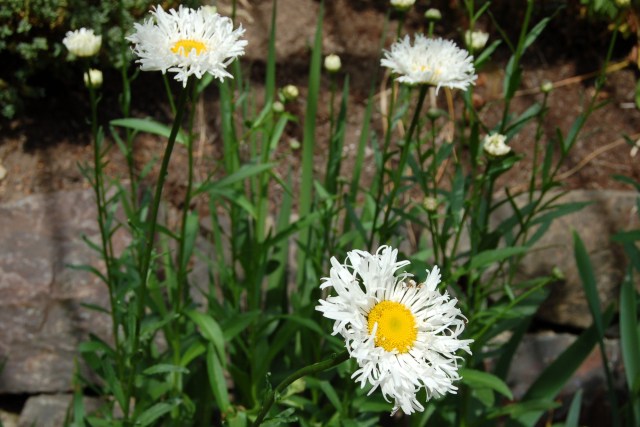
"Teddy Bear" Shasta Daisy

"Teddy Bear" Shasta Daisy

 The White

I’ve been planting more and more Shasta Daisies in my yard.  They are low-maintenance, bloom for a long time, and make nice flowers for a bouquet.  The also work well with our somewhat rustic (meaning a bit wild and out of control) landscaping.  This Shasta Daisy is particularly nice.  The variety is “Teddy Bear” and it has a nice ruffled petals.

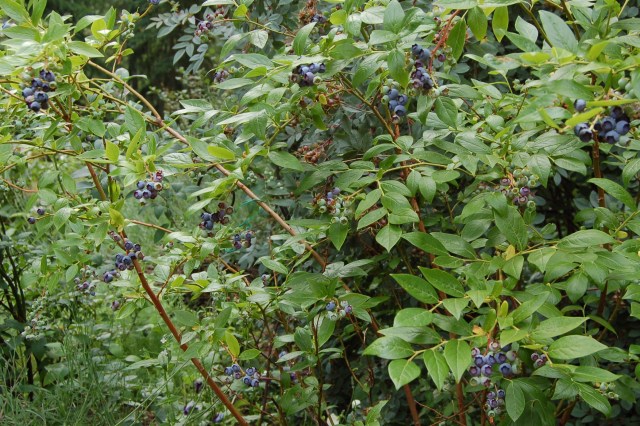
Blueberries, ready to harvest

Blueberries, ready to harvest

 The Blue

We’ve had an usually dry spring and early summer.  This has allowed the blueberries to begin maturing weeks before they would during a more typical year.  This is a bush that I planted last year and it is doing really well it its new home.

I hope everyone had a lovely 4th of July!

Sandy


Posted in Gardening | Tagged , , | 2 Comments

First cuke of the season

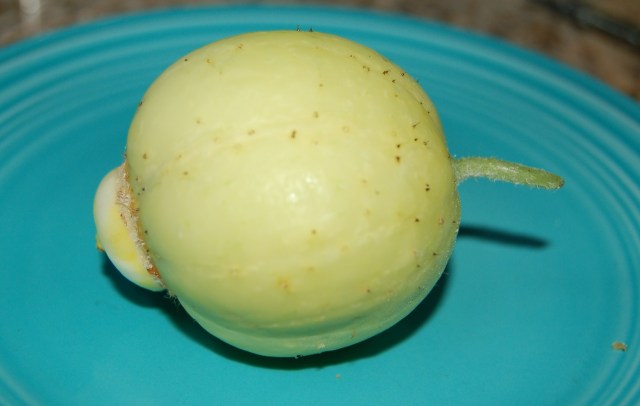
Lemon cucumber
Lemon cucumber

Quick post tonight.  Take a look!  My first cucumber of the season. This is a lemon cucumber, a variety I have been growing for years.  Even before we started building out a large garden, I always found a place to grow cucumbers. Cucumber production in the Puget Sound area can be a bit tricky because the plants do need some heat.  This is why I am doing our primary cucumber growing in the greenhouse.  This little guy came off a plant hanging in a Topsy Turvy planter in the greenhouse.  I’m more than thrilled to have my first cucumber before July. I don’t think I’ve ever harvested a cucumber in Seattle in June before.

Oh, I am having some trouble with my cuke plants. I’ve got some powdery mildew problems.  I’m going to try some diluted baking soda/soap solution to see if that helps, but if anyone has a better recommendation I’d love to hear it.
Sandy
 

Posted in Gardening | Tagged , | 6 Comments

The jungle in the greenhouse

The greenhouse in June

The greenhouse in June

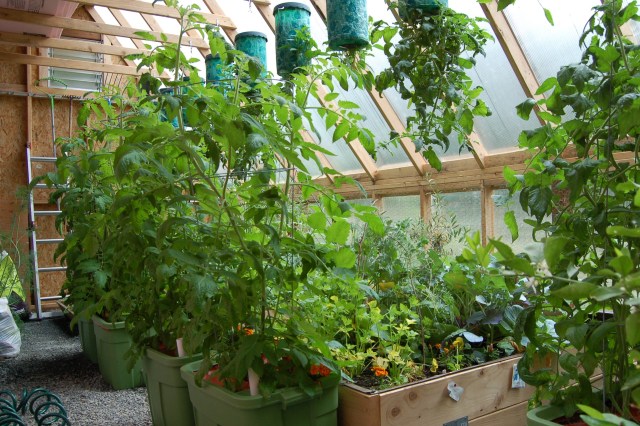
In just a few short weeks, the tiny little tomatoes I planted have turned my greenhouse into a jungle! Everything in the greenhouse is growing like crazy.  The cucumbers, melons, peppers, and more are all looking great.

Melon trellis

Melon trellis

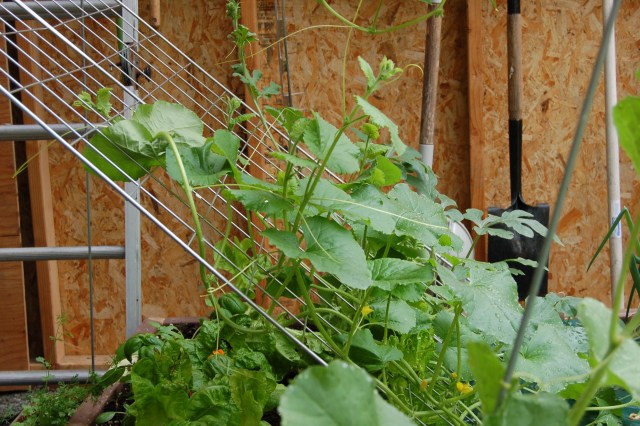
This is the first year I am growing melon in the greenhouse.  I decided to use this cucumber/melon trellis that I found at Gardener’s Supply to save space.  This allows me to underplant the melon vines with shade happy plants, such as lettuce. So far, the system is working out well.

Mini sweet pepper in hanging planter

Mini sweet pepper in hanging planter

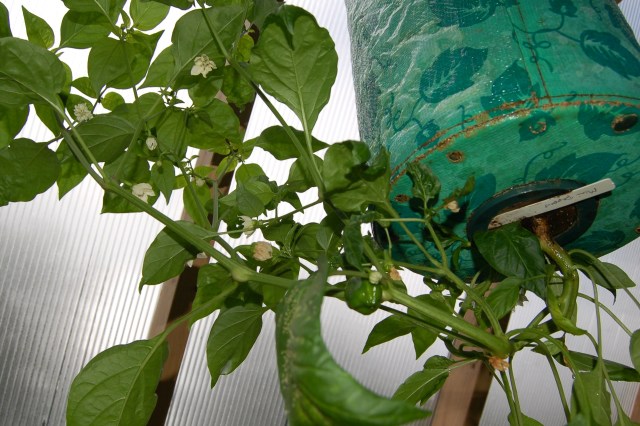
In addition to using the Topsy Turvy planters for tomatoes, I am also growing cucumbers and peppers. Here you can see fruit forming on a mini sweet pepper plant.

Hanging lemon cucumber plant

Hanging lemon cucumber plant

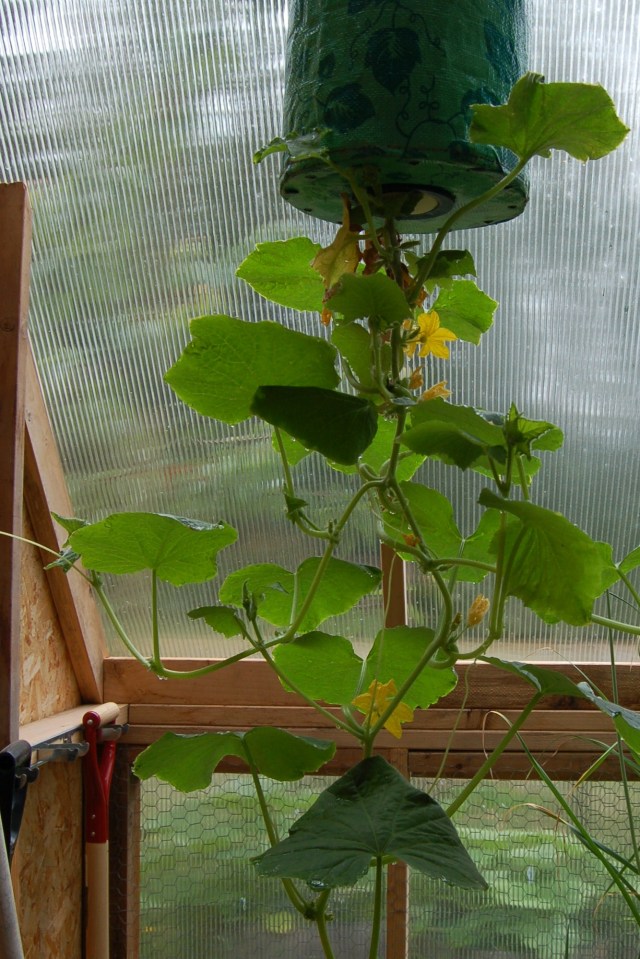
Last year, I planted a lemon cucumber in a Topsy Turvy planter and it did really well. I’m doing the same this year and already have fruit forming on this lemon cuke plant.

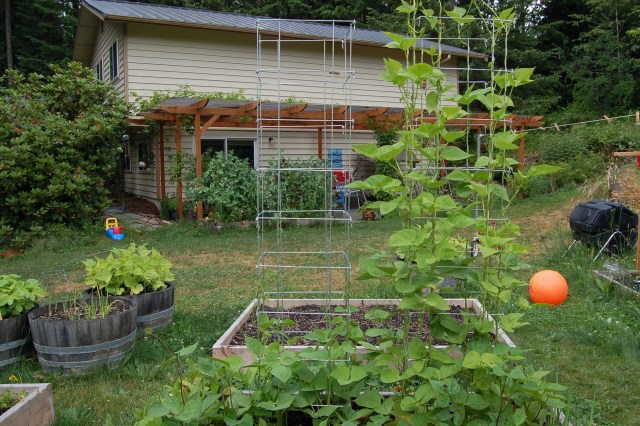
Pole bean towers

Pole bean towers

I planted two batches of pole beans at the same time and one has clearly been much faster to grow.  Santa Ana is on left and Spanish Musica is on the right.

Cinderella pumpkin plant

Cinderella pumpkin plant

In the half wine barrels, I planted a number of squash this year.  The barrels help me keep the weed situation under control, plus a more permanent home for squash and other sun intensive crops won’t be ready until we do a garden expansion sometime in the future. This plant is the antique French Cinderella pumpkin. I also have sugar pumpkin planted in another barrel.

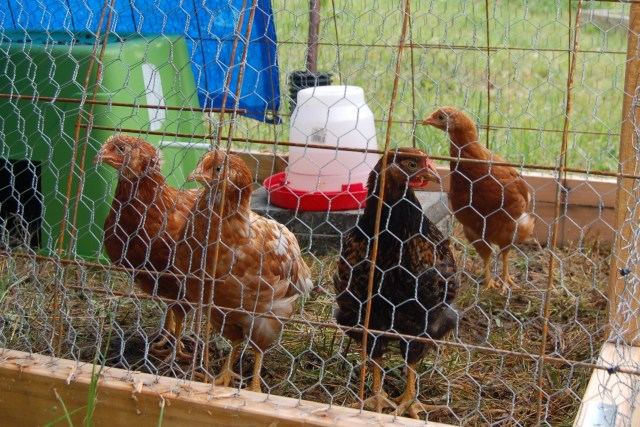
Our pullets

Our pullets

Finally, I’ll end with a current shot of our pullets.  These young chickens are now about seven weeks old.  We have three Golden Sex Links and one Golden Laced Wyandotte.  I’m starting to think the Wyandotte might be a rooster.  I guess we’ll figure out whether this is the case in the next few months.  If it is, I’m not sure what we’ll do with it since we didn’t exactly plan to have a rooster as part of our flock. 

Well, that’s it for today. I hope everyone is ready for and excited about summer, which officially begins tomorrow, June 21st.
Sandy
 

Posted in Gardening, Homesteading | Tagged , , , , , , , | 7 Comments

Photo album: June 2009 fruit & berry pollination report

By this point in the growing season, I have a pretty good idea of what my future summer fruit crop will look like. The blossoms are gone and the bees have done their work. Some crops are looking good. Others, not so much. Here’s the June 2009 pollination report.
Strawberries in June

Strawberries in June

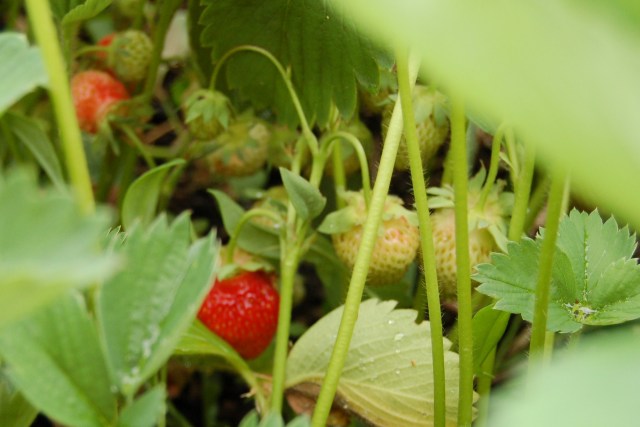
The strawberry bed is full of strawberries this year. In fact, the kids have already started raiding the bed each day.  They will eat every berry they find.  In addition to the large strawberries, we also have quite a few patches of alpine strawberries (red and yellow varieties) and these are ripening now as well. 
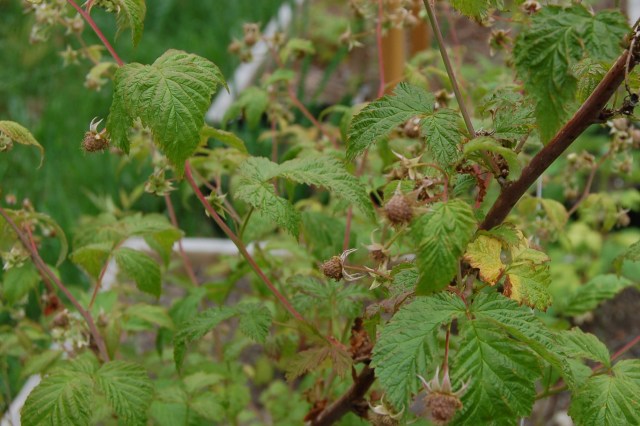
Raspberries in June

Raspberries in June

We planted two new raspberry beds this year.  We bought some new canes but also transplanted some existing canes that we had into the beds.  While nowhere near ripe, you can see that the raspberries are forming nicely.
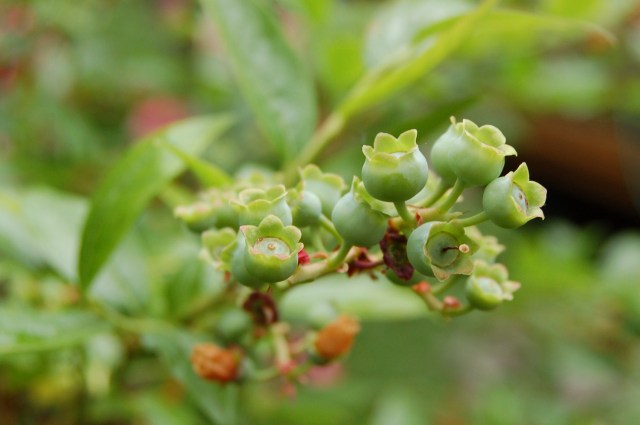
Blueberries in June

Blueberries in June

The blueberry crop is coming along nicely as well.  I have about 10 blueberry bushes in varying stages of maturity.  Two of the bushes are getting pretty large and are heavily loaded with berries this year.
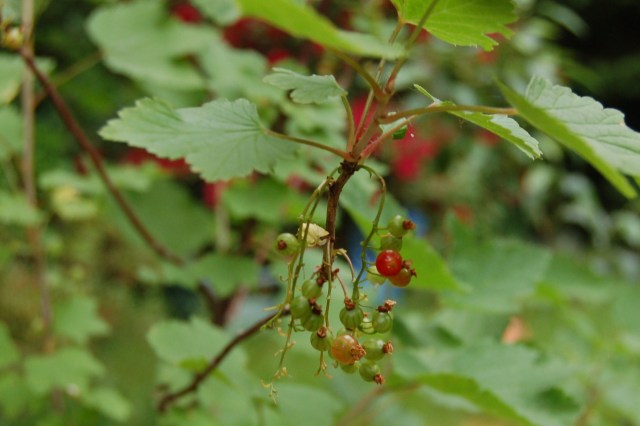
Currants in June

Currants in June

The red currants have been ripening over the last week.  The berries are tart, even when fully ripe, but the kids still love them and keep the bushes picked pretty clean.
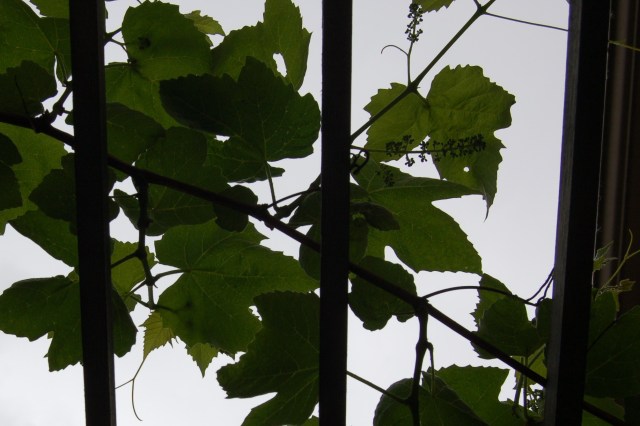
Grapes growing over the pergola

Grapes growing over the pergola

The grape vine growing over the pergola is beginning to show fruit.  Hopefully we’ll be able to eat more than we did last year when the birds stole the grapes just as they became fully ripe.
Shiro plum in June

Shiro plum in June

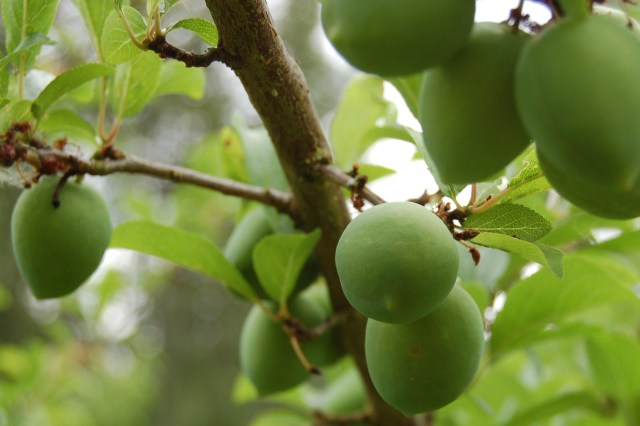
And as usual, the Shiro plum will have a heavy crop.  This is by far the most reliable fruit tree I have growing.

Other fruit trees did not set nearly as much fruit as the Shiro. This isn’t entirely unexpected because a number of the fruit trees in the orchard are only a few years old.  Here’s a rundown of the pollination in the orchard:
  • Peach trees:  I have two fairly established peach trees in the orchard.  Between the two trees I have a grand total of one peach growing.  Peaches are self-fertile so it can’t be a cross-pollination problem.  I think the varieties simply bloom when it is too cold here for the bees.  These two trees will probably be removed when I start the next phase of the garden bed expansion.  The peach and nectarine trees I have in the greenhouse are likely to be more successful. I have three peaches going strong on the mini peach tree and one nectarine on that mini tree.
  • Pear trees:  I have three trees.  Two I just planted this year so I wouldn’t allow fruit to grow on them if fruit had set.  The third pear is a little twig of a tree that has been in our yard for years.  It is the remaining growth of a larger tree that mostly died back.  The little twig is really perking up now and has four pears growing this year.
  • Cherry trees:  I have three cherry trees.  The pie cherry is a medium-sized tree that we transplanted this year (it had to be moved because of the greenhouse) so I have no expectations of a crop and am just hoping the tree doesn’t die. We also have a Ranier with a light crop and a new sweet cherry that won’t produce anything this year.
  • Apples:  We have eight apple trees.  Most are too young to set fruit.  I do have a Winesap that has a few dozen fruit this year.  Last year it had more, so I am wondering if I pruned it wrong this winter. The Gravensteins only have about a half-dozen fruit.  These require cross-pollination with two other varieties, so I think the cross-pollination has been a bit problematic.  The new trees I planted this year should help with this in the future however.  I was hoping for a better apple crop than I am getting this year.
  • Plums:  I already mentioned the Shiro and how well it is doing.  I also have an Italian Prune with a light crop and newish Schoolhouse plum that has only one plum on the tree.  The Italian Prune has been a disappointment the last few years.  This is a fairly mature tree.  We planted it at least five years ago.  Two years ago we had a good crop.  Last year was a bust.  This year is a bit better, but just a bit.  It is supposed to be self-fertile, but the fruit doesn’t seem to be setting well.
  • Kiwi:  The kiwi vine growing up the pergola is looking great this year.  Kiwis take a number of years to become establish.  This one is about five years old, so it is possible we could start getting fruit from it this year.  Fingers crossed!

Well, that’s about it for the pollination report.  Definitely not the best year, but I do have a number of fruits and berries to look forward to as the summer progresses.

Happy gardening!

Sandy

Posted in Gardening | Tagged , , , , , , , , , , , , , | 9 Comments

Garden transformation and what we’re eating

Front yard, circa 2002

Front yard, circa 2002

I’ve gardened for years, but most of my gardening experience has been with ornamental (as opposed to edible) plants.  When we moved into our house in 2002, we knew the yard needed a lot of work.  We had no idea that we’d do the level of transformation that we have done.  Take, for example, the front yard.  Originally, there was an odd, curved retaining wall heavily planted with juniper.  Beyond the wall, the yard dropped down to a fairly large slanted patch of grass and weeds that was totally useless.  Well, that had to change.

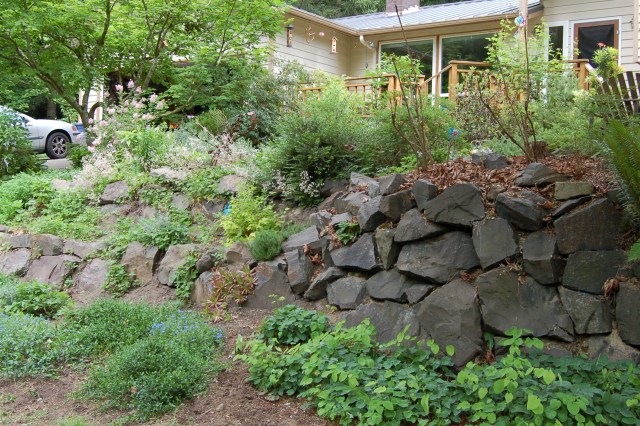
Front yard, terraced and fully planted

Front yard, terraced and fully planted

So it did change.  A few years ago we moved the retaining wall and then  filled in and terraced the sloped lawn area. We planted a variety of shrubs (including lilac), ornamental perennials (mostly flowering, including lots of primulas), perennial herbs (including lavender and rosemary), as well as lots of alpine strawberries.  The whole area makes a whole lot more sense now and we get a lot of use out of the space, something that wouldn’t have happened with the old layout. I thought it would be fun to share before and after pictures so this will be the first in a series that I’ll do from time to time.  

Switching gears, it sure is great that we’re now able to regularly harvest from our garden.  The spring crops are in full swing and we’ve been adding home-grown food to our meals as much as possible.  Here are some of the things we’ve been eating:

  • Last night Derek made an awesome lasagna with fresh chard and basil from the garden.
  • We have lot of salad greens growing and have salad with almost every dinner now.
  • The kids keep harvesting the carrots, even though they are still a bit small.  This is why I planted lots of carrots.
  • I’ve been nibbling on radishes now and then, mostly while I am working out in the garden.
  • Every pea pod that matures is swiftly eaten by the kids.  Good thing we’ve got a giant crop about ready to mature.

Many other plants are on the verge of maturing so we’ll have a lot of new foods to weave in to our meals as the season goes on.  I hope everyone has enjoyed these last two amazingly beautiful weekends.

Sandy

Posted in Gardening | Tagged , , , , , , | 5 Comments

Clothesline season, garden disappointments, and corn

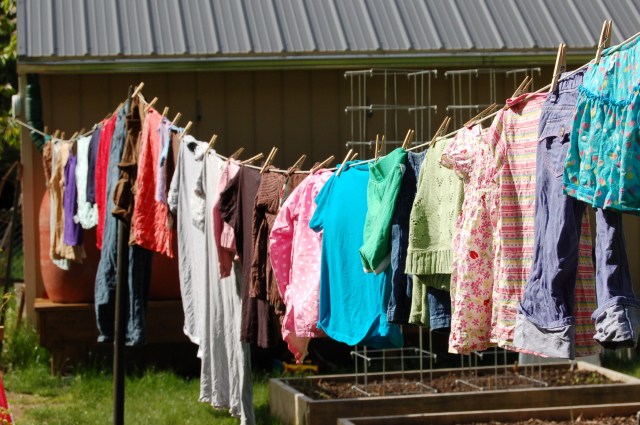
Clothesline in use

Clothesline in use

A beautiful sunny weekend gave me the perfect opportunity to kick off the clothesline season for the year.  As I’ve previously written, our highest electricity usage happens on the weekends, which is when I do all the laundry. On a nice, sunny day I can easily dry two loads of laundry on the line per day.  Over a weekend, this reduces my dryer usage by 66%. This is great from an energy use reduction standpoint.  Plus, the clothes smell great.

Asparagus bed, May 2009

Asparagus bed, May 2009

My biggest gardening disappointment so far this year has been the asparagus bed. Last fall, I put a lot of work into prepping the asparagus bed for a spring planting. When the asparagus crowns arrived, I planted all 25 of them exactly as directed.  And then I began the wait.  About a month ago, the first shoot appeared. And then I waited some more.  Out of the 25 crowns, I’ve counted eight little wimpy asparagus shoots so far.  I’ve heard asparagus can be difficult to establish, and my experience so far is proving this to be true.

Spinach in greenhouse, bolted

Spinach in greenhouse, bolted

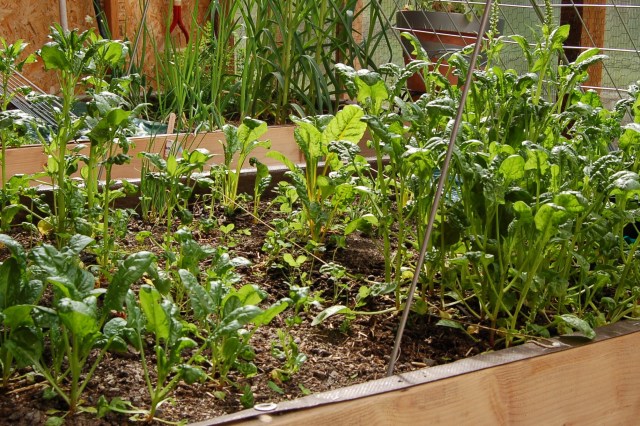
 This is a much more minor disappointment, but I’ve learned it is not a good idea to do a second spring spinach planting in the greenhouse.  As you can see, the greenhouse spinach has already bolted, which means the temperature is signalling it to go to seed. I’m going to need to harvest all of this today.  Guess we’re having spinach with dinner tonight!

Canoe peas, sparse germination

Canoe peas, sparse germination

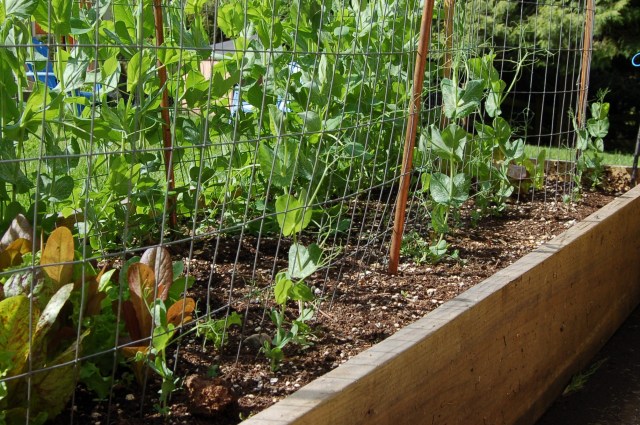
Another disappointment this year, the planting of Canoe peas.  In the foreground, you can see that the Canoe peas did not germinate consistently.  I’d say that only 20% of the seeds I first planted actually germinated.  I did a second planting a few weeks later and had a few more germinate, but the plants are not nearly as dense as I would like. Certainly not as dense as the Oregon Sugar Pods that you can see in the row behind.  I won’t be including the Canoes in my planting plan for next year.

Golden Bantam corn

Golden Bantam corn

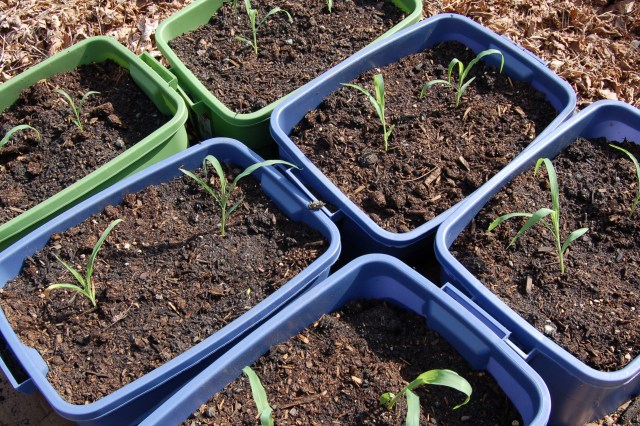
Switching gears, here you can see my little corn patch.  I planted the corn in the leftover tops of the bins I used to make self-watering containers.  These containers are sitting on top of a lasagna planting area that I’m building up over time. When I’m finished growing the corn, I’ll simply remove the tops of the bins and the soil will become part of the layers of materials I am using to build a large new planting area.  I’ve never grown corn before, so we’ll just have to see how it goes.

 I hope everyone has been enjoying the spring so far this year!

Sandy

Posted in Electricity usage, Gardening | Tagged , , , , | 3 Comments