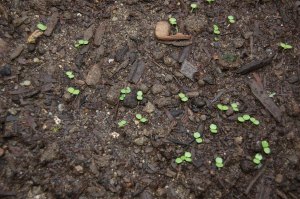
Cabbage and broccoli seedlings

Cabbage and broccoli seedlings

White Doyenne Pear from Raintree Nursery
The seed and plant catalogues have been arriving in droves. I’m the target market, they know it, and the marketing efforts have been successful. About a week ago I placed an order for all the seeds I should need this season. I thought I was done. Then, I picked up the Raintree Nursery catalogue. In a few months, I will be planting a lovely White Doyenne Pear, purported to be the “world’s most delicious fruit.” Nevermind the fact that I didn’t need a pear tree. Last fall I order a pear tree grafted with three different varieties. I also ordered two more apple trees, and miniature peach and nectarine trees. Oh yes, there is also the asparagus and rhubarb that will be arriving and all sorts of seeds. I’ve ordered so many things (and I haven’t kept track) that I am sure to find a surprise or two in the nursery deliveries. But come on, how could I resist a pear like a “fine, rich buttery chardonnay, sweet yet tart, with musky undertones and a strong perfume”? I couldn’t. I couldn’t resist the high-bush cranberries I happened upon on the site either.
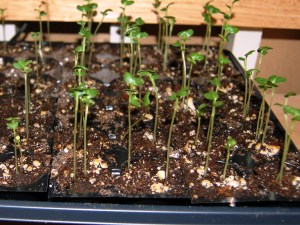
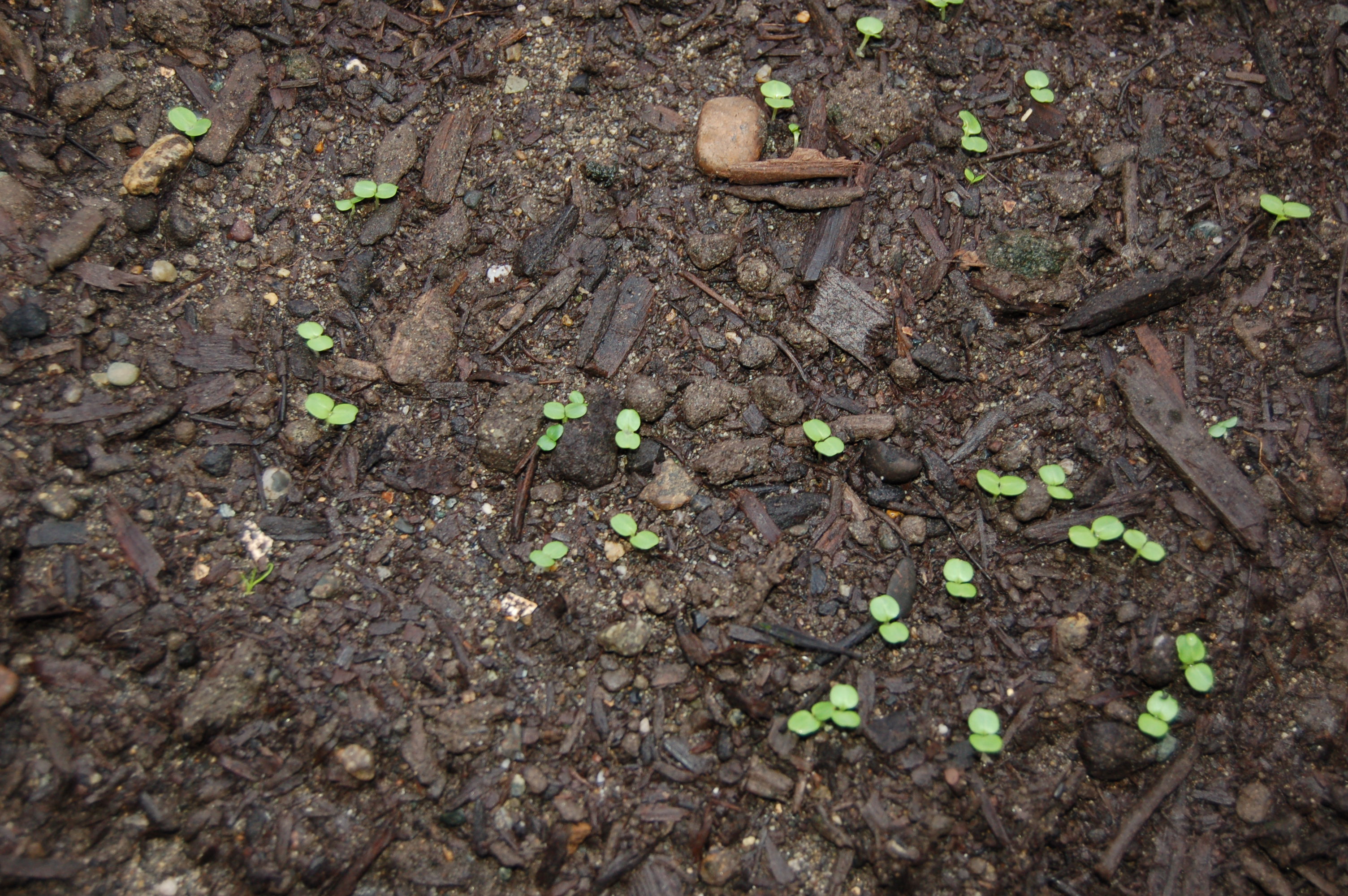
In addition to leafing through all the catalogues, I’ve planted my first seeds of the season. DoubleD at The Modern Victory Garden published a really great seed starting schedule page on her site. It’s just the thing an amateur food gardener like myself needs. Following the scheduling, the onion and lettuce seeds are now on the heat map under the grow lights and in a few weeks I’ll start the cabbage and broccoli. Thanks, DoubleD, for putting together such a helpful page.

Overwintered carrot in the greenhouse
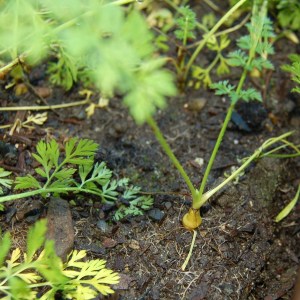
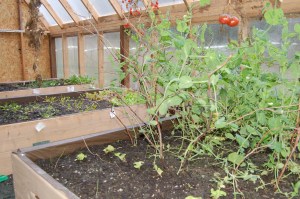
Out in the greenhouse, there is some noticeable activity. The garlic I planted last fall has sprung up. The bunching onions are looking good. The mache continues to grow, although slowly. And the carrots and lettuce planted in the fall are perking up. I think they have overwintered successfully (so far) and I’m hopeful I’ll be able to have an early crop of each.
Happy gardening!
Sandy

December electricity and gas usage
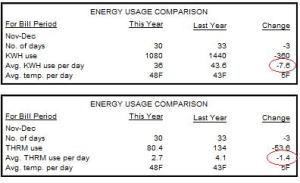
Our December utility bill (covering mid November to mid December) shows our best energy reduction results so far. Our daily average K HW usage for electricity was down 17%. Our daily average THRM usage for natural gas was down 34%. There are two primary reasons for the latter in particular: 1. The average daily temperature was 5 degrees warmer compared to last year, meaning the furnace didn’t have to work as hard, and 2. We’ve been really good at keeping our thermostat set to 68 degrees.

Greenhouse lettuce in December
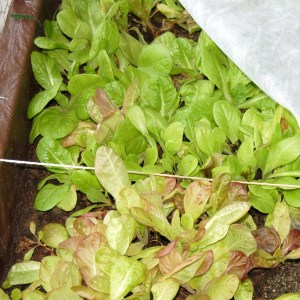
Out in the greenhouse, temperatures have dropped significantly. While it typically stays 10 – 15 degrees warmer inside than outside (sometimes requiring a small propane heater), that’s not saying a lot when the low temperate of the day is 8 degrees. A few days ago we moved our lime tree inside the house because it isn’t exactly a plant that can handle sub-20 degree temperatures. Today I did the same for the lemon tree. Pretty much everything in the greenhouse that was growing (pepper plant, pea pods, broccoli and cabbage plants) is now kaput, except for the lettuce. A few weeks ago, I put a floating row cover over the lettuce bed. When I pulled it back today to see how the lettuce has weathered the cold, definitely sub-freezing temperatures, I was pleasantly surprised that it looks fine.
The other interesting challenge of such cold weather is taking care of the chickens and goats. And the biggest challenge by far is how quickly their water freezes over. Giving the goats access to water requires boiling water and a hammer. We bang through the layer of ice and then pour in boiling water. Of course, this needs to be repeated later in the day. We’ve also started taking the chicken water into the garage at night so that it doesn’t completely freeze. We take it back out in the morning when we let them out of their coop. Later in the day, we have to go back out with boiling water and thaw it out again. Luckily, the weather doesn’t seem to be bothering the chickens too much. When I researched chicken breeds, I specifically looked for cold-hardy birds that would lay well in the winter. They appear to be doing both. We are consistently getting 2 – 3 eggs from them even on cold days.
Stay warm!
Sandy

Oregon Giant pea plant in December
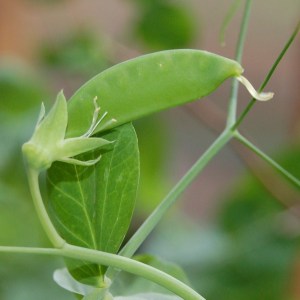
Last post, I noted that I have quite a few pea blossoms in the greenhouse. I wasn’t sure if I’d actually get any pods though. That question has been answered. Now, I’m not exactly thinking I’m going to get a bumper crop, but it is fun to see fresh pea pods growing as we head into December. As I’ve said before, the greenhouse is unheated so we’re pretty much dependent on whatever happens weather-wise and so far we’ve been lucky. We haven’t even had a frost yet, though I hear other pockets of the Puget Sound area have. While we are now starting to get a few pea pods, I did also notice a problem with the pea plants. Some of the blossoms are starting to get moldy. Another reason we need to complete the ventilation system . . .
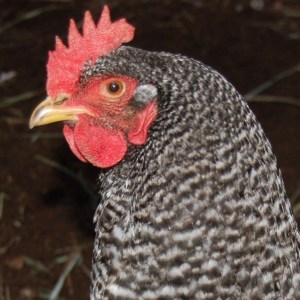
In chicken news, Salty, our Barred Rock chicken, has started laying eggs. We now how two chickens laying eggs and we’re reliably getting two eggs every other day now. Way to go Salty!

Salty, our Barred Rock
And finally, our new plan. We have a pretty long to-do list already, but lately Derek and I have been talking about adding one more item to the list, a root cellar. I have pretty big plans for expanding the garden next year and have started to think about how to store what we produce so that it can last as long as possible. Doing a little research, I’ve started finding all sorts of information about root cellars. Apparently, interest in root cellars has been growing. A quick search even found an article on the New York Times site, “Food Storage as Grandma Knew It,” about urban dwellers setting up root cellars. There are all sorts of ideas for root cellars. Everything from traditional partially underground cellars to cellars in a basement to converted and buried old freezers or refrigerators. Not sure what we’ll do yet, but we are both intrigued. Guess we’ll officially add this one to our list.
Sandy
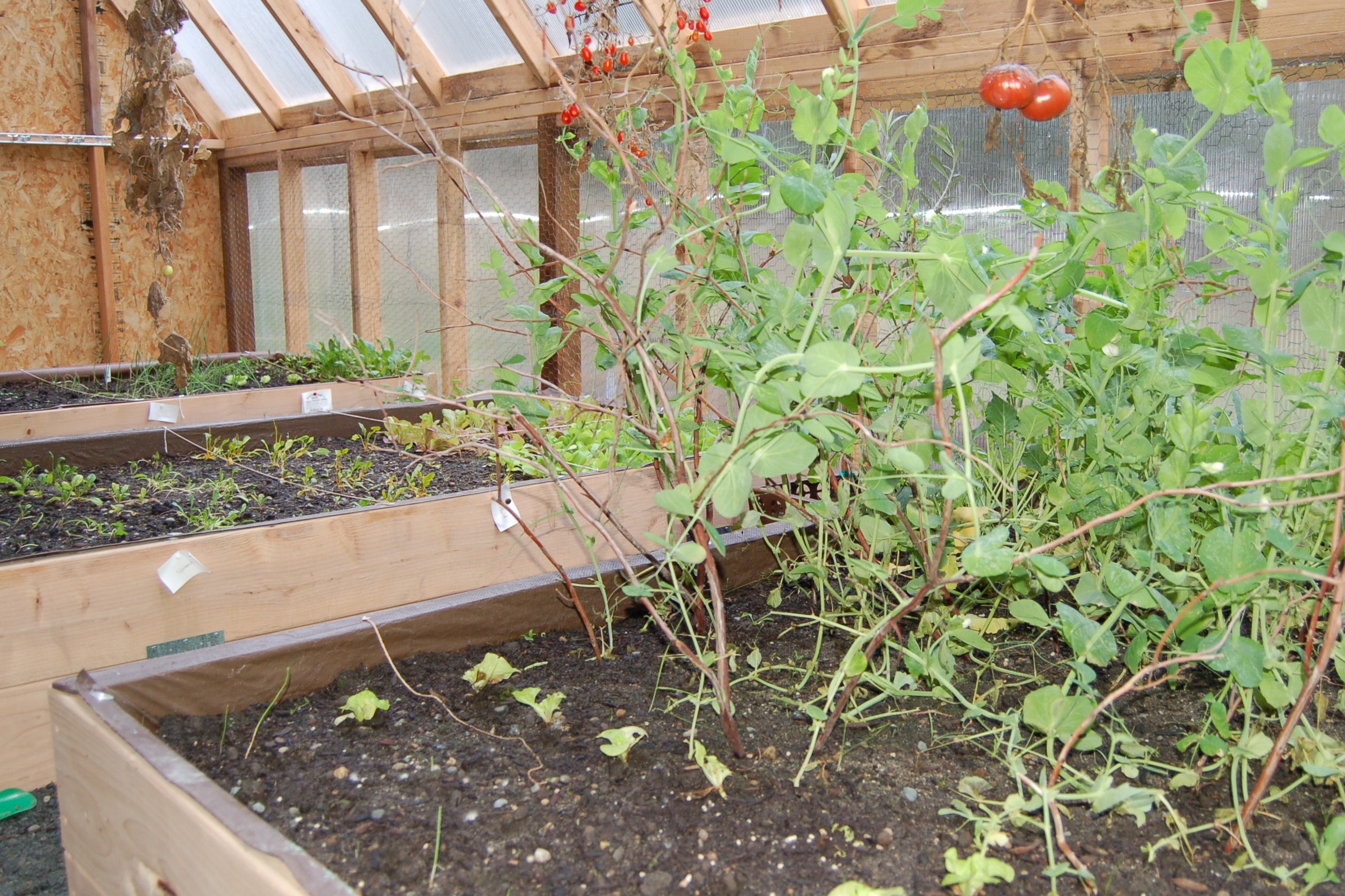
We finished building the main greenhouse structure and the beds within the greenhouse in early September. We didn’t actually finish the project, however, and likely won’t finish it until next spring or summer. First, we have some automatically opening vents we need to install. Second, we never finished setting up the heat sink system. This means that venting the greenhouse is really manual (opening up the front panels and door) and we don’t have any additional heat. So, this fall the greenhouse is pretty much like a giant cold frame. It is certainly a better climate in the greenhouse than outside, but I think it will be a better environment overall when we actually complete the project. That said, there are some interesting things going on in the greenhouse, even in its current state, as we head toward the end of November. Some are successes, and some are not, but I am learning a lot about how to grow in such an environment and expect that we’ll be able to make increasingly better and more efficient use of the structure in the future.
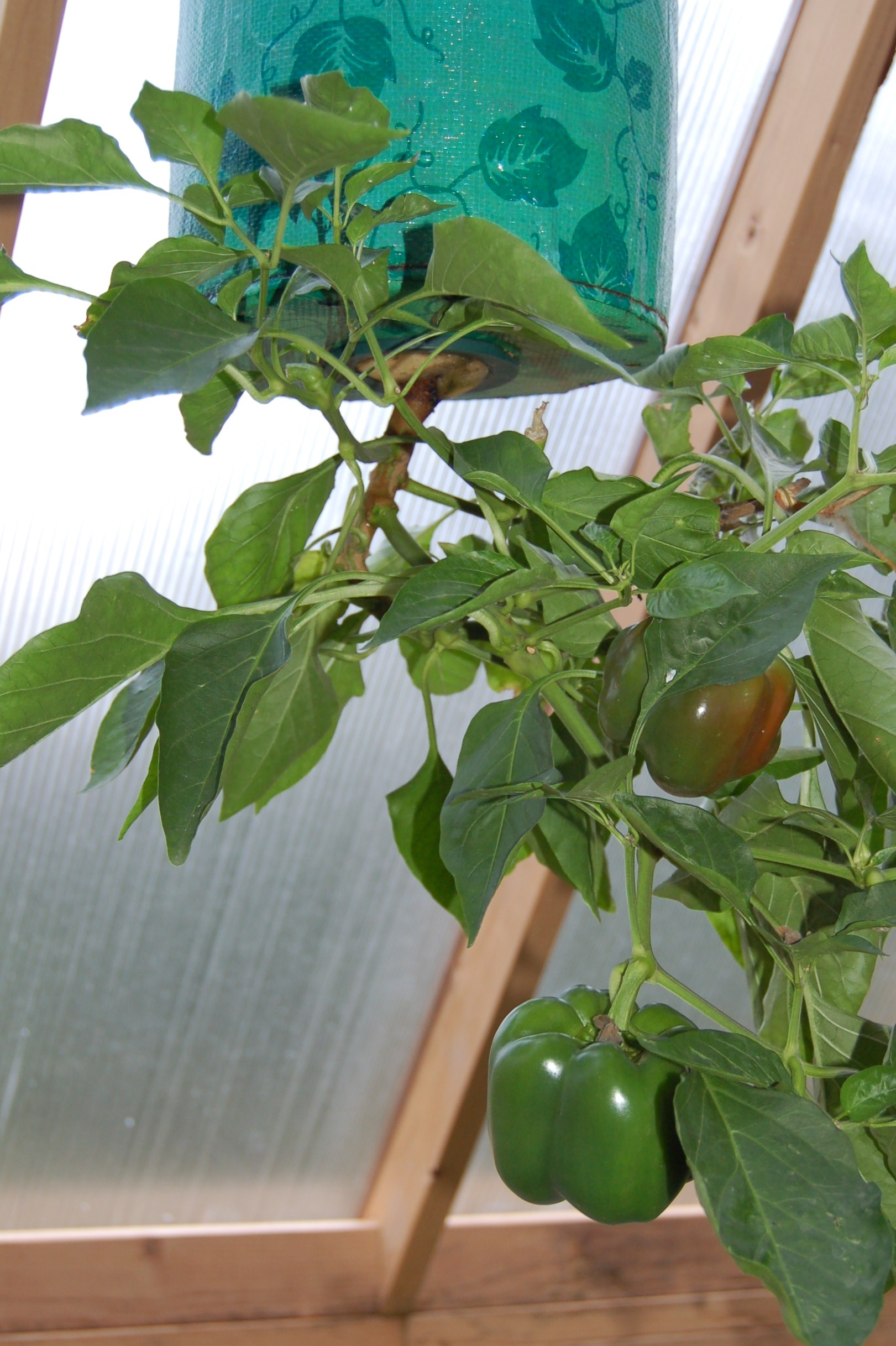
I’ll start with a success. This is the only pepper plant I planted last summer and I am still getting peppers off the plant. Growth has of course slowed, but the peppers continue to redden. I plan to plant a whole lot more peppers next year and will probably dedicate six hanging planters to peppers alone.
Our lettuce plants are also doing well, though growth has slowed.
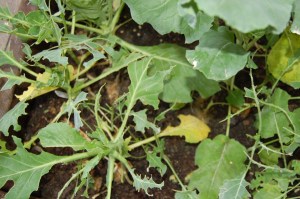
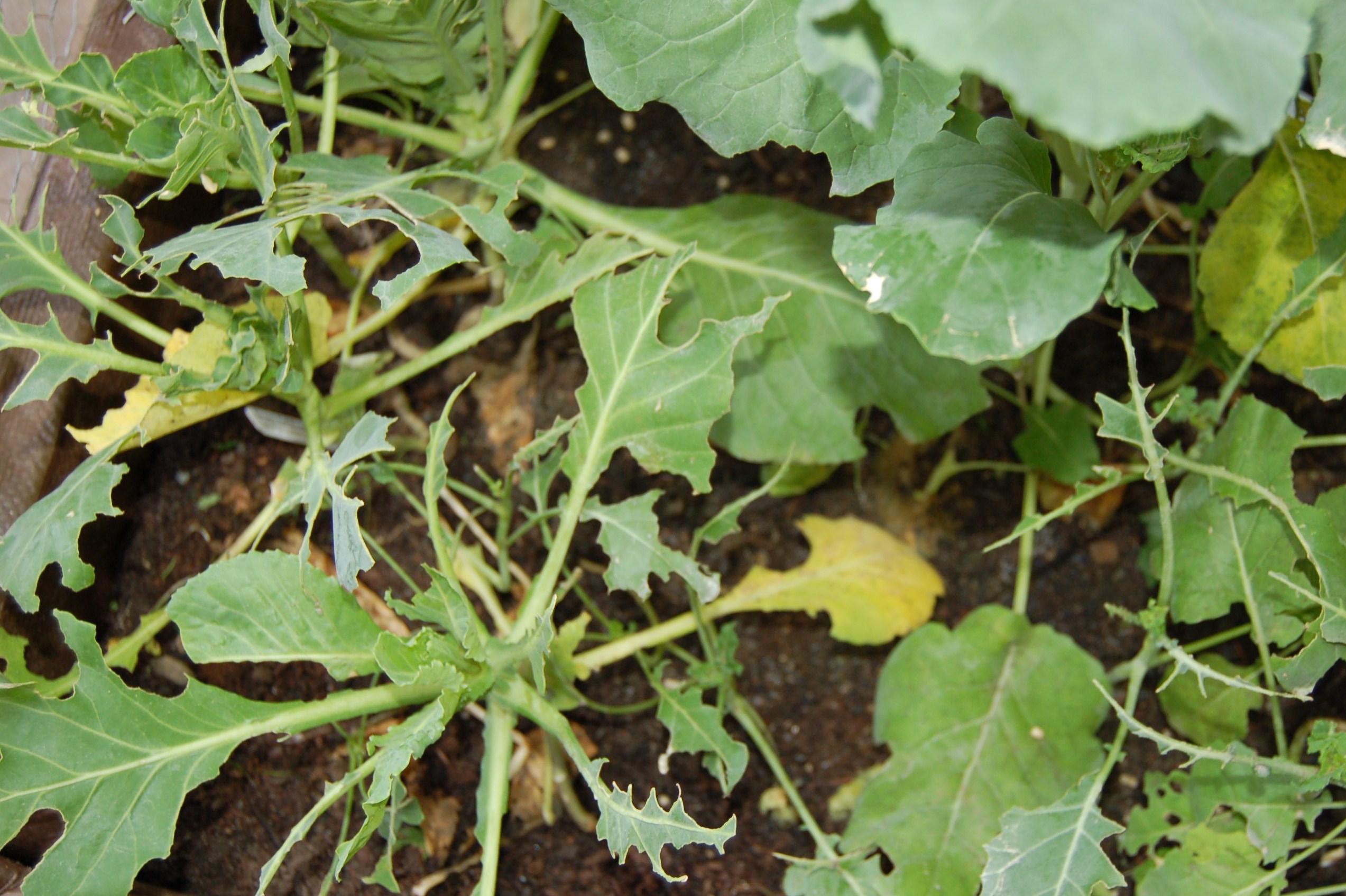
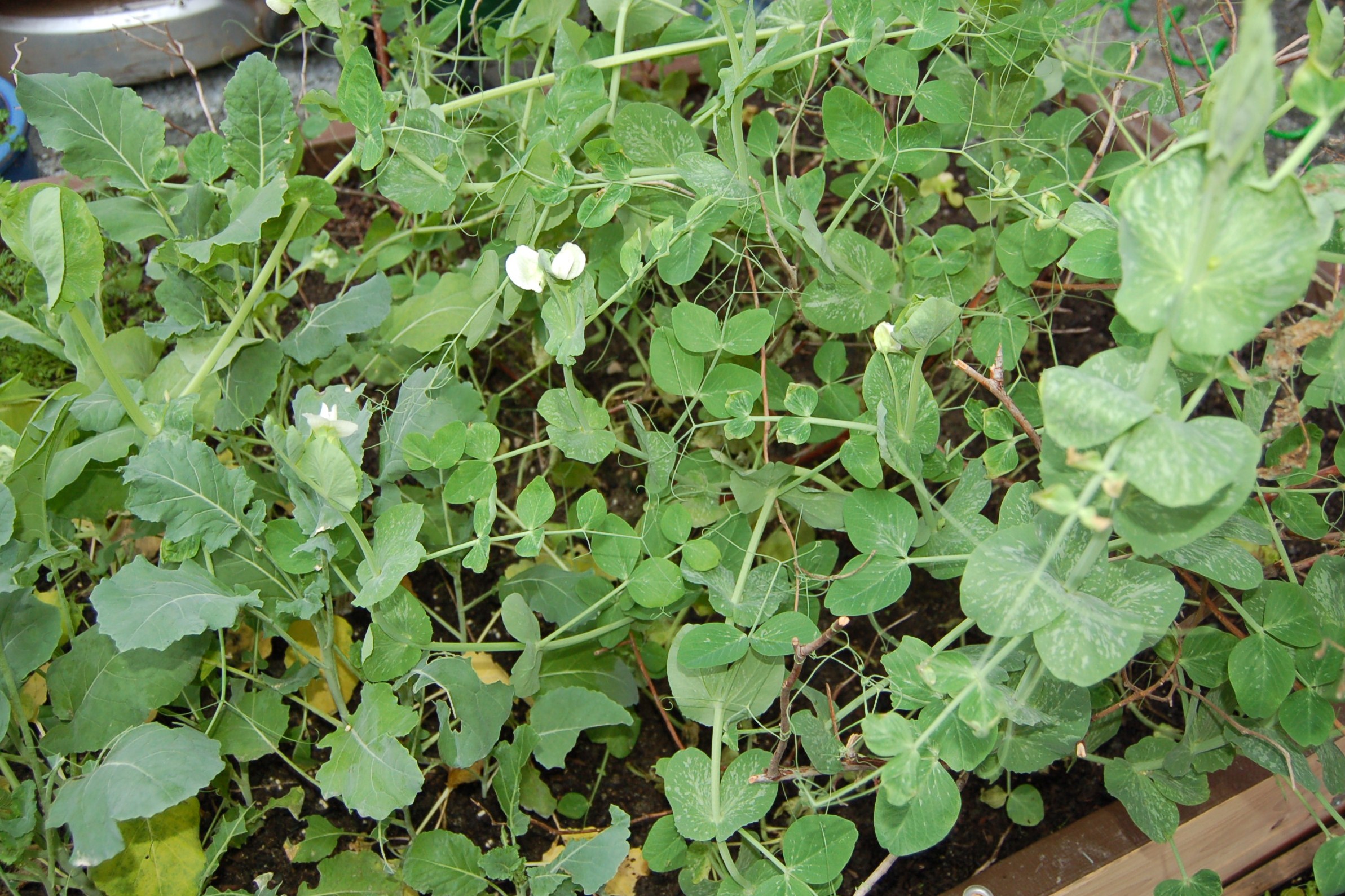
Next, I have a failure. The cabbage (and broccoli) that I planted has had two major problems. First, it was planted too late. It probably needed to go into the ground a full month earlier than it did. Second, the plants have had serious insect problems. I did find a few green caterpillars, which I pulled off and destroyed. I also found aphids (or something similar) on the backs of some leaves. I first tried spraying the plants with an organic insectide. The problem continued so I tried mixing up a potion from the Terrific Garden Tonics book. Neither worked. Then I started thinking that maybe rodents were nibbling away as well, so I put a mouse trap in the greenhouse. I’m not even sure if mice would do this, but nothing I’ve tried so far has worked. Haven’t caught a mouse yet and the damage continues.
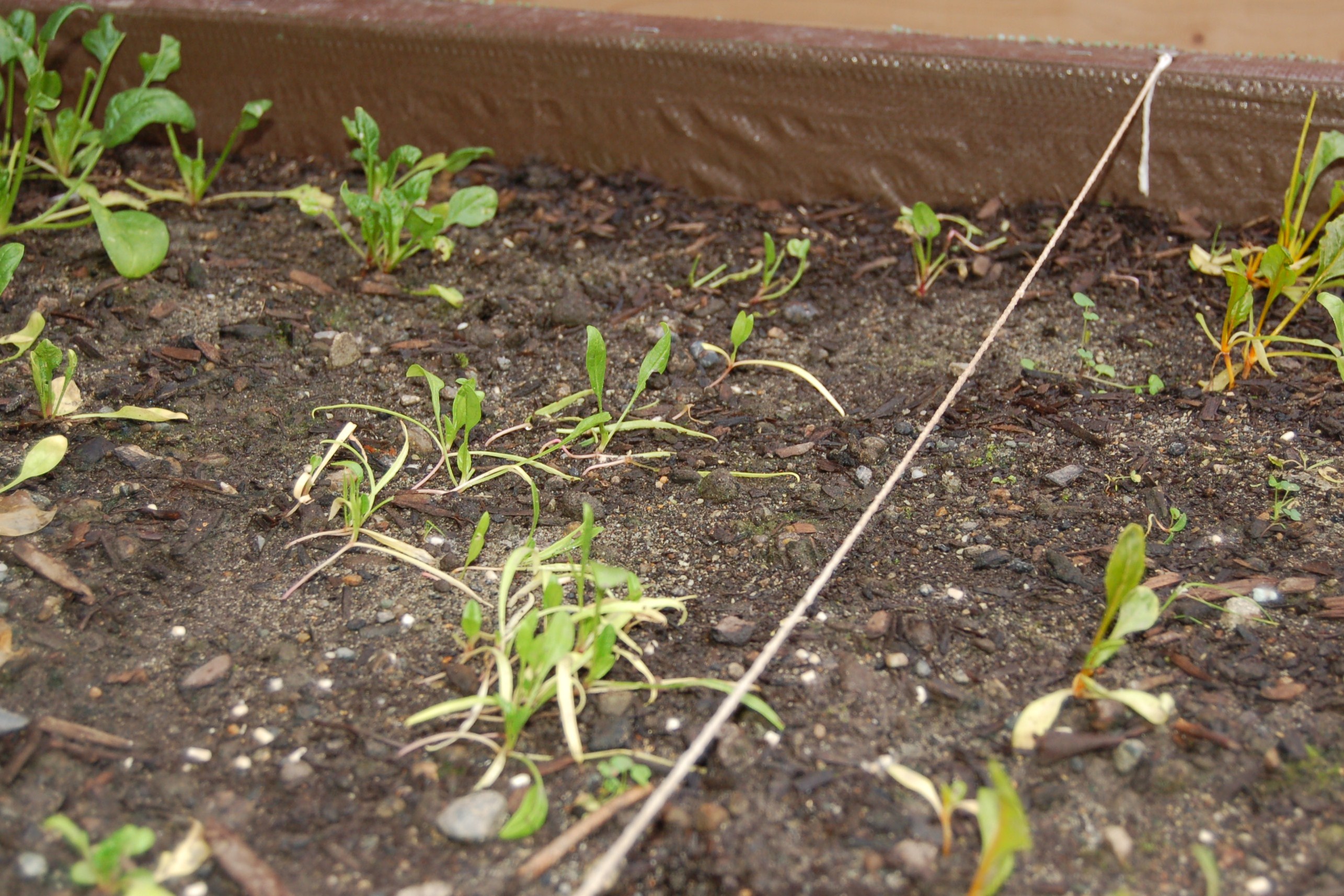
The same two problems (late planting and insects) have been factors in the problems I’ve had with the spinach and chard as well. They both sprouted nicely but then growth slowed significantly as the days shortened. Plus, the growth there is keeps getting nibbled away by insects.
Neither a failure or success, next I have the Oregon Giant pea plants. The plants are nice and large in size and they are flowering, but I have no idea if we’ll actually get pea pods. At this rate, the pods wouldn’t actually be formed until we’re into December, and I’m thinking that doesn’t sound too likely.
Next, an experiment. While looking for a winter greens crop, I kept running across mache. I don’t believe I’ve ever actually eaten mache, but it is supposed to do well during cold months and the description sounds nice, so I thought I’d give it a try. The first week in November I planted some seeds in the greenhouse and some outside. Those outside haven’t even germinated yet.
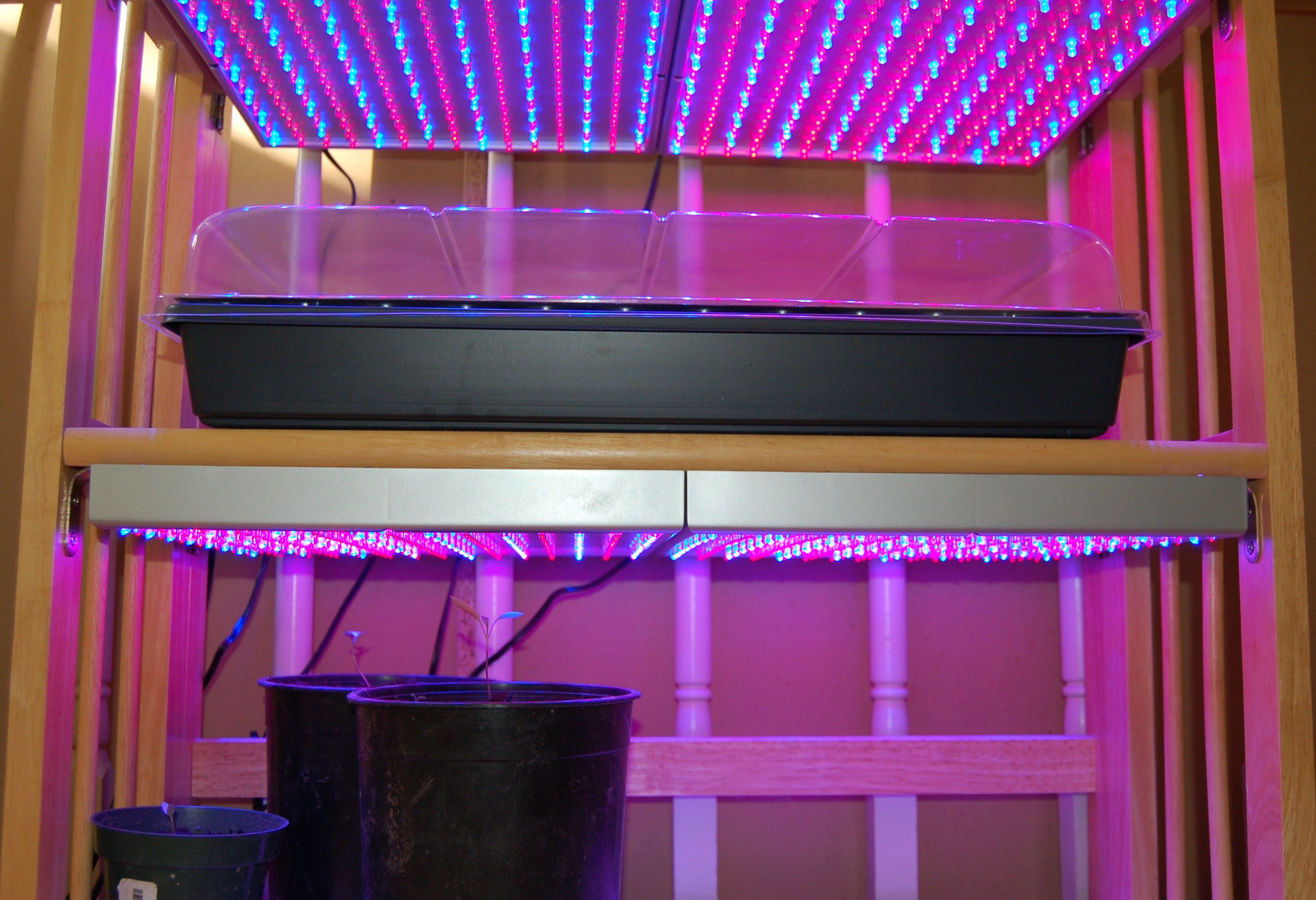
And finally, I’ll end with a forward-looking project. Inspired by DoubleD over at The Modern Victory Garden, I’ve set up a seedling starting system by taking an old bookshelf and attaching grow lights. I found four blue/red LCD grow light panels on eBay and Derek attached them to the shelf for me. I selected the LCD grow lights because of their low energy usage. Each panel uses 13 watts. I also ordered two grow mats. These use 17 watts. I can light up and heat a whole shelf for 43 watts — not bad! Since I am new to this, I plan to follow DoubleD’s guidance as I start using grow lights and heat mats to get a jump start on the spring season. Here’s how my set up looks:
Happy gardening!
Sandy
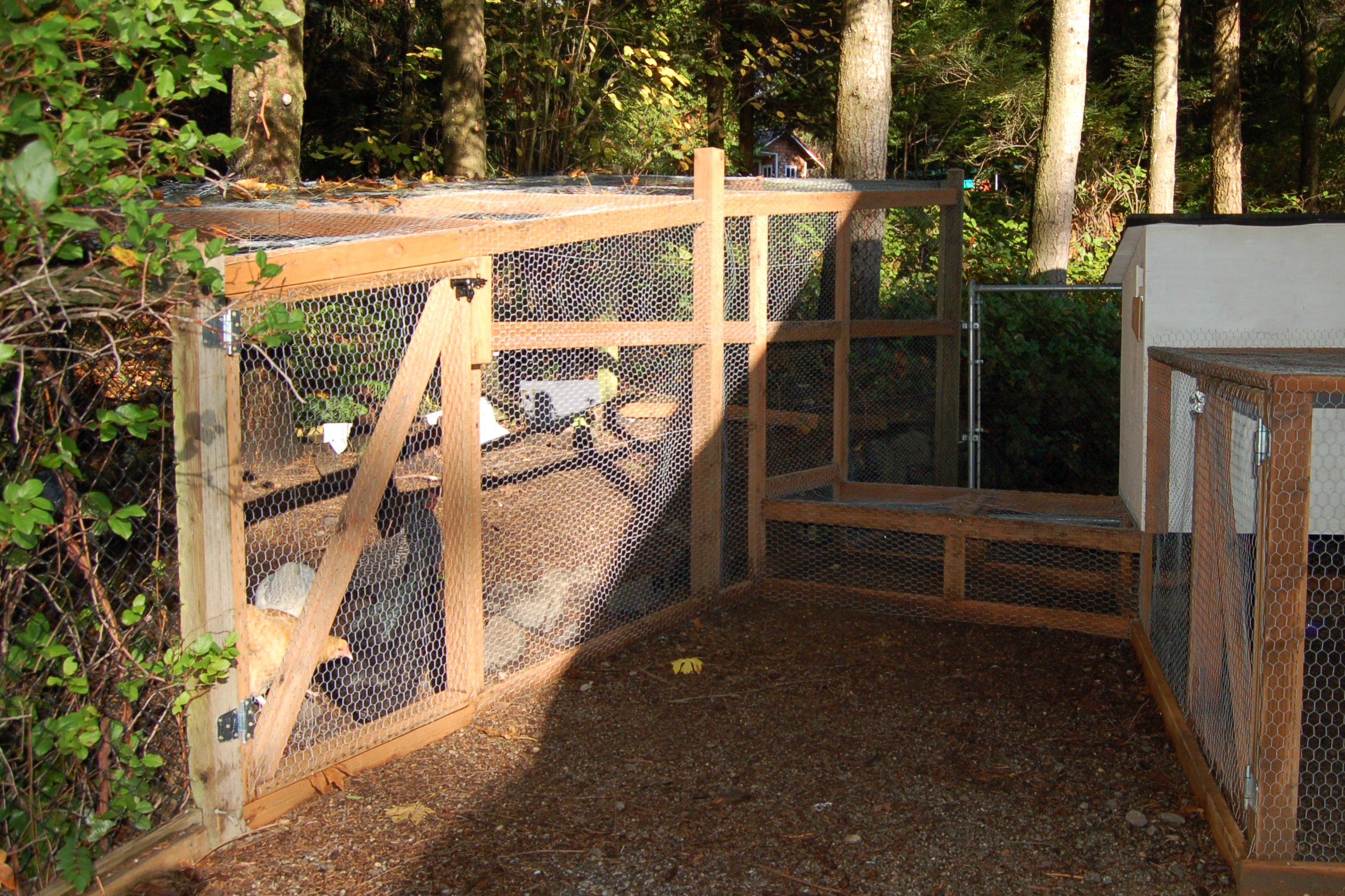
Hindsight being 20/20, we realized after the fact that we could have sited the chicken coop and run better. We originally decided to place them close to the house because it was the only fenced area. I still think this was the right idea. We didn’t realize, however, that we could have fairly easily taken advantage of part of that fenced in space to create a much larger, enclosed chicken run, giving the chickens both a lot more space and more light. We briefly contemplated trying to move the existing coop and run, but it was just way too heavy. Then we start thinking about how we could enclose the new run area and connect the two, while still allowing us to walk through. This eventually led to the idea of making a chicken tunnel connecting the two spaces (we will be putting steps on each side of the tunnel so we can easily walk over). The chickens can now roam between the existing coop and run and the new “north wing.” Hopefully happy chickens will mean more eggs.
Sandy
I used an 8′ pressure-treated 4×4 (buried 18″ in the ground) to anchor the center of the new fence line, with new pressure-treated 2×4 boards for the fence ‘stringers’ and ‘roof’ (where I anchored the chicken wire). I enclosed the top and new side with chicken wire (we may add chicken wire to the inside of the hurricane fencing as well) and built a new gate for the north wing and chicken habitrail. Sandy had the idea to use left-over metal roofing material to block spots where we thought something might try and dig under the fence (this is a temporary solution), which were screwed to the existing fencing. I still need to build the path over the top (out of 1×4 decking) and the steps, but that might wait until next weekend. All it cost was the raw materials, a new pneumatic stapler (yay, tools!) and a trip to the E.R. for a smashed thumb (no broken bones, thankfully). The day I finished it was the day we got our first eggs, so, while it isn’t necessarily causal, I’d say it was worth it.
Derek
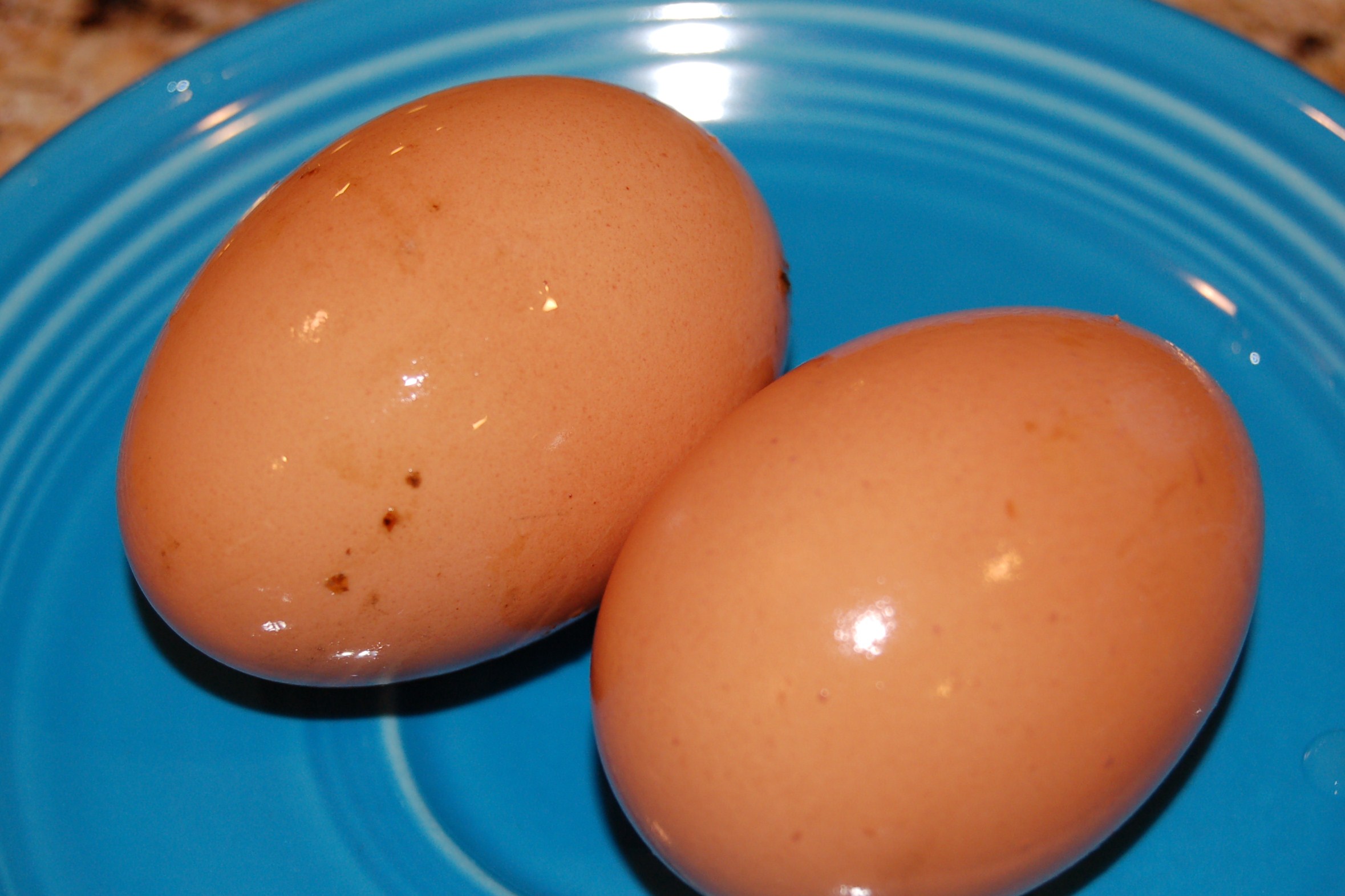
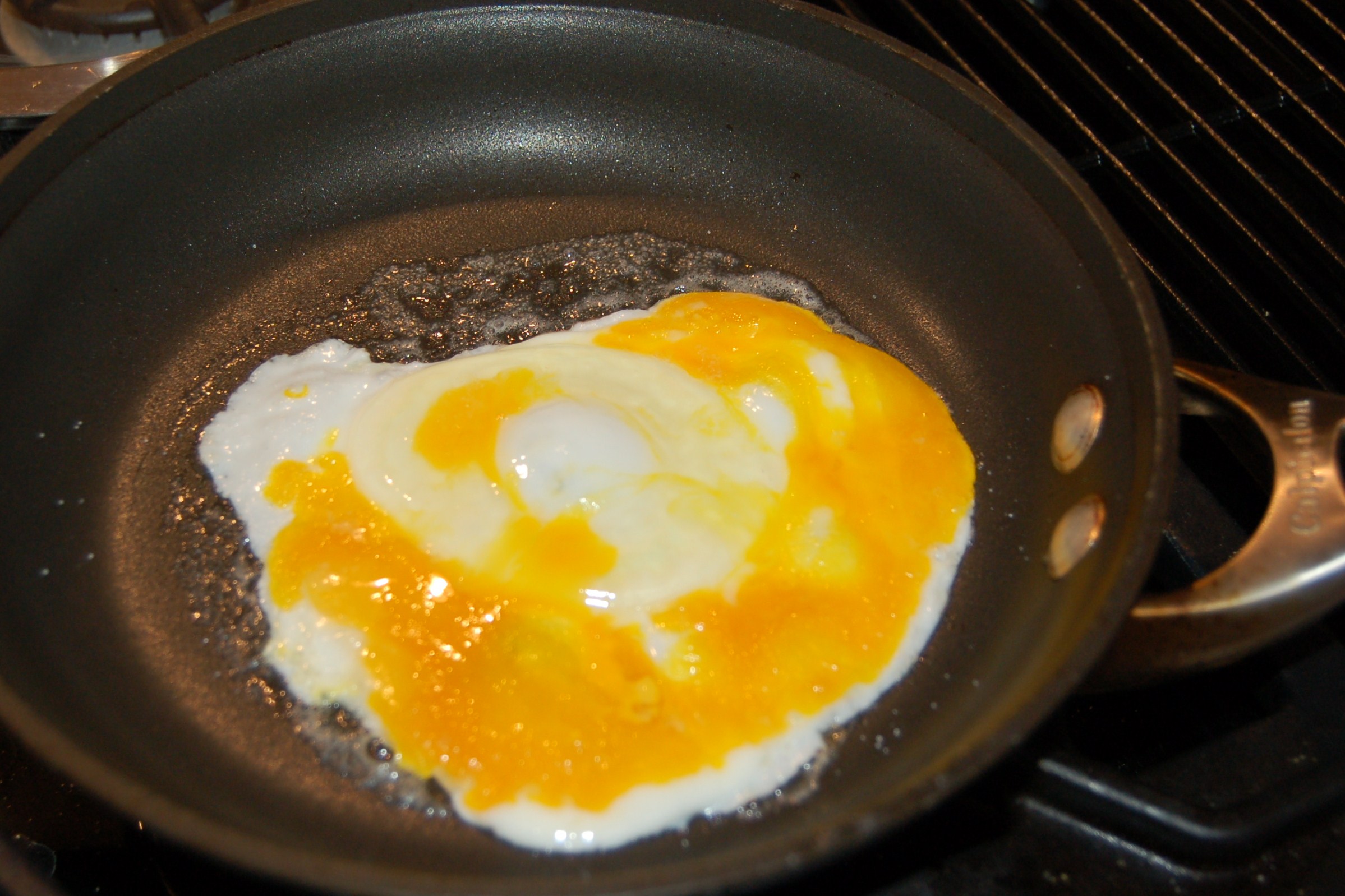
I’ve written previously that our chickens have been getting idle threats that they are heading to the stew pot if they don’t start laying soon. This threat is made even more idle by the fact that I don’t even eat chicken. When we bought the chickens in August, we were told they’d start laying in a few weeks. Clearly, the chickens were younger than we thought. Nine weeks after getting our chickens, I opened the coop today to find two eggs! Now they actually deserve the big chicken coop/run extension that Derek has been building. This project will be done this weekend and we’ll be sure to post pictures of the “north wing” in a few days.
Update: I had a request to see a picture of the egg yolk. The yolk is much closer to orange than the paler yellow you tend to see in store-bought eggs.
Sandy
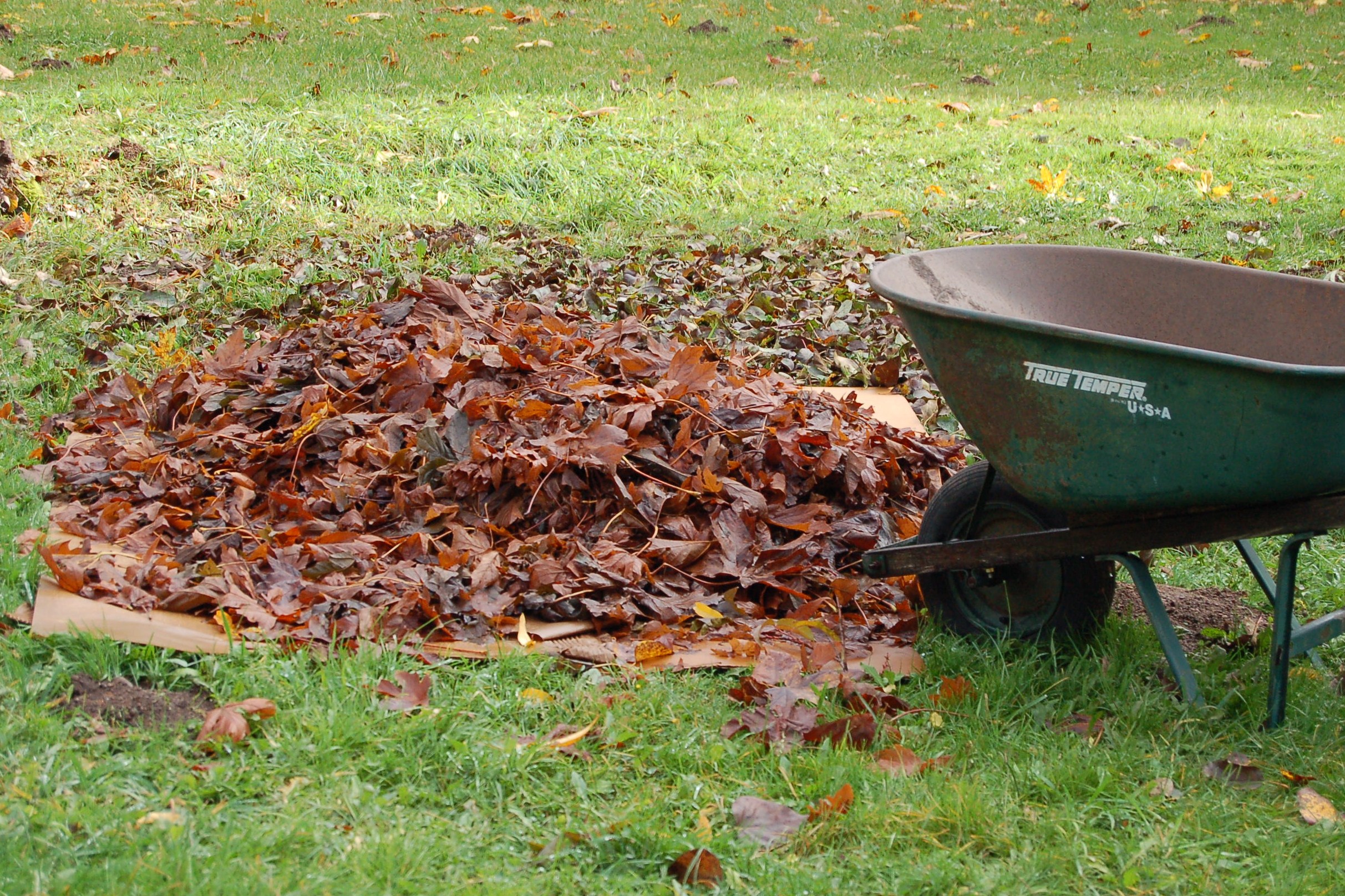
A good portion of our lot is wooded. I’m talking very big, very tall trees native to the Pacific Northwest. Most of the these trees are evergreen, not requiring much work, but we do also have native Big Leaf Maple trees. The name says it all. Big leaves. And lots and lots of them. In years past, the dropping of these leaves has been nothing but a nuisance. What to do with all those leaves? Typically, we’ve raked them into a sloped area near our driveway and forgotten about them. This year, though, I better understand what the Big Leaf has to offer. Leaves are a great ingredient in composting. I’m a beginner at composting, so a site like Seattle Tilth will tell you all about it much more effectively than I could. Simpler than mixed ingredient compost, leaf mulch is essentially just leaves that have been piled up and have broken down. Some sites recommend that you mulch, or chop up, the leaves to help them break down faster. As you can see, I did this to cover the new rain barrels and raised beds. By the spring, once the leaves have broken down, they can be used as you would any mulch, for weed suppression and moisture retention. You can also dig them into food planting areas to build up organic matter and improve the overall quality of the soil.
I’m also using the leaves for a lasagna planting area that I’m starting to work on. Lasagna gardening is a lower-overhead way to prepare an area for planting. Instead of digging up an area or tilling, you build on top of the ground, as it is, by layering newspaper or cardboard and then layers of organic matter than you have available. Well, we have leaves. Lots of leaves. So I’m using that as the first layer. We also have goat manure and straw, which is going to be another layer. And then more leaves, and then I’ll figure out what next. And then we wait until next spring for it all to break down into plantable organic material. As you can see, the lasagna garden, while theoretically less work, does require planning.
Still, even with the lasagna gardening project and the general leaf mulching I’ve got going on, we will have many, many more leaves than we can deal with. Right now, the lower part of our driveway, the location of our second Big Leaf, is completely covered in leaves. It’s looks quite pretty right now, but I know it isn’t going to take long before it becomes a big unsightly mess. Sounds like the perfect time to call for the help of my 13-year-old nephew. He likes earning money and I always, always have a job for him. I’ll also offer up leaves to any of my local gardening buddies who aren’t so fortunate as to have Big Leaf Maples in their yard. If you need more material for your compost bins, the leaves are free for the raking. Just shoot me an email and we can work out the details.
Update: In the fall of 2011, we decided to part ways with the big leaf maple among other reasons to make way for our solar installation.
Sandy
We’ve had a number of projects going lately and I wanted to share the results of some of this work. Here goes in a quick photo album.
New raised beds and wine barrel planters
Gardeners must be among the most optimistic of people. This weekend, with the help of my brother, father, and nephew, we spent a good amount of time preparing beds that will be planted this spring. This involved the construction of the beds, moving heavy wine barrels, and filling these with combinations of soil, goat and chicken manure, and fall leaves. Out of all of these, the one that requires the most patience and optimism is the asparagus bed. We put in a lot of work into this bed this fall, will plant it in the spring, but will then have to wait about three years before we can really start harvesting crops.
So I was thinking about the wine barrels and how to cover them in the spring and fall to extend the season. I’ve seen cloches and other items on gardening sites, but they tend to be pretty expensive. Then I thought about umbrellas. I found some inexpensive ($6) bell umbrellas and they fit right over the barrels. I’ll give this a try and see how it works.
Phase one of major infrastructure improvements
We’ve written that we need to replace our roof prior to making any investments in solar. Well, we can check this one off our list. As of today, our new metal roof has been completely installed. It looks great, will be low maintenance, and will serve as a great foundation for future solar installations.
Sandy
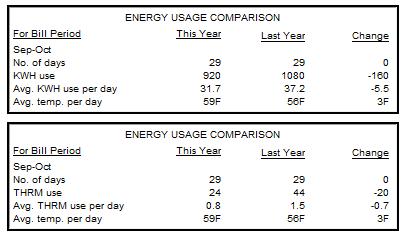
At the mid-point each month, I look forward to getting our energy bill to see if any of our energy-saving measures are starting to pay off. So far, I’ve only seen small improvements. This month, however, the improvements are noticeable. I’ve received feedback from readers who are much more knowledgeable in energy use reduction than I am that looking at month-over-month changes is not nearly as telling as looking at year-over-year changes, since usage patterns vary considerably based on seasonal factors. Looking year over year, our electricity usage is down by 15% and our gas usage is down by 45%. Since our furnace is by far our biggest user of natural gas, I credit reprogramming our thermostat and keeping the temperature at 68% as being the reason behind the improvements. I do think we can squeeze out a bit more efficiency by continuing to optimize the thermostat programming, primarily with trying to move the “away” temperature down more to see if we can do so without causing any problems. In spite of these improvements, it is clear we have a long way to go in improving our electricity usage. Our current usage, 920 KWHs a month is still pretty high considering that we are actively working to bring this down. Although a bit dated, here’s some really useful data about KWH usage, based on geographical region.
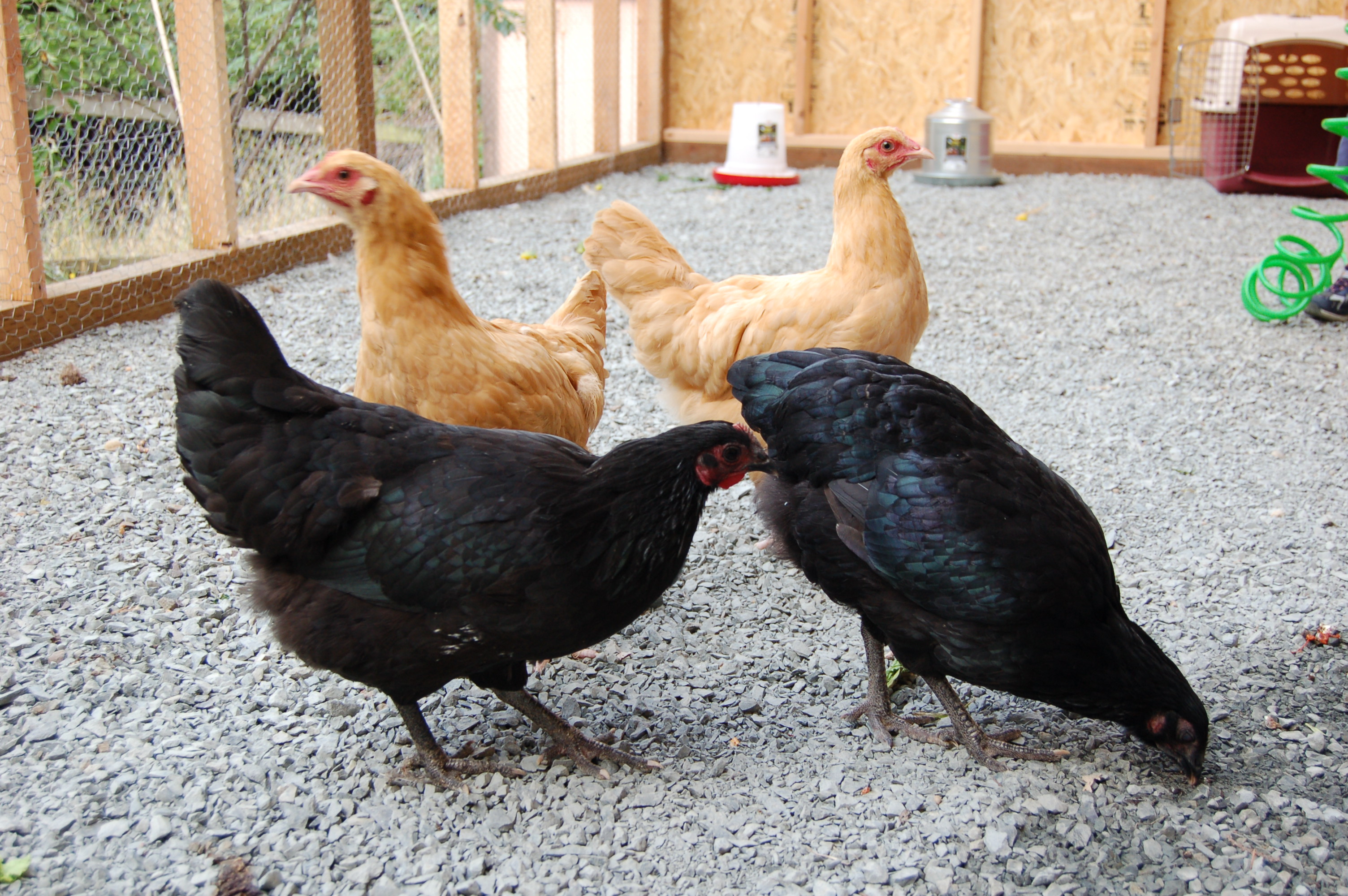
In other news, I am sad to report that we’ve lost a chicken. A few mornings ago I realized that there were only five chickens in the coop/run. I looked all around but didn’t see the sixth chicken. We’ve been letting them free range a bit during the day and I think the chicken jumped over the fence and couldn’t get back in. When I closed them into their coop that night, I think I closed one chicken out of the coop. We found a pile of feathers in our yard, so we know for sure it is gone. The lost chicken was one of our Buff Orpingtons, the one we named Blondie. So RIP Blondie. I hope you went quickly.
In final chicken news, no eggs yet. The chickens are getting mild threats of heading to the stew pot if they don’t produce soon. These are empty threats, but it sure would be great to start getting some eggs from them.
Sandy