Dang, it’s cold!

Derek here.

It has been a while since either of us posted. It has also been cold (at least for the Puget Sound region) over the last week – getting down into the low teens or even lower. Unfortunately, this means that despite running a propane heater in the greenhouse, the contents of said greenhouse are suffering a bit. So far nothing has outright died, but I’m worried we’ll have a repeat of the ‘flaccid bell pepper’ incident of 2008. At least since it has been sunny during the day, the greenhouse is getting up to 50+ degrees while the sun is out.

In addition the cold weather has meant a modification of the daily routine – at night I am bringing in the chickens’ water so it doesn’t freeze in the dispenser and in the morning I’m taking out hot water for the chickens and hot water for the goats. I’m also having to hammer out the ice in the goat’s watering trough in the mornings as well – needless to say, that’s adding a bit of time to my pre-work morning routine.

In order to nip this in the bud in future, we’ve decided to run a 115V/20A circuit from the house out to the greenhouse. This will allow us to (1) Keep a 1500W oil radiator running in the greenhouse to keep its overall temperature at night above 32 degrees F and (2) Run a water trough heater in the goat pasture to keep their water from freezing at night. Unfortunately, the circuit won’t be installed before this particular cold snap breaks, but it should be good insurance for weather yet-to-come. The additional work item for the greenhouse, of course, will be to finish the insulation installation. Not sure what else we can do about the goats (and we’ll still need to bring the chicken water in at night).

Stay warm!

Posted in Gardening, General, Livestock | 2 Comments

The garden in November, plus yummy bread

I’ve been hibernating. A thoroughly enjoyable eight-week leave from work ended a few weeks ago, but the hibernation began well before that.  There is no excuse other than I didn’t feel like tackling the fall garden tasks even though I had ample time to do so.  After I finished up the last of the canning and harvesting, I retreated indoors, leaving overgrown plants, weeds, and hundreds of thousands of fallen leaves completely unattended.  No doubt about it, I have a mess on my hands that would have been easier to tackle before the weather fully turned wet and cold.  I’ll just have to take advantage of any semi-dry days in the weeks ahead to go outside and begin the fall clean up just as winter descends. 

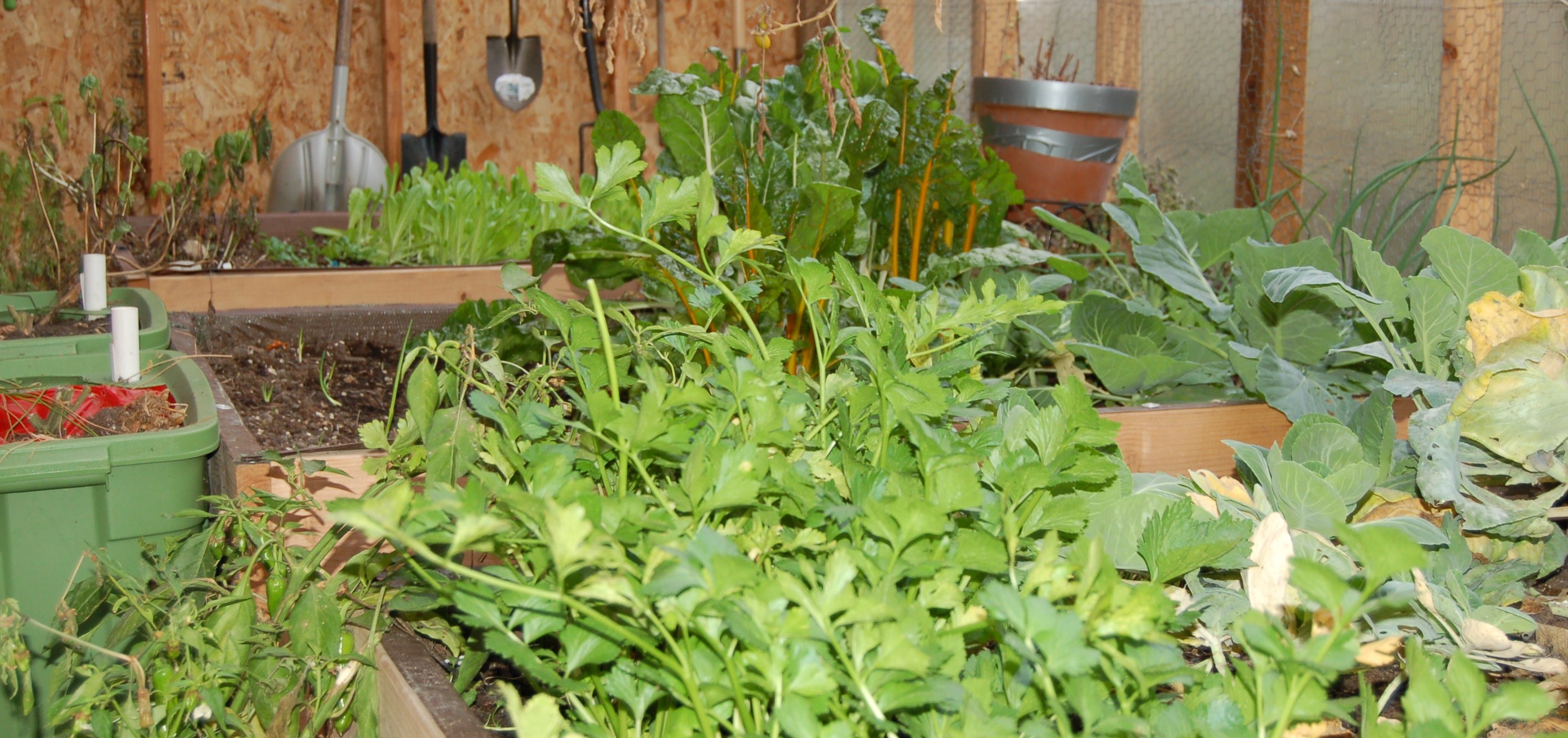
The greenhouse in November

The greenhouse in November

Even as we near the end of November, the garden continues to produce.  We have not yet had any freezing temperatures, so here and there little bits of edibles remain.  A few raspberries remain edible; a pea plant still has both pods and flowers; and I finally harvested the last of the potatoes, just in time because they were on the verge of resprouting. In the greenhouse, the greens are thriving.  A fall planting of Romaine lettuce is ready for “cut and come again” harvesting.  The Swiss chard is thriving.  Plantings of green onions and celery continue to grow strong, as do the herbs I have in pots, such as parsley.  The big disappointment remains the broccoli and cabbage, only because I find the constant battle with bugs so annoying. 

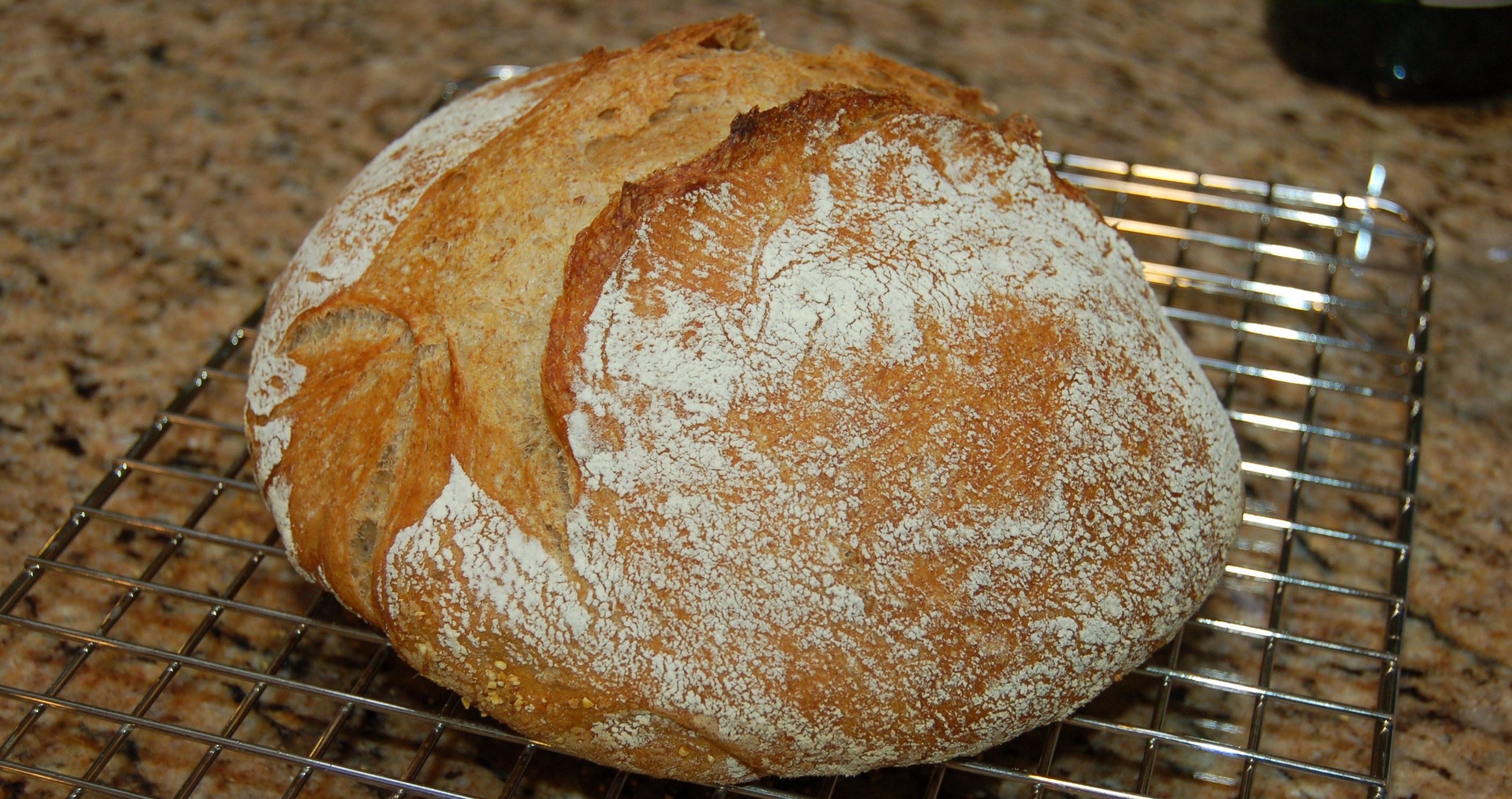
No-knead bread

No-knead bread

Coming back indoors, I finally got around to trying the no-knead bread recipe that has been making the rounds for some time now.  I found and followed the original recipe for the bread, created by Jim Lahey for the New York Times.  The bread is easy to make and tastes great.  The cooking method leads to a nice crisp crust, which really makes this bread special.  I figure I spent about $0.50 making this bread, which would have costs $4.00 – $5.00 in a store.  I see more of this bread in our future.

Sandy

Posted in Gardening, Homesteading | Tagged , , , , | 3 Comments

Last tomatoes and summer garden notes

Tomatoes and mini butternut squash

Tomatoes and mini butternut squash

For the last month or so, in spite of the fact that I’ve had ample time on my hands, I’ve been pretty terrible about taking care of fall gardening chores.  Most of my beds contain the bedraggled remains of summer plants, weeds are building up bulk, and I’ve only been able to get the most basic overwintered crop, garlic, in the ground. So today I rallied my energy and started some of the tasks I should have taken on weeks ago.

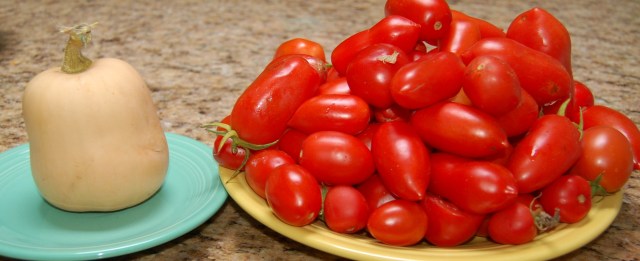
First up was to harvest the remaining tomatoes.  I had a pretty good harvest of small-ish tomatoes that will work perfectly for making into sauce. Such a small harvest will probably only make one jar of sauce, so I won’t bother canning it and we’ll instead eat it fresh, which is pretty wonderful anyway.  I also harvested the last of the butternut squash.  All the other squash I did manage to harvest and cure some weeks ago.

I’ve also been meaning to collect some of my thoughts about my garden this year, mainly so I’ll remember next year some of the things I wish I had done differently this year.  Some of you might find these notes useful as well.

More of this

Fruit trees: Fruits are my favorite thing to grow, eat, and process.  This is why my small little orchard now has 25 fruit trees (9 apples, 4 cherries, 4 plums, 4 pear, and 4 peach).  A few of these trees are quite new (I love those fall nursery sales!) and my orchard will be complete when I plant a final apple (William’s Pride) this spring as a second pollinator for my Gravenstein trees.  A few things I need to do with my orchard: 1. Winter pruning, 2. Applying dormant oil this winter to keep down pests, 3. General clean up around trees, and 4. Apply good organic fertilizer.

Berries: Berries are also very high on my list.  I have twelve blueberry bushes, two raised beds of raspberries, and a raised strawberry bed.  I also have innumerable Alpine strawberries, which are planted around the garden as an edible groundcover. Since most of these berry plantings are new this year, I don’t plan much berry expansion next year, aside from possibly spreading the Alpine strawberries out to even more locations.

French green beans:  A clear winner on the plant list this year was the Maxibel bush bean. Not only did this produce a large number of beans, they tasted great and produced forever.  In fact, I just harvested a bunch of beans today.

Shelling beans: Another bean winner this year was the Etna shelling bean.  When beans are in full production in the garden, it’s nice to have a variety that doesn’t need to be harvested to either eat fresh or can, but can instead be allowed to dry on the vine for harvesting later.  I plan to grow many more Etna bean plants next year.

Carrots: With small children harvesting carrots before they are fully ready, I clearly cannot overdo planting carrots.  Since they can be left in the ground quite long, the harvest period is long as well.  Two favorite varieties from this year, King Midas and Yaya.

Green onions (aka scallions): Green onions are quite versatile.  They can be used in stir fry, salad, soup, and they can be grilled, just to name a few options. Plus, they grow quickly.  I’m definitely going to dedicate much more space to green onions next year.

Garlic: We had a good crop of garlic this year.  It was so good we worked out way through it really fast.  I’ve already planted for next year three times the amount of garlic we had this year. 

Peas:  My kids will eat pea pods right off the vine.  We ate a lot of pea pods this spring, but didn’t have many left over for saving.  Next year I want enough to both eat and save.  Oregon Giant and Oregon Sugar Pod II both did well for us.

Peppers:  My favorite pepper this year was the Italian Sweet.  The plants produced a good number of large, thick-walled peppers with few seeds.  The flavor was nice and I wish I had planted many more of these.  I’ll probably plant fewer mini peppers next year because, although they produced a large number of fruits, they were just too seedy and too much work to prepare.

Less of that

Green beans:  I planted eight different varieties of beans.  I don’t need eight varieties and I probably can dedicate half as much space to beans next year.  The challenge is that we can’t eat and process them fast enough to keep up with a planting the size I had this year. 

Cabbage and broccoli:  I love both cabbage and broccoli, but I find these to be fussy plants.  I’m always in battle with insects and never quite seem to win. 

Corn: I produced an OK crop of corn this year (Golden Bantam variety), but it took up too much space and water for the results I produced.  Plus, there are two local farms that produce lots of great corn that I can buy very cheaply.

Cucumber: OK, I won’t plant fewer cucumbers overall because I love them in general, but I won’t plant Boothby’s Blonde next year.  The plant produced a good crop of cucumbers, but they were prone to tasting bitter, which is totally unacceptable to me, so this one is now off my planting list.

Self-watering containers and Topsy-Turvy planters:  I give these a grade of C for growing tomatoes.  They worked OK, but I think I would be better off planting my tomatoes directly into the ground, which is what I plan to do next year.  I’ll use these alternate planters for pepper plants and cucumbers, which seem to do well in such planters.

Do a better job with

Onions: My onions were small.  I probably needed to water them more consistently. The Ringmaster variety provided the best results for me and I’ll definitely plant it again next year.

Potatoes:  I probably planted the right amount of potatoes but I think they would do better in a dedicated potato bed (I used grow bags) and more consistent watering.

Squash: I think I had too many plants in too small a space.  Next year, I’d like to build a large squash bed and plant it with the right number of plants.  More consistent watering will probably also help.

Happy gardening!

Sandy

Posted in Gardening | Tagged , , | 7 Comments

Is it jam or is it jelly?

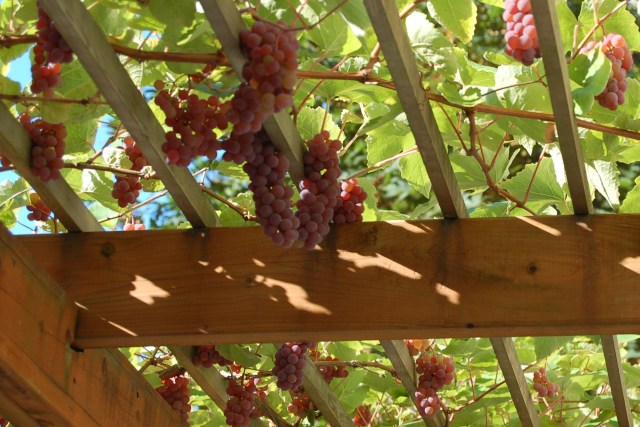
Grapes in September

Grapes in September

As I’ve mentioned previously, we’ve had a really nice crop of grapes this year.  I lost the label for this particular grape variety, but it is a light red, almost pink, seedless grape that clearly does well in the Pacific Northwest.  We easily had four times the amount of grapes you see in the picture above, which is not bad for a vine that is only a few years old.  With so many grapes, I decided to try making grape jam, something I’ve never done before.  The results were, well, interesting.

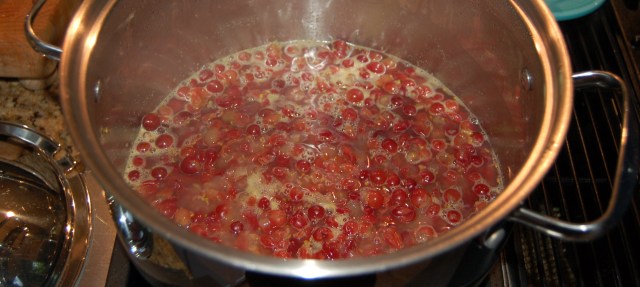
Grapes, boiling for jam

Grapes, boiling for jam

Following the “easy grape jam” recipe in the Ball Complete Book of Home Preserving, I picked, washed, and prepared 3.5 lbs of fresh grapes. The recipe requires boiling the grapes and using a liquid pectin.  While the grapes were boiling, I tried to mash them up a bit so I wouldn’t have completely whole grapes in the jam.

Grape jam or jelly?

Grape jam or jelly?

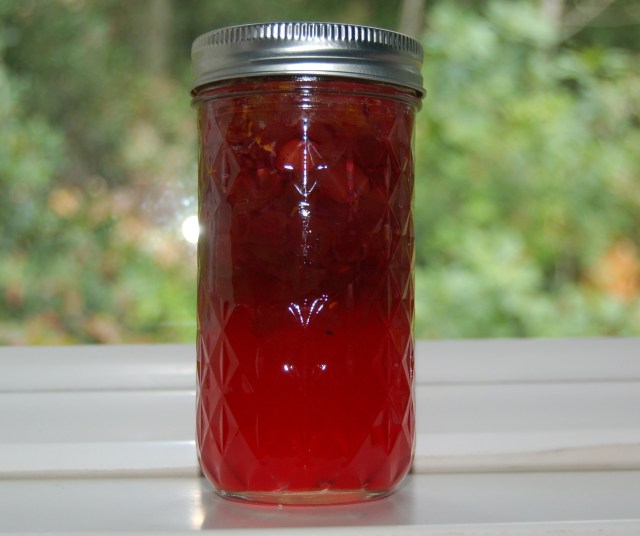
After I completed the canning process, it became apparent quickly that the jam solids and liquid separated pretty significantly. The top, darker, part of the jar contains the grape solids and looks like jam.  The bottom is pretty much solid-free and looks like jelly.  This wasn’t what I intended, but it isn’t exactly a canning disaster. Has this happened to anyone else?  Any thoughts or recommendations?  Now if I could only find a grape jam recipe that uses less sugar.  Seems such a shame to make jam using a recipe that requires way more sugar than actual fruit.

Rose hips on rugosa rose

Rose hips on rugosa rose

My canning efforts are quickly winding down, but I have an idea for at least one more project.  I have a lot of really pretty rose hips.  I did a quick search and found a recipe for rose hip jam.  Has anyone attempted this before? Any other ideas for what to do with the hips?

Sandy

Posted in Uncategorized | 7 Comments

Roo – Isn’t he pretty?

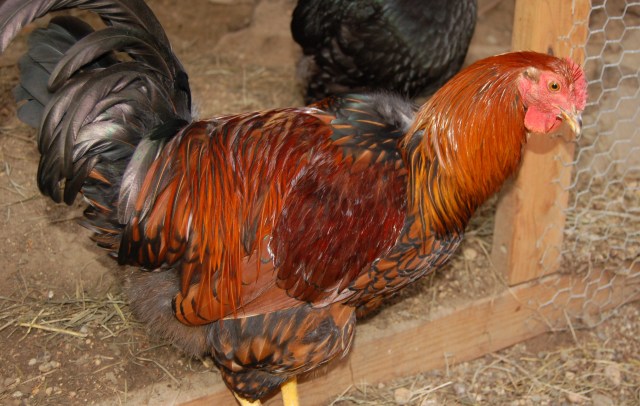
Roo the Golden Laced Wyandotte rooster

Roo the Golden Laced Wyandotte rooster

Last March, we bought four baby chicks, mostly because the kids really wanted baby chicks.  We had enough room in our coop/chicken run to increase our flock from five to nine, so we went ahead with the chicks.  Originally, the plan was to buy three Golden Sex Link chicks because the color of the chick determines the girls from the boys and it is easy to avoid getting rooster.  While there, I decided to throw in one more chick just for fun, the Golden Laced Wyandotte. Of course, it turned out to be a rooster.  He sure is a pretty bird though – and not too obnoxious – so we are planning to keep him.

Cock-a-doodle-doo!

Sandy

Posted in Homesteading | Tagged , | 3 Comments

Summer in a jar

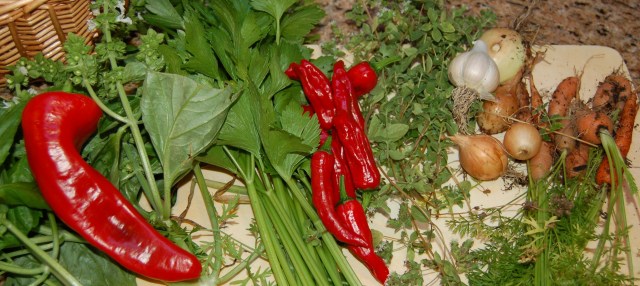
Seasonings for tomato sauce

Seasonings for tomato sauce

As we head into the tail end of September, the harvest continues going strong.  Today, I harvested a good amount of Italian sauce tomatoes and found enough additional produce and seasonings to make a batch of tomato sauce.  Above, you can see the celery, carrots, peppers (sweet and hot), basil, oregano, onions, and garlic that I added to the sauce.  I used my two favorite purchases this season, the Roma food strainer and the All-American pressure canner to get this job done.  Both products are great, but I can’t say enough about the food strainer.  It is so much easier than hand processing the tomatoes. It is also great for making applesauce.

Finished tomato sauce

Finished tomato sauce

And here is the completed sauce, all canned and ready to store.  It is quite delicious if I do say so myself. 

Sandy

Posted in Homesteading | Tagged , | 3 Comments

Pickle help needed!

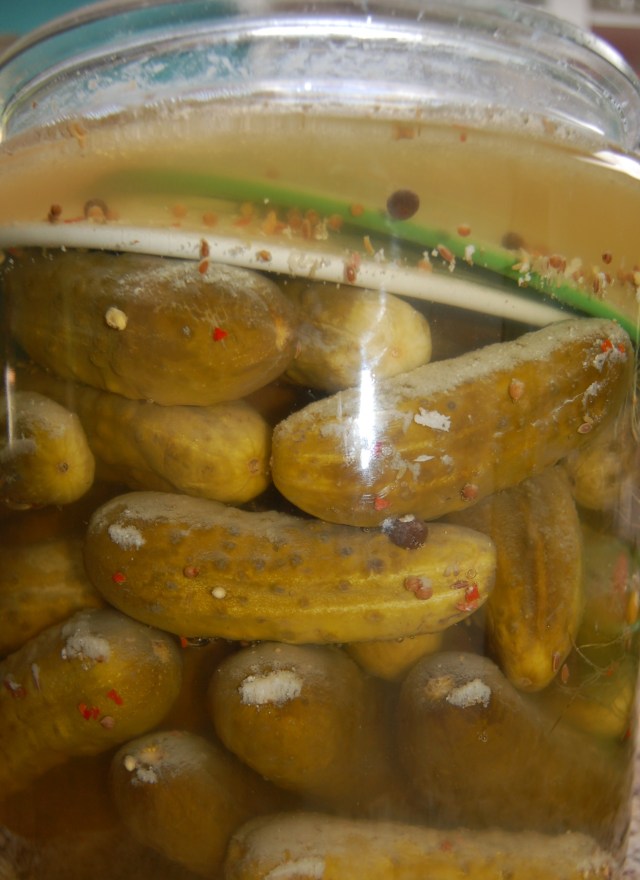
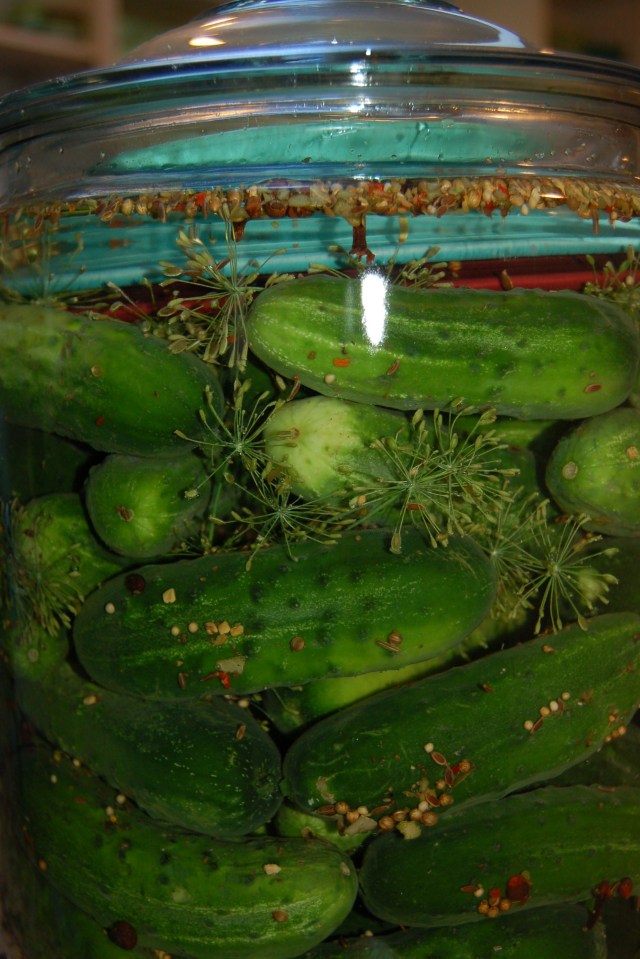
OK, about a month ago I started a batch of deli-style pickles, following (to a T) the recipe in the Ball Complete Guide to Home Preservation book. The pickles are supposed to sit in the brine for at least three weeks and it has been more than that already.  The book says to “every day, remove any scrum that has formed.”  The problem is that it is impossible to remove all the scum. Take a look at what I’ve got.

Sludge on top of deli pickles

Sludge on top of deli pickles

Side view of pickle sludge

Side view of pickle sludge

If you have experience with this type of pickle, any suggestions?  In spite of the sludge, the pickles smell like pickles.  There are no foul smells at all. Could I rinse the pickles off and then create a new, sludge-free brine for canning?  Or, has this turned into a science experiment that could lead to a food-born illness and must be disposed of? Help!

Sandy

Posted in Homesteading | Tagged , | 8 Comments

This is what an Italian prune should look like

Ripe Italian prune

Ripe Italian prune

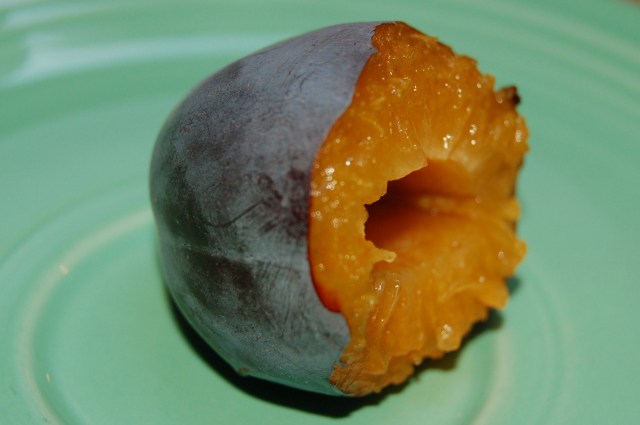
One of the best things about having a small home orchard is being able to eat tree-ripened fruit.  Even when I shop at a local farmers’ market, I find that the fruit is often a bit on the green side, probably because it has a longer shelf life for selling when picked somewhat green.  The Italian prunes I bought a few weeks ago at a market took over a week to ripen enough to eat – and then the consistency was a little bit wrong somehow.  Above you can see what an Italian prune should look like, with the dark purple skin and golden orange flesh.  This Italian prune was picked fully ripe off the tree.  So tasty!

Sandy

Posted in Energy usage | Tagged | 3 Comments

The fruits of my labor

Applesauce, blueberries, and blackberries

Applesauce, blueberries, and blackberries

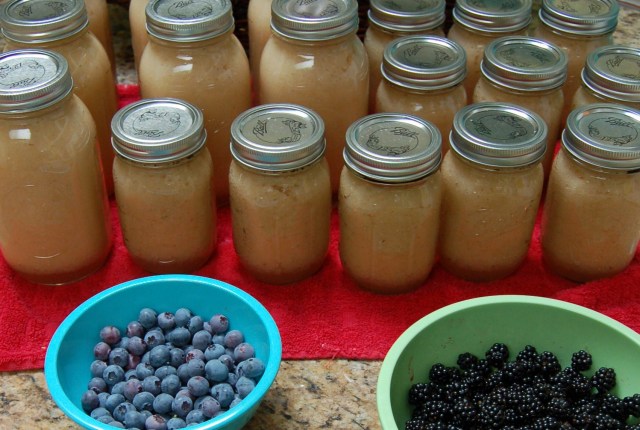
As the summer winds to an end and I have time to reflect on my gardening efforts over the last few months, I’ve come to realize that there are some things I enjoy growing much more than others. At the top of my list of fruits and berries. I’m lucky enough to have enough space for a small orchard as well as for berry plants, primarily strawberries, raspberries, and blueberries. I love to eat the fruit, as do the kids, and it is great for preserving. This year I made a large batch of applesauce from Gravenstein apples.  I have two Gravenstein apple trees in my yard.  The trees are pretty young so I don’t get enough fruit to preserve.  We timed a trip to Lake Chelan this year to coincide with the Gravenstein harvest.  We all had a great time at the lake for a few days and then brought home two big boxes of apples for sauce.  For those of you in the Puget Sound area, I highly recommend a late summer trip out that way.  It’s close enough for an easy drive but the climate is totally different and the amount of fruit grown and harvested there is pretty amazing. 

You can also see in the first picture a bowl of blueberries.  We still have blueberries ripening on a late season blueberry bush.  We’ve had ripe blueberries in our yard for over two months now, making this a great year for berries.  We can never get enough blueberries and I plan to put in three new bushes in a spot where we recently removed a huge, overgrown rhododendron. The blackberries above we picked from some wild blackberry patches in our neighborhood.  We have a few raspberries ripening now as well.

Grapes in September

Grapes in September

Our grape vine is also doing very well this year. I can’t remember what variety this is, but the grapes are a nice smaller seedless grape with a light red color.  I’m getting a bit worried that the birds will swoop in and take them all as they did last year, so we are trying to figure out how to protect them with bird netting, which is easier said than done considering that the grapes are growing on a giant pergola. Wish us luck with this!

Yellow Doll watermelon

Yellow Doll watermelon

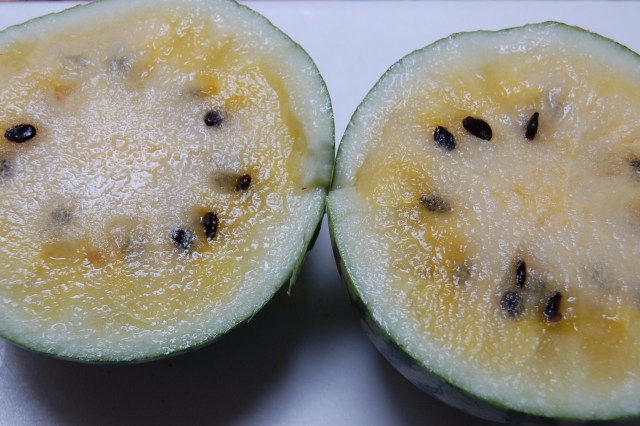
Although summer was quite warm in the Puget Sound area this year, typically it is not.  Our greenhouse allows us to grow some things that need more heat than we typically have.  Here you can see the Yellow Doll watermelon that we grew.  I’ve never successfully grown a watermelon here before so now I know we can.  The Yellow Doll has a nice taste, but it is seedier than I liked and the vine was prone to mildew problems. I think I’ll try a different variety next year. We also grew a few varieties of cantaloupe which did well.

I’m really looking forwarding to gardening as we transition from summer to fall.  I’m taking a few months off from work and will have plenty of time to spend in the garden.  I can’t wait and will certainly keep everyone posted on our progress.

Sandy

Posted in Gardening | Tagged , , , , , | 6 Comments

Flock integration and deli style pickles

Last spring, we bought four new baby chicks (three Golden Sex Links and one Golden Laced Wyandotte). The baby chicks have grown quickly and it’s about time that we integrate them into our existing flock of five hens. Integrations can by tricky because the chickens (and in this case one rooster) need to establish a new pecking order. As you can see in the video, we’ve moved the chicken tractor near the fixed chicken coop and run, hoping that the chickens will get used to one another a bit before we let them intermingle.  I still expect that we’ll have  fighting, however.  If you’ve got any good flock integration techniques or advice, I’d love to hear it.

Deli style pickles

Deli style pickles

Switching gears, I am on my third batch of pickles for the summer.  This time, I am trying to make deli style pickles, which require a three-week soaking process. I’ve become the pickle guy in Crossing Delancy. It will be fun to see if the pickles turn out ok.

In addition to this, over the last few weeks I’ve been making jam, preserving green beans, and harvesting potatoes. Oh, I also canned some spaghetti sauce, which was totally yummy. And now I have 30 lbs of peaches to can. This time of year is extra busy both in the garden and, as I am finding out, in the kitchen preserving the harvest. So glad I’ve got a vacation coming up the week after next!

Sandy

Posted in Homesteading | Tagged , , | 5 Comments