I’ve been irritated by Obama’s softening on oil drilling. Here’s a great video that explains my irritation way better than I could. Plus it’s funny. Enjoy.
Sandy

I’ve been irritated by Obama’s softening on oil drilling. Here’s a great video that explains my irritation way better than I could. Plus it’s funny. Enjoy.
Sandy
As alluded to previously, one of the things we’re doing is trying to increase efficiency given the existing infrastructure of the house. To wit: we’re replacing the majority of incandescent light bulbs with compact fluorescent bulbs. Now, personally, I’ve never been a big fan of fluorescent technology – I’m one of those people who can hear the buzzing of the ballast and can sometimes see the cycling/flickering that was inherent in the older generation. In addition, there’s something comforting about a good incandescent bulb – it’s warm and welcoming like a fire in the fireplace or a vacuum tube amplifier. However, incandescent bulbs are extremely wasteful (approximately 90 percent of the electricity consumed a bog-standard incandescent light bulb is emitted as heat instead of light) and – let’s face it – based upon 19th century technology (as is the internal combustion engine – a topic that will be explored another time).
As mentioned, my past experience with fluorescent light bulbs has been poor to say the least. Fortunately, or unfortunately, compact fluorescent bulbs have a very long light span, which means it is entirely possible to have some older-generation light bulbs that really don’t look so great and make enough extraneous noise to cause the voices to begin clamoring in your head (or is that just me?). Either way, Sandy and I went to the hardware store last Sunday with the intention (in part) to buy some new compact fluorescent (CF) bulbs. To my delight, I found that someone in the light-bulb business got a clue about designing a usable CF bulb. Instead of the weak, pallid-jaundiced light of the first generation bulbs, you can now choose from a variety of color temperatures (unfortunately, they don’t list the temperature in Kelvins – symbol = K).
Thankfully, for me and anyone who happens to stumble across this blog, there’s always Wikipedia.

Different color temperatures for CF bulbs
To your left is a photo (thanks, Wikimedia Commons) of several varieties of CF bulbs. As you can see, there is a vast range of color-temperatures available for CF. The color breakdown is as follows:
– Warm / Soft White ≤ 3000 K
– White / Bright White = 3500 K
– Cool White = 4000 K
– Daylight ≥ 5000 K
Your old-school first-generation CF bulbs were closest to what is called ‘Warm white’ or ‘Soft white’ and you didn’t have a choice with regard to color temperature. Boo. Hiss. That’s why they were so dim and murky looking when compared to incandescent bulbs.
Simply moving up the temperature scale from 3000 Kelvin to 3500 or 4000 Kelvin makes a huge difference. While not as ‘warm’ as traditional incandescent bulbs, it’s not as evocative of a mental institution / hospital morgue as the low-Kelvin CF bulbs were. This is, as Martha Stuart would say, is a good thing.
Merrily, I bought a bunch of 100W equivalent (ratings are equivalent to incandescent since that’s what most folks understand – the lumen output is equivalent to an 100W bulb) and 60W equivalent bulbs and brought them home. I decided to go with 100W bulbs in the light fixtures in the kids’ rooms and 60W bulbs in the various table lamps. Bad choice. The funny thing – even to this day – about CF bulbs is that since they are ballast-based, you don’t get the full output immediately upon switching on the lights – it usually takes a minute or so for the light to warm up and give you 100% of the available lumens.
When I tested the lights, they looked pretty good. However, later that evening when we were putting away laundry we turned on the lights in the kids’ rooms and stepped out for a second (to put clothes away in our room). When we returned, both kids’ rooms were lit up like a movie set. Clearly a pair of 100W bright-white bulbs were too much for the room.
And that brings me to the caveats about CF bulbs:
When everything is said and done, you can reduce your household lighting-related energy consumption by a substantial margin simply by switching to CF bulbs. If you are worried about wasting the incandescent bulbs you’ll be replacing, take heart – you can always carefully store them and save them for a couple of years and then sell them on Craigslist or eBay when they are no longer available due to upcoming government bans.
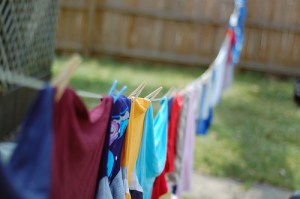
By "tracitodd" at http://www.flickr.com/photos/kyshuttergirl/
I have to say, the Puget Sound Energy site is quite good. I’m able to get way more information about my electricity and gas usage than I ever knew I could. If you look at your bill details online, you can break your usage into a variety of charts (daily, monthly, electricity, gas, etc.) using the “Energy Use Analyzer” tool which can be found on the bill statement page.
When I looked our our daily electricity chart, a clear pattern emerged. Monday through Friday were the low usage days. This makes sense since we typically are not home during the day during the week. I also noticed very large spikes on one day of each weekend, usually on Sundays. I knew instantly what it was: laundry. The New York Times concurs.
Derek does all the dishes. I do all the laundry. And I usually do all this laundry in one day, typically taking six loads. I know that is a lot. With four people in our household, we average more than a load per week. There are a few reasons for this. First, my soon to be five-year-old daughter changes her clothes throughout the day. I’m never quite sure what is clean and what is dirty so I tend to throw everything that has touched her floor into the dirty pile. Second, I wash everything that has been worn at all during the week. From a hallway conversation I had at work, I realized different people have different rules for what actually needs to be washed. My rule defaults to everything that has been pulled off a hangar — this is probably excessive.
Laundry is a triple whammy of electricity usage: 1. The washer, 2. The dryer, and 3. The hot water heater. We have two things that do help, a better-than average efficiency for our hot water heater and an Energy Star washer and dryer set. We also, a few years ago, purchased the Fisher & Paykel washer and dryer set. The washer uses only 24% of the electricity of a traditional washer and the spin cycle pulls out more water, making drying cycles shorter.
So here’s what we’re going to do to bring laundry electricity usage down:
Happy laundry.
Sandy
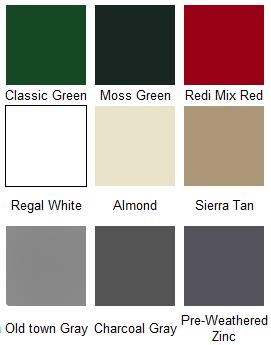
And the winner is . . .
As Sandy also posted, I’ve been put in charge of determining the replacement options for our roof. Currently we have a cedar shake roof of unknown vintage (probably dating back to the Reagan administration). Checking the roof around the edges reveals that the bottom course is starting to rot, while various and sundry shakes are curling / splitting as you ascend towards the ridge. Given that the rot is bound to attract termites (hopefully the shakes will be dry enough when the termite queens swarm), a semi-forested environment breeds moss (which is destructive to cedar) and new cedar shakes would require (IMHO) unnecessary logging, I’d like to move away from cedar as a roofing material.
This will be the second roof I’ve replaced in my lifetime of homeownership (the first was a composition to composition replacement at our old house – pretty much a slam-dunk as that’s all we could afford at the time). Even with ruling out cedar shakes, the choices now are a bit more plentiful: slate, fiber-reinforced concrete shake, green/living, composition, and standing seam metal. The first three are out for a few reasons:
This leaves us with a couple of choices: composition and standing seam metal roofing. Both are lightweight, both are farily inexpensive, and both are class-A fire rated (important when living in a wooded environment). However, there are some additional game rules (aren’t there always?) we need to take into account:
So here’s the dilemma…standing-seam roofs are far greener from a manufacturing standpoint, have a longer lifespan and can be recycled. However, they’re at least $6-8,000 more expensive up front. It seems like a fairly trivial amount when average home costs are considered, but not so fast. As I’m sure someone has said in the past (and if they haven’t, I’m trademarking this phrase), “It takes green to go green.” All the other projects we’re doing (greenhouse, solar power, Sandy’s future electric car, etc.) are expensive. Granted, we’re not doing all of them now, but we need to start saving money in order to pay for the big ticket items (PV and electric vehicles) that are coming in the future so we don’t go into debt. So an additional $6,000 becomes something to mull over.
So what are we doing?
We’re biting the bullet. It’ll be a standing seam metal roof from Esary Roofing (chosen in part for their fair labor practices) and we’ll just suck up the additional cost and re-evaluate our timetable for future green purchases. And in answer to the picture-puzzle above, Sandy has decided on Charcoal Grey as it will be fairly easy to coordinate if we decide to repaint the house at a later date.
More updates as the tear-off begins in September.
Derek

Desiccated rhododendron: Will it live or will it die?
We’re slogging through the dryest time of the year in the Pacific Northwest. Of course, I’m sure posting something about our dry spell will lead to an immediate downpour. But right now it is dry and I’m starting to see which of my plants are tough and which could be on the way out. You see, I’ve decided not to water my ornamentals this year to see what is tough enough to survive the dry season without help. Now I’ve got some rhododendrons looking very droopy.
In the picture you see one of the droopers. The biggest problem for this rhododenron is its location. It was planted under a number of huge fir trees. There is a lot of competition for water. There are two other rhodies in the same location that are also showing the signs of water stress. Ever since we moved to this house seven years ago, I’ve been babying the rhodies during August and, when needed, September. Now I’ve decided I’m not going to waste the water.

Happy bee on water-wise lavender
I have some basic knowledge about xeriscaping. The basic idea is to choose plants that will not require much (if any) supplemental water. Since I have many mature plants in my yard, I’m just going to shut the water off and see what survives. Anything that dies will be replaced by something following xeriscaping principles. Lavender is a great example of plant that requires little water, looks great, and attracts a ton of bees. So fewer desiccated rhodies and more bee-attracting lavender for me. And I’ll save the water for my edibles plants, which are increasing in number. I know I have a few fruit trees that need water, and they’ll get it this weekend. And Seattle Tilth has some good water wisely information I’m going to leverage to make the watering I do more efficient. One thing I do use already, and love, is a root feeder. It’s a spike you push into the ground that waters the roots directly. I use it all the time for my fruit trees and blueberries.
Next step: Put the four rain barrels to better use by positioning them to catch run off from the green house roof (once the green house is done). There are likely more rain barrels in our future, maybe many more, maybe something like this.
I’ll report back on the fate of the rhododendron at the end of the summer . . .
Sandy
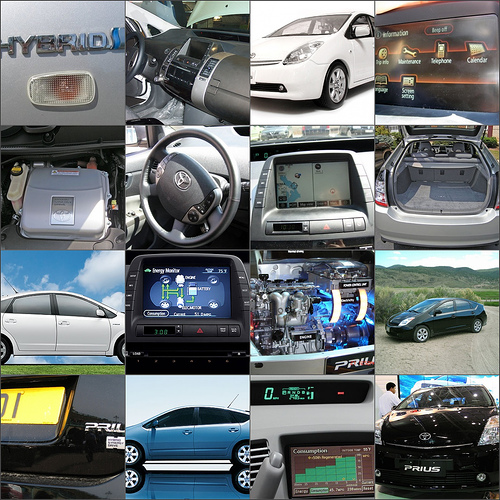
Prius collage, by Xwelhamite at http://www.flickr.com/photos/xwelhamite/
I know I have some bad preferences. I’ve already explained my issue with the thermostat and my preference for 72 degrees. Next on my list: I love my Volvo V70 and won’t trade it for a Prius. On the freeway, my Volvo gets about 30 mpg. That’s respectable. City driving is not respectable. Right now, I am averaging 21.5. I know the Prius would do a lot better than that, but here’s why I am not buying:
1. My Volvo isn’t very old. I only have about 40K miles on the car and it seems like a waste to get rid of it while it is still useful. If I trade it in, someone else will drive it around getting the same mpg and won’t exactly have pulled an inefficient car out of the system.
2. I have little kids and they have bulky stuff. When you have two jumbo car seats in a vehicle plus a dog that likes to ride around everywhere, plus a stroller, plus groceries, you need a little extra space for the stuff that needs to be hauled around. The Prius would probably be OK in this regard, but the Volvo is awesome. Luckily, the kids will be graduating from most of their truly bulky stuff in the next few years.
3. My husband and I have doubled our fuel efficiency by carpooling to work. It’s pretty convenient since we work for the same company.
4. But here is the main reason. I want something better than the current generation hybrid. I want more than the 45 mpg the current gas/electric Prius has to offer. I want a vehicle that is all electric, or if a hybrid, then one that relies on the electric technology even more, bringing mileage into new, hopefully triple digit, territory.
There are all sorts of interesting concept cars being developed. Today, Nissan announced a new electric car concept that will be available in 2010. I’ve also been following the news on the Volvo ReCharge, which is aiming to rely heavily on electric and give triple digit mpg. Chevy is working on an electric car called the Volt. The one car concept I’ve seen that meets my 4-door plus storage requirement is the Zap-X Crossover. If it makes it to market, it also won’t be until 2010. And the MSRP is $60k, which is more than I would want to pay for a car.
Some of this thinking might be wrong-headed, but this is my position right now. Every time a new green concept car is announced, I’m all over the story. I am very interested in green vehicles and fully expect to shift to a green vehicle in the next five years. The Toyota Prius is a great car. It was the proof of concept that really kicked off the green car movement. It created demand and there is more R&D going on in this area than ever. So, thank you for this Prius, but no thanks for now.
Sandy
I’ve already acknowledged my energy illiteracy. I’ve also acknowledged that I have much to learn about modern homesteading. This means that decisions that we used to be able to make quickly now require becoming more informed, and this takes time.
Take our roof as an example. We need to replace our cedar shake roof. It’s pretty old and we don’t feel great having a highly combustible roof in a wooded area. But there are a lot of roofing options. Which one makes sense from a green perspective? There are three factors we are considering: 1. Environmental impact of roofing materials, 2. Suitability as a base for future solar installation, and 3. Suitability of the roof for water collection. I’ve “delegated” the research on this one to Derek. 🙂 And he has been researching, and researching some more, getting information, new information, conflicting information, comparing various costs, weighing cost/benefit, etc. So it’s not easy. Derek will do the write up soon about the decision we ultimately make.
The other challenge for us is that our yard is now all torn up. I’m very excited that construction on the green house began today, but I forgot how much heavy equipment tears up a yard. On the plus side, the kids were thrilled that our yard is now a dirt and gravel pit and had a great time playing in the mess. So did the dog.

Future green house site
I also tried out a carbon footprint tool today. These tools estimate the carbon impact your lifestyle has on the planet. On the MSN Green site, I found a useful carbon calculator. According to the tool, my family and I contribute 10.75 tons of carbon to the environment each year. This is above the national average of 7.5 tons. Since we joined the green energy program, the biggest impact comes from our car (a Volvo V70 which we drive about 10k per year) and from flying. Most of my trips are business trips. When I took the flights out of the calculation, our impact dropped to 5.05 tons. That’s a huge difference. Those flights have as much impact as my house and car driving. Pretty amazing.
More later . . .
Sandy
No longer having aspirations of fame and riches (well, I never really aspired to these things) and also having given up on becoming the great American novelist, a world-respected academic, or an Olympic gymnast, I’ve set my sights on a life aspiration that is difficult but attainable and potentially very rewarding. I want to become landed gentry. If not gentry exactly, a modern homesteader and given my location, a suburban homesteader. Homesteaders strive to use their home and land to be as resource independent as possible.
Aside from my general energy illiteracy, which I am working to correct, I’ve had some “homesteading” type aspirations for some time. I’ve always enjoyed gardening and have an interest in edible gardens, but I haven’t had much time in recent years to make much progress on gardening for food production. Those little kids I have are just getting big enough now to be little helpers in the yard so I’m more able to go out and take on gardening projects. And the kids really like participating. Yesterday, we built a food composter based on an easy concept from Seattle Tilth and now the kids can’t wait till we have more things to put in it.
So, here’s where we are starting with our efforts to become suburban homesteaders:
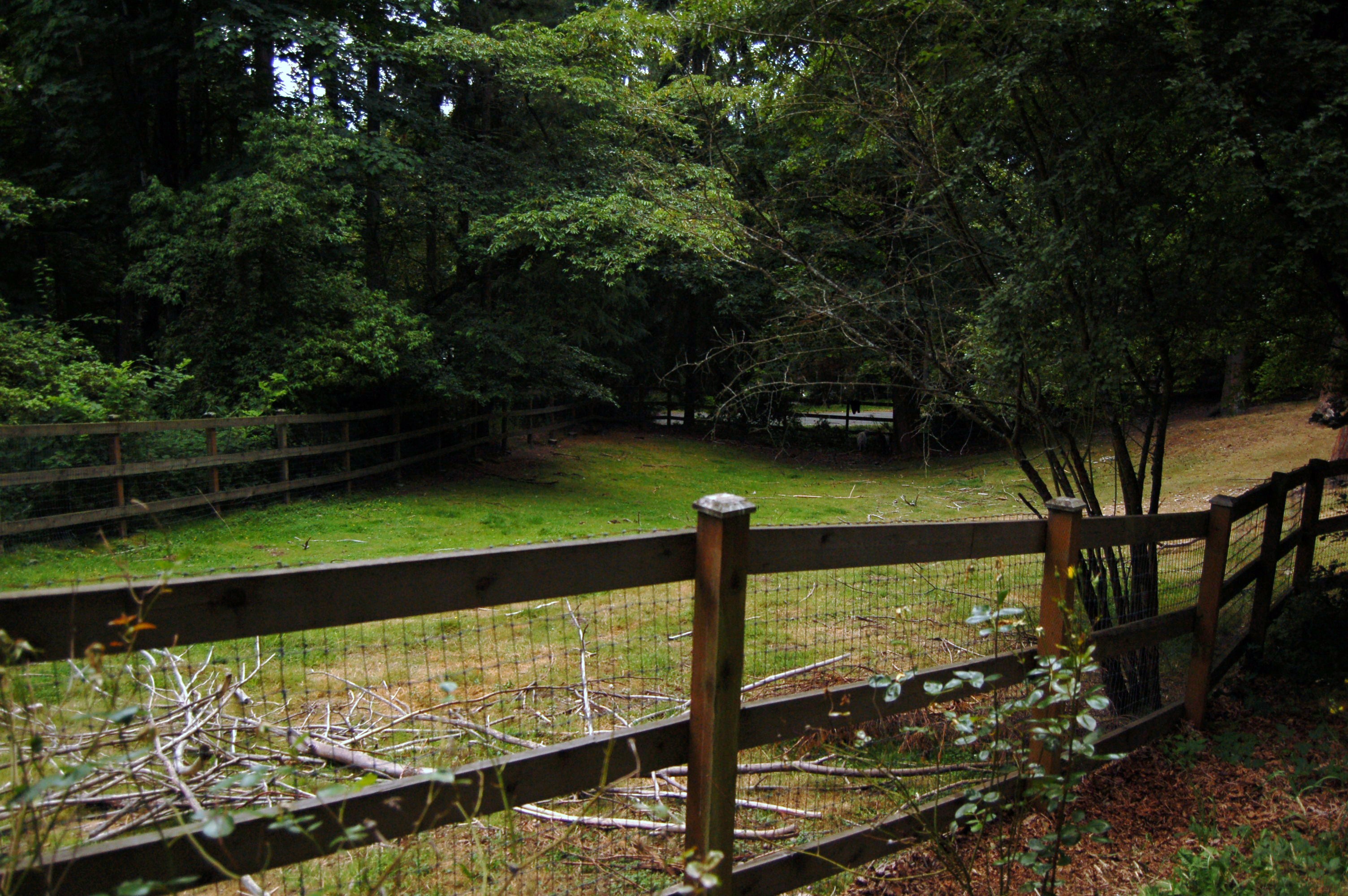
Goat pasture

Orchard
As for veggies, the main crop I’ve focused on this year is lettuce. We built a portable salad box we saw some plans for in Organic Gardening magazine. We’re going to build two more and I think in our mild Seattle climate we can keep this growing close to year round, especially after we build a green house. I also have a small (3 X 10) raised bed that I threw a variety of things in (a few squash, beans, and some ground cherries). I am also growing a number of tomatoes in those “As Seen on TV” upside down planters. They are doing really well and no weeding required!

Pergola
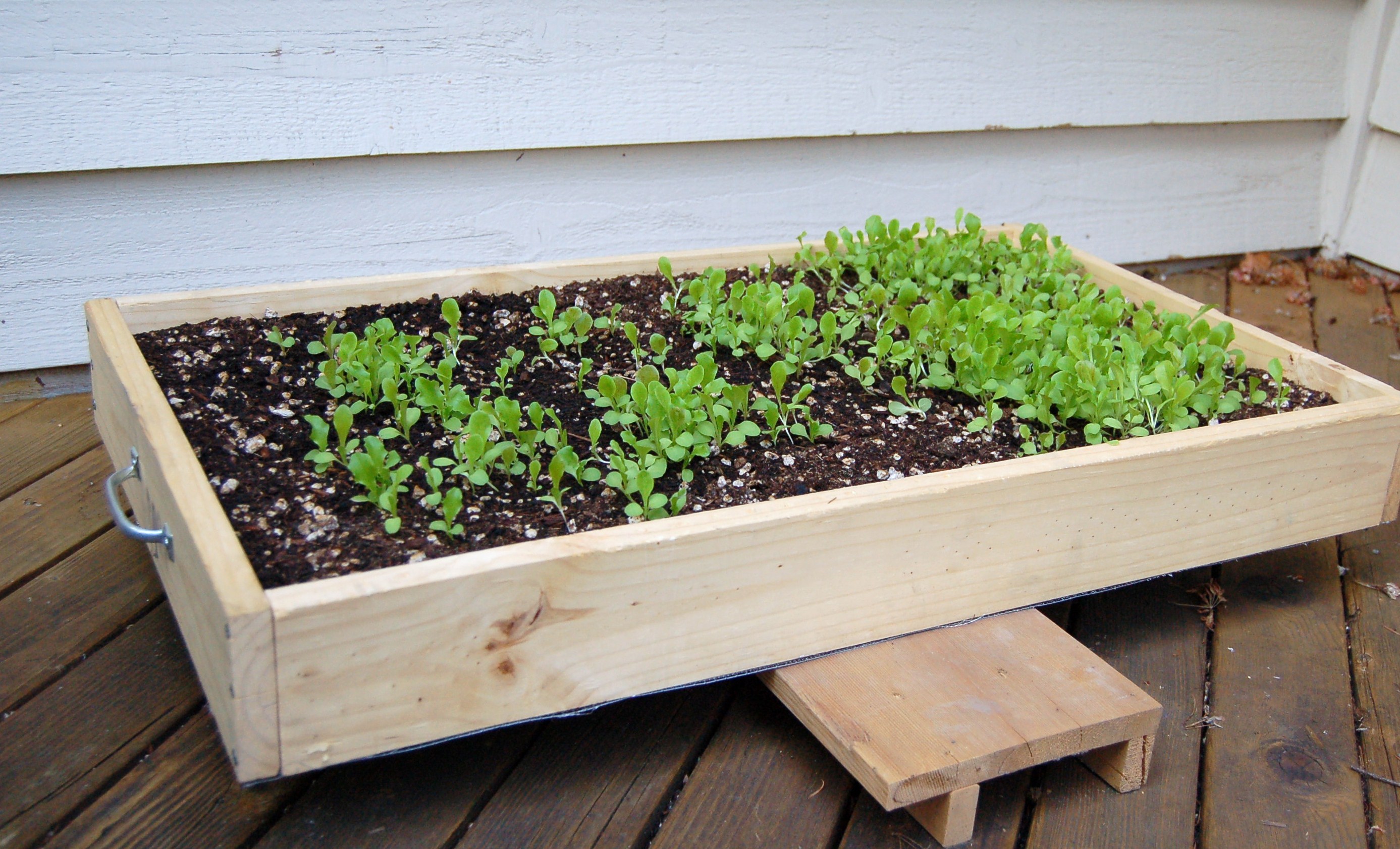
Salad box concept from Organic Gardening magazine
We also have a few projects we are going to tackle this summer. First, we are going to build a green house. I’ve been wanting to do this for years. After thinking about it, we decided we wanted to build something that wouldn’t require electricity. Originally, it was because we didn’t want to have to go through the hassle of getting the electricity connected to the location, which is pretty far from the house. Now, it is a good first experiment for us to build something that doesn’t require fossil fuel usage. After some research, we decided to build an altered version of this passive solar green house. The project gets started on Monday.
We are also going to build a chicken coop this summer. I’ve been looking at a variety of plans online and found a number of interesting ones at Backyardchickens.com. So we’ve got a busy summer ahead, but I’m looking forward to it.
Sandy
(Derek wants to point out that he’s wanted to be landed gentry for years…again, not cool when he says it…)
I have a bad habit that has to change next cold weather season. I don’t like being cold. I grew up in a house that only had wood heat and I love, love, love central forced air heating systems. I still get a little thrill when I bump the thermostat to up from 68 to 72 and hear the system fire up and kick out some lovely warm air, no logs required.
Needless to say, our natural gas bill really spikes during the cold months. We have only two systems in our house powered by natural gas: our furnace and our dual-fuel stove. We used to also have a gas hot water heater, but when our old hot water heater died last year, we replaced it with a Marathon electric hot water heater, which is supposed to be pretty efficient. With our cooking levels being pretty consistent throughout the year, our natural gas bill is all about how we use our furnace.
As I mentioned in a previous post, I haven’t been too sure what to think of natural gas as an energy source. I found some good, high-level information at the Low Impact Living site. The article, “The Story Behind Natural Gas,” had just the information I was looking for, with the crux of the issue being two points: 1. Natural gas burns more cleanly than other fossil fuels, but 2. It still contributes carbon dioxide to the atmosphere and we should work to limit consumption. If you need a primer on natural gas, as I did, the Low Impact Living article is a good place to start.
Based on the Low Impact Living site assessment of natural gas, did we make the right choice moving to an electric hot water heater? For the short-term, probably not, since the article does recommend moving to (and not away from) natural gas usage over electricity usage. However, if we look at this decision over the next few years it will likely be the right move for us since we plan to invest in solar energy to power our house.
But that will be a few years out. Our immediate challenge ahead when the cold sets in will be to play around with our programmable thermostat and see if we can optimize it better for when we are home and away. Then, of course, I’ll just need to keep my mitts off the the thing and resist hitting the up arrow key and resetting it to my favorite, 72 degrees.
Sandy
After discovering that we used 880 KWHs in June, I decided to learn more about how these 880 KWHs of electricty were created. I went to my friendly local utility Web site, Puget Sound Energy, and found quite a bit of useful information in the Energy and Environment section. Now I realize that a utility company isn’t exactly the most unbiased source for information about the environmental impact of energy generation, but the site did contain some very interesting, and hopefully credible, information. First of all, the site publishes a graph of the energy sources used to generate the electricity it distributes. Here’s the graph:
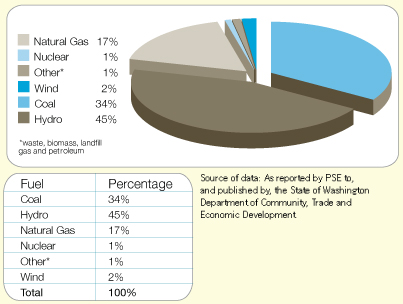
Electricty Sources for PSE
Living in the Pacific Northwest, we do benefit from hydroelectric power, which makes up 45% of the mix. Coal generated electricity I do know is not good, contributed to the green house gas problem when the coal is burned to create the electricity. Natural gas burns cleaner, but I’m still not sure how this rates in terms of environmental impact.
So here’s where I get to deciding to voluntarily pay more. I joined the Puget Sound Energy Green Energy Program. Joining the program will cost us and additional $0.0125 per KWH. For our electric bill last month, that ads on about $11 more dollars. PSE will buy blocks of power from green sources to introduce into the overall power mix, effectively increasing the percentage of green power in the overall power supply. In my mind, this does a few things: 1. It demonstrates to PSE that there is more demand for green energy, and 2. It increases my bill, giving me an incentive to use less energy. Here is what this buys:
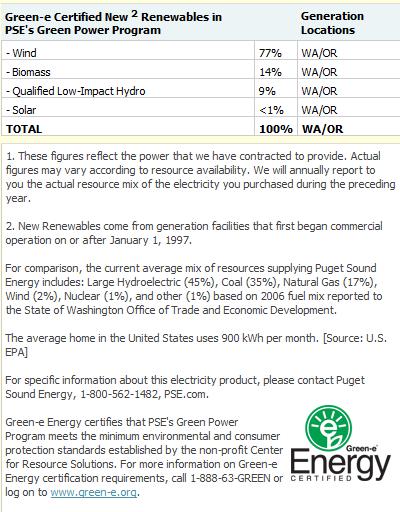
Green-e Cerfication Profile
Oh, as an added bonus I found out that the average American family uses 900 KWH per month. Our 880, our lowest usage of the year, is just under this. When you average our numbers out, we’re certainly above average, something we are working to change.
Sandy

 The 10 Year Challenge