I just impulse purchased turkeys – oh boy!

Baby heritage turkeys

Baby heritage turkeys

Going to the feed store in early spring the same day the latest batch of new poultry arrived led to an “impulse purchase” that had me thinking “What did I just do?!?” on the drive home. Yes, I impulse purchased two turkeys. I blame it on my subscriptions to Hobby Farms magazine and Mother Earth News. Both have had articles in the last year about all the interesting heritage breeds of turkeys. I’m a sucker for a good poultry article and obviously also susceptible to impulse poultry purchases.

The lady at the feed store wasn’t entirely sure what breeds these are. All the heritage turkeys were mixed up in a batch together. She thinks the blond turkey is a Midget White and the black is a Black Spanish Turkey. We’ll have to wait until they mature to know for sure. The heritage breeds all have distinctive looks so it shouldn’t be hard to tell later on.

So now the big question. Are these Thanksgiving turkeys? That’s actually what I was thinking when I bought them, but the kids began protesting immediately. Apparently, they don’t like the idea of eating their pets. Andrew, at least, has agreed that if the turkeys turn into nasty beasts like our rooster Roo, then they can be eaten. Apparently, the turkeys hold their own fate in their wings.

Sandy

Share

Posted in Homesteading, Livestock | Tagged , | 2 Comments

Asparagus “stump” soup

Asparagus soup

Asparagus soup

This is a repost from last year. I’m reposting this to kick off asparagus season and to cheer my friend Kelly on as she makes her first batch.

After reading the latest post on A Posse Ad Esse, I hung my head in shame for never using the ends of asparagus plants. I always compost or worm bin the ends, thinking they are not worth using. How wrong I’ve been. A Posse Ad Esse suggested using them in soup. I whipped up a batch, using a “wing it” recipe similar to this one, and the soup was great. When going through the stumps, if you have any that are extra thick and woody, you should either skip those or use a vegetable peeler to take the hard skin off. Super woody stalks will have a hard time breaking down in the soup. Even so,  never again will I throw out usable asparagus stumps.

Happy cooking!

Sandy

Share

Posted in Cooking & food preservation | Tagged , | 1 Comment

Reject “stump” garden

Celery, onion, and garlic in my "stump" garden

Celery, onion, and garlic in my "stump" garden

On Pinterest, I’ve seen a number of postings lately in which people suggest growing new plants from the root stumps of the veggies they purchase at the grocery store. I’ve never thought about doing this, but it seems like such an obvious, and great, idea. As such, I decided to take one of my self-watering containers in the greenhouse to start a stump garden with unused veggie ends (the root zone area). I’ll share updated pics in a few weeks. Hopefully, I’ll have some good growth on my reject stumps.

Speaking of Pinterest, it’s a great site for gardening, DIY, and homesteading enthusiasts. I often find interesting new ideas on the site and have even posted ideas there myself. You can easily follow me on Pinterest to keep up with my pins.

Sandy

Share

Posted in Gardening | Tagged | 1 Comment

DIY shopping bag using dish towels

Finished tea towel shopping bag

Finished tea towel shopping bag

I’m home with the kids for spring vacation this week, so we decided to head to the craft store. While there, I saw an idea for easy-to-make grocery shopping bags using tea towels. Since it’s pretty dreary outside, it seemed like a fun indoor project. The project shown at the store is a bit simpler than what I did (I added sides and a bottom to the bag), but the overall idea is easy enough for a beginner.

Shopping bag supplies

Shopping bag supplies

The first part is always the most fun – picking out fabrics! Instead of just making a plain bag, I decided to adorn the turquoise tea towel fabric with a flower-patterned stripe and some pink rick rack. To do this project, you’ll need two (or three tea towels) depending on the size you want, a fat quarter pattern for the stripe, rick rack, and bag strapping. I used my quilting supplies for easy measuring and cutting.

Cut desired bag height and depth

Cut desired bag height and depth

First, I cut the tea towels to size. I chose to cut the two main tea towels into clothes 15″ X 20″ because I wanted to make a fairly large bag.

Rotary cutting stripes

Rotary cutting stripes

Next up, cutting stripes. I chose to cut 6″ stripes. Make sure the fabric is wide enough to completely cover your bag width. If you are using patterned fabric such as I did, do think about how you want the pattern centered.

Pinned stripe and rick rack

Pinned stripe and rick rack

Next, pin the stripe and the rick rack to the front face of the bag. Sew the pieces into place. I did this for the front and the back side of the bag, but you could just do one stripe.

Bag side pieces

Bag side pieces

Cut the side and bottom pieces. For my bag, this meant two 6″ X 20″ pieces for the sides and one 6″ X 15″ for the bottom.

Sew sides and bottom onto main panels

Sew sides and bottom onto main panels

Begin the process of sewing the sides and bottom together. Remember you are sewing everything together inside-out.

Puckered edge straps

Puckered edge straps

Once all the sides and bottom are sewn together, it’s time for the straps. I chose to do a “puckered” strap. I don’t like it when the top of my bag gapes open, and the way I chose to put the straps on makes the top look neater in my opinion. It’s a lot of fabric bunched together, though, so I had to hand-sew the straps on.

Finished bag

Finished bag

Voila! All done. A custom grocery shopping bag for about $10 in materials.

Thanks to Lily for taking the “action” sewing shots.

Happy sewing.

Sandy

Share

Posted in Crafts | Tagged , , | 1 Comment

Harvest: Swiss chard and baby garlic

Swiss chard and baby garlic

Swiss chard and baby garlic

This weekend I harvest a good batch of Swiss chard (Bright Lights) and baby garlic greens (Inchelium red). The Swiss chard in the greenhouse has been going gangbusters! It’s one of those plants where a few plants can quickly start producing volumes, but I’m not always sure what to do with it. I decided this time on a stand-by: vegetarian lasagna with Swiss chard. Of course, this dish is perfect for a nice dash of garlic, so I headed to the intentionally over-planted garlic bed and pulled some baby garlic greens to chop up and add to the lasagna. It was tasty!

Sandy

Share

Posted in Cooking & food preservation, Gardening | Tagged , | 6 Comments

Grape pruning, bees, and an essential gardening tool

Grape vine before pruning

Grape vine before pruning

Grapes need a good pruning each year. They produce more grapes when properly pruned. While there are different methods for pruning grapes, I keep grape pruning pretty simple. I focus on a number of “lead” vines and hack pretty much all side shoots off.

Grape pruning after

Grape vine trimmings

Grape vine trimmings

As you can see, I clipped off a lot of the plant, probably more than 50% of the total vine volume. You really shouldn’t be afraid to give a grape a good hard prune.

Above you can watch professional guidance on the topic if you want to go beyond my basic approach.

Orchard mason bee condos

Orchard mason bee condos

Exciting news! The orchard mason bees have arrived just in time. A local mason bee expert uses our yard to harvest mason bees each year. Steve, the bee guy, dropped off the bees this week and they’ve already hatched. We benefit from having a nice colony of bees in place to pollinate our orchard and Steve gets to keep all the baby bees for next year. It’s a great arrangement.

Tomato, pepper, basil, and corn seedlings hardening off

Tomato, pepper, basil, and corn seedlings hardening off

My babies are growing up! Today was a nice sunny day so I took my seedlings out to the greenhouse to begin hardening off prior to planting. Just in time, too, because I need to start seeding the next wave of crops (cucumbers and squash) ASAP!

Thermometer

Thermometer

And I’ll end today with a recommendation for a great garden tool. A thermometer! A number of plants require the soil to warm up to certain temperatures before planting. The easiest way to find the temperature is with a basic digital thermometer. This is a simple, cheap kitchen thermometer, but it does the job well.

Sandy

Share

Posted in Gardening | Tagged , , , , , , , | 6 Comments

Potatoes & raspberries

La Ratte and Yukon Gold potatoes

La Ratte and Yukon Gold potatoes

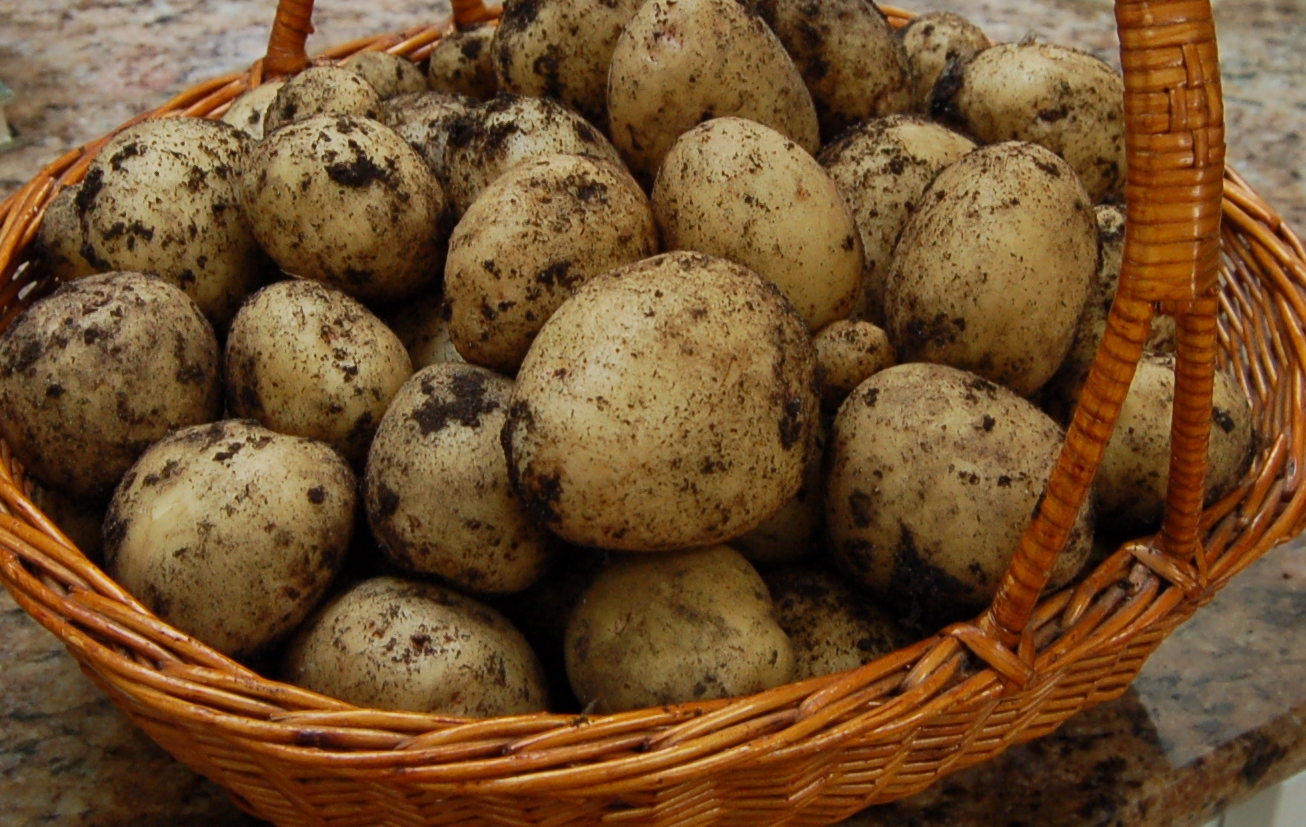
It was a stunningly beautiful weekend so, of course, I did venture forth into the garden to do some gardening. I decided to pace myself and do just a few of the many tasks on my to-do list this weekend. First up, I planted the potatoes. I decided that this year I would keep my potato crop a bit smaller and mostly use them for fresh eating. As such, I only planted two variety, La Ratte and Yukon Gold. Both are tasty and versatile, working well in potato soups and salads.

Raspberries before pruning

Raspberries before pruning

Secondly, I decided to prune the raspberry beds. The raspberries were already producing a lot of new growth. I needed to remove the old shoots that would not produce this year and cut back those that will fruit this year. Tom at Tall Clover Farm has a great raspberry pruning tutorial if you need pruning 101 basics. The goats were really happy I took on this task today because they love raspberry leaves as much as blackberries.

Raspberries after pruning

Raspberries after pruning

And here’s the after shot. It was actually quite a bit of work to get these two beds under control, but I’m glad it’s done.

For those of you not entirely sick of hearing about our solar panel installation, just a quick FYI that I’ve added a solar log page to the site. You can find it under the big header picture at the top of the page.

I hope you enjoyed the sunny weekend as much as I did.

Sandy

Share

Posted in Gardening | Tagged , , | 2 Comments

Anatomy of a solar panel installation

As some of you may have gathered by the We’ve Got the Power post by Sandy, we have finally taken the plunge into solar power / photovoltaic (PV) generation.  We have been wanting to install a PV array on our roof for several years, and have been actively planning for it for about 4 years, including installing a metal standing-seam roof and cutting down a beautiful, but shade-producing maple tree.  The primary array is on the section of our roof that faces south by southeast, while the smaller secondary array faces southwest.  As seen in the Google satellite photo below, the large section of roof that is reflecting light back up into space gets a lot of sun and was therefore the optimum site for the primary array.

While we had fulfilled some of the basic prerequisites for installing solar panels on the roof, we still needed to do a basic feasibility analysis of our proposed panel location.  Puget Sound Solar sent over Will Sumner to do the initial assessment and determine if our back-of-the-envelope guess on siting a PV array made sense.  Will used a special instrument called a SolMetric SunEye to take multiple photos of the available unblocked sky from various locations on the roof and extrapolate the solar efficiency of the location we were considering (the ‘shading / orientation factor’.  The results were positive with over 70% average unblocked solar coverage – a sample photo can be seen below:

This also indicated that we could boost the coverage to over 80% by convincing our neighbor to chop down some poplar trees that lean towards our house…needless to say, this is a future plan (if we can bribe them sufficiently).  The secondary array has a similar shading / orientation factor, with an average factor for the two arrays of 73.5%.

The feasibility having been established, we now needed to decide upon what modules we wished to install.  The biggest decision you need to make in Washington State is whether or not you want to use local (WA) produced panels, or ‘foreign’ panels (e.g. produced outside the borders of Washington State).  The differences are not trivial:  for example, panels from Sanyo have the highest power density (highest efficiency) but you only get an incentive rate (a rebate for energy produced in kiloWatt Hours) of $0.15 / kWH as they are non-locally produced, while panels from Itek Energy or Silicon Energy (SiE) are less efficient (you need more panels to produce the same amount of wattage) but receive the maximum incentive rate of $0.54 / kWH.  In addition, the panels from Silicon Energy are the only panels that have survived the DOE accelerated aging tests (80 years and counting) without a failure.  After much back and forth, we decided to go with the Silicon Energy panels as they would allow a quicker payoff / break-even than the Sanyo panels, despite the higher initial cost, as well as the fact that we would be supporting a local Washington business and Washington jobs with our purchase.  After some juggling of configurations by Will, we decided on a final configuration of a primary array of 33 SiE panels facing SSE running through a large inverter, and a secondary array of 12 panels facing SW running through a smaller inverter.

The System:

The heart of the system is, of course, the photovoltaic panels.  These miracles of science convert solar radiation (remember, light is both a wave and a particle) into electricity.  While nowhere near as efficient as photosynthesis, it is still pretty impressive that these panels are able to capture close to 20% of the energy from the sun and harvest it.  The panels we chose were 195W units, which provide a theoretical maximum output of 8.775kW if all 45 panels are running at 100% efficiency.

(photo courtesy of Silicon Energy)

Once the panels have generated electricity, it needs to be converted from direct current (DC) to standard 240VAC at 60Hz – this is done with inverters.  Because we have two banks of panels, we needed two inverters:  one rated at 5300W and one rated at 3850W.

These panels then run through a series of breakers (safety, safety) and a massive cutoff switch to a pair of meters – one that measures the total production in kWH (for the $0.54 incentive payment calculation) and one that measures net consumption (e.g. house consumption minus PV production).

The Installation:

The installation started on a cloudy Monday – the PSS crew’s first task (which took the entire day due to the fact that the seams on our roof were 11.5″ on center instead of 12″ on center), was to install the rails upon the roof that would support the panels.  The non-standard spacing would force the crew to drill out almost all of the holes instead of using the pre-drilled holes.  Needless to say, they were a bit displeased by this discovery but they worked through it and made the best of the situation.

On day two, the electricians came out and began the prep work to install the inverters and the high-voltage home runs from the inverters to the panels.  Note the breaker box between the planned inverter location – this is one of three cutoffs (not including the off/on switch on the inverters themselves) that can be used to disconnect the solar panels from the incoming line voltage.

On day three, the panel assembly and install began in earnest. While the electricians continued the wiring infrastructure, the roof crew mounted the entire secondary array and a portion of the primary array.  Here’s one of the panels being un-boxed – notice that you can actually see through the panel and also notice that the wiring is extremely simple (just two wires that connect to opposing corners of the panel – they’re connected to each other for shipping purposes, but are wired in series with the other panels in the array so only two wires – one positive and one negative / ground connect back to the inverter):


On day four (Thursday), the inverters were fully installed and connected by the electricians, and all panels were mounted and wired back to the inverters – after a brief test to make sure the system was functioning end-to-end, the system was disconnected from the line voltage in preparation for final inspection as well as the installation of the net metering equipment from Puget Sound Energy:

Here is the smaller array being tested at the inverter:

After the installation was completed, the worst part was waiting for the inspection (which really only took two days – the install was completed on a Thursday and the inspection happened on a Monday) and the meter install.  Unfortunately, these two steps are completely serial – e.g. you have to have the installation completed before the electrical inspection can occur and you have to have passed the electrical inspection before the utility can order the net metering equipment and set up an appointment.  As a result it was a week and two days after inspection before we were hooked up (a week and two days with an unseasonable amount of sun – the universe is perverse, apparently), but the final connection was done very quickly (under 1 hour), and the clouds even parted for a few hours to drive the panels and inverters to their maximum production levels.  And the final result is below:

Happy net metering!

- Derek

Share

Posted in Solar | Tagged , , , , , , , | 2 Comments

We’ve got the power (solar that is)

Solar system inverter boxes

Solar system inverter boxes

After a speedy and flawless solar installation from Puget Sound Solar, we’ve been waiting for Puget Sound Energy to install our new meters in order to officially turn the system on and begin net metering. Well, today was the day! As you can see be the green lights in the photo above, our inverters boxes are on!

Solar and electrical meters

Solar and electrical meters

All in all, it wasn’t a bad first production day. The system came online around 11:00 am and the above photo was taken at 5:30. So, in 6 1/2 hours of intermittently sunny conditions, we produced 25 kWh. Not bad!

Look for a full system technical overview in an upcoming post by Derek.

Sandy

Share

Posted in Solar | Tagged , , | 3 Comments

Photo album: Plum blossoms, peas, garlic, blueberries, and rhubarb

Shiro plum in bloom

Shiro plum in bloom

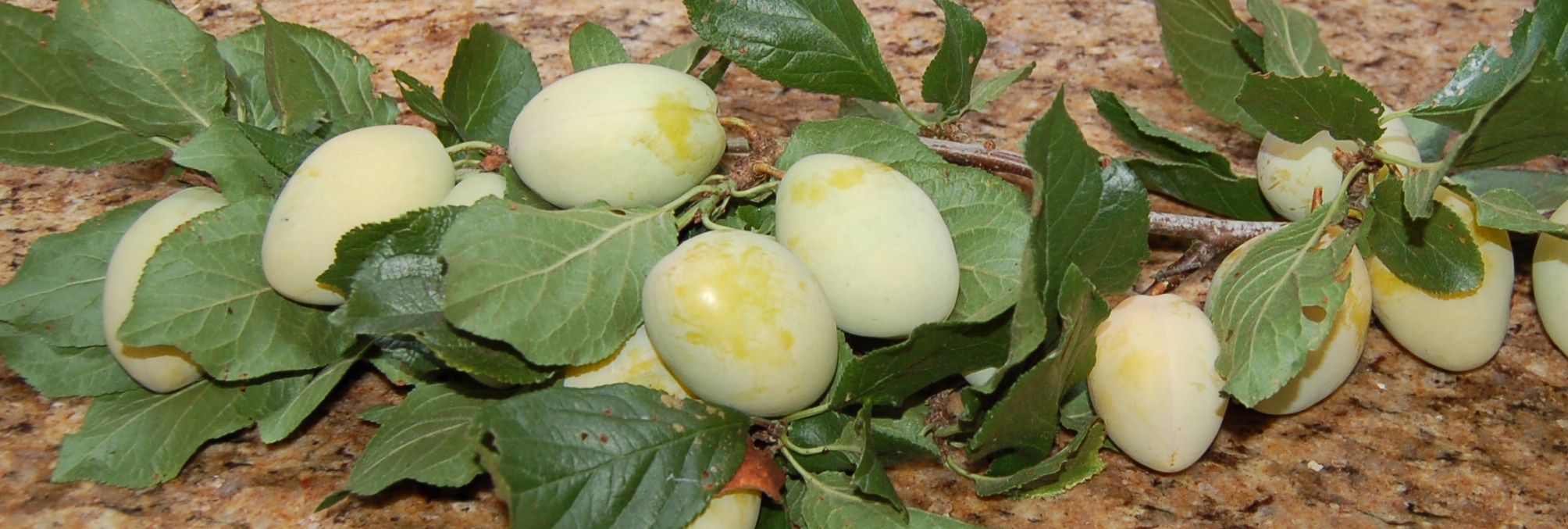
Our Shiro plum tree is our more prolific and reliable tree. The tree is about 7 – 8 years old now and produces heaps of super juicy yellow plums each year. What you see in the picture is the “after” shot. We pruned this tree pretty hard last week (yes, very late I know). I took out most of the center growth and pruned it into a fan shape for easier picking.

Blueberries leafing out

Blueberries leafing out

Also showing nice spring growth: the blueberries. We have a few dozen bushes around our yard and they are all leafing out nicely.

Peas

Peas

The peas are emerging and starting to show some good growth. I intentionally over-planted the peas so I can harvest some of the baby pea shoots for a nice stir fry.

Rhubarb

Rhubarb

In just a few short weeks, the rhubarb has put on a great amount of growth. I should have enough to harvest a decent amount this year.

Garlic

Garlic

Also showing impressive growth is the garlic. This is another plant I over-planted so I can harvest spring greens.

That’s it for now!

Sandy

Share

Posted in Gardening | Tagged , , , , | 2 Comments